GROSS: Why do you think nobody cared? What is it a sign of?
BAZELON: You know, I think that when you're a young Black guy with a gun, people make a lot of assumptions about you. Once you're snatched up into the criminal justice system, you professing your innocence - it's just not enough. Like, people are not listening. Either they assume that you're guilty, or they don't really care whether you did this particular crime because they think you must be guilty of something. I mean, that was something that some of the jurors we talked to from Yutico's case said was kind of in the air in the jury room.
And to me, it just goes to show how the deck can be stacked against you if you're someone like Yutico. It doesn't matter that, you know, Yutico was, like, a star student in high school. He was really well-liked by classmates across lines of race and class. But it's as if all those parts of yourself and your life fall away, and you're just reduced to the stereotype. Like, you're just this young Black guy in a hoodie with a gun, and no one looks more closely. No one looks beyond that.
GROSS: Your grandfather was a judge who served on the U.S. Court of Appeals in the D.C. Circuit. He served for, like, three decades, and he wrote a couple of majority opinions that were really relevant to Yutico's case. Can you describe one of them?
BAZELON: Yeah. I mean, this discovery for me and talking about this with Lara was one of the most special parts of this experience. So my grandfather had a couple of cases in 1969 and 1972 where the police did a show-up ID. And, you know, in one case, there was this Black suspect, and they put him in a police car, and they drove him up to the white victim to identify, and my grandfather said, this is a really risky way to identify someone. And even then, he was very aware of the dangers of misidentification, especially across race. So, you know, when I read these opinions in which he said - you know what? - these defendants deserve a new trial - that really struck me as prescient, and it just made me feel connected, and it made both Lara and me feel connected to this whole legal history.
GROSS: So in terms of the misidentification of suspects, there were other things that were discrepancies in the witness' testimony, in the testimony of the person who was robbed. One had to do with the description of Yutico's hoodie that night. It was a gray hoodie, but there was a question of was it a pullover, or was it a zipper? Can you talk about that a little bit? And, you know, did he have a beard, or did he not have a beard?
BAZELON: Yeah. There were some key discrepancies. So the victim of the robbery, when he called 911, said that the robber had a slim build, and he didn't mention any facial hair. Yutico was fairly heavyset at the time of this armed robbery, and he had a beard and mustache. And you're also right about the hoodie. The initial description was different from the kind of hoodie Yutico was wearing. So if you look at the specifics in this description, it's not at all clear that it was a precise match for Yutico.
GROSS: I have a couple of gray hoodies. I mean...
BAZELON: Yeah.
GROSS: ...Like, who doesn't? Really, like who doesn't have a gray hoodie?
BAZELON: I know. I also have one. I hear you.
GROSS: Was there any evidence against Yutico except for that the person who was robbed identified him as the robber, even though it was dark, even though many hours had elapsed since the robbery took place, even though there were discrepancies in what the eyewitness said the robber was wearing and what Yutico was actually wearing? Was the eyewitness testimony that it was him the only evidence?
BAZELON: I mean, really, pretty much. The only other fact I think is relevant here is that Yutico was caught with a gun that was the same kind of gun the victim said was used in the armed robbery. But it was a very common gun. I mean, a pistol that thousands of people - you know, probably even hundreds of people in New Orleans - could have had at the time. And there was no record of any kind of distinctive marking on the gun. So right, this really is a case that comes down to one eyewitness's testimony.
GROSS: So when Yutico was exonerated, the judge said to him, I just want you to stay strong and stay encouraged and to not allow this to provide you with a bitterness for a system that has, in fact, failed you.
What was it like for you to hear the judge say, yeah, the system failed you?
BAZELON: Well, I was really relieved to hear her say that, because I think reckoning with the failures of the system is the only way to fix it. And there was an honesty about her recognition that in some ways, he's being asked to do something that is too much. Like, if the system fails you, what do you do with that? And I think what the judge was saying was, you have to move forward with your own life despite all of this. I mean, one thing that went through my mind in that moment is that the state is not giving Yutico any kind of financial compensation for his wrongful conviction. The reason for that is kind of technical. Louisiana has a law where if you've contributed in any way to your own arrest, you're not eligible for any kind of compensation. And so the fact that Yutico ran from the police and had a gun is enough to mean that he can't get any damages from the state, even though that has nothing to do with his false conviction for this armed robbery. So I was thinking about that. I mean, it's hugely important for Yutico to get his freedom back, and the judge was giving it to him. But the state was also really leaving him to fend for itself, even as the judge was admitting that what had happened to him was deeply unfair.
GROSS: Emily Bazelon, it's great to have you back on the show again, and congratulations on helping to rescue a life.
BAZELON: Thank you so much, Terry. I really appreciate it.
GROSS: Emily Bazelon writes about criminal justice and is a staff writer at The New York Times Magazine. Her article about Yutico Briley, titled "Can You Please Help Me Get Out Of Prison?", is the cover story of this week's magazine.
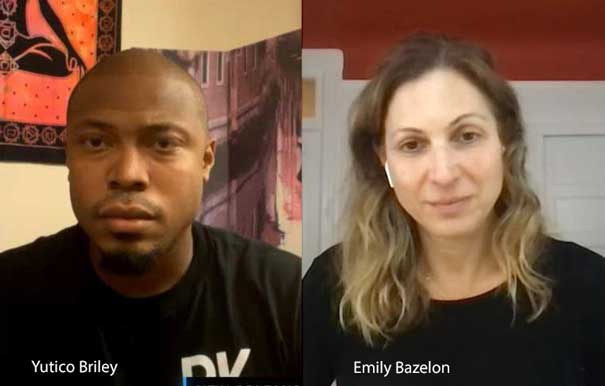
This is FRESH AIR. My guest is Yutico Briley, whose case I just discussed with Emily Bazelon, a journalist who covers the criminal justice system. He's the subject of her article titled "Can You Please Help Me Get Out Of Prison?", which is the cover story of this week's New York Times Magazine. Briley was sentenced to 60 years in prison for an armed robbery in New Orleans in 2012 that he said he didn't commit. Bazelon was one of dozens of people he wrote to from prison asking for help to prove his innocence. But no one was interested - except Bazelon After corresponding with him, she thought his story was an example of the inequality of mass incarceration. Bazelon described the case to her sister, Lara Bazelon, a lawyer who's a professor at the University of San Francisco School of Law, where she directs a criminal justice clinic. Lara decided to represent Briley and won his appeal and his exoneration. He was released in March. Now, at the age of 28, Briley is starting a new life and facing the difficulties so many people face after being released from prison. He's joining us from his home in New Orleans.
Yutico Briley, welcome to FRESH AIR. Congratulations on being on the outside, on getting out. My first question is a question that you could probably talk about for hours or maybe for years. And it's a really big question, and I apologize if it's too big. But what did it feel like when you were in prison serving a 60-year sentence - and you had served seven years of this before Emily Bazelon, you know, reached out to you - after you reached out to her. So what was it like to know that you didn't do the crime but you were sentenced to 60 years, and you were serving so much time in prison and no one on the outside believed you?
YUTICO BRILEY: Well, to say the least, it was excruciating. I mean, as far as anxiety-wise and - you know, it - just at one point being totally hopeless and - so just dealing and try to coping with that. I still, like, right now, don't even know how I did it. But just during those times, I just remember feeling like I had to just appreciate the small things, like waking up every day (laughter). You know, thinking that my freedom was so far away at one time to where, like, I found myself in this terrible position, but, OK, this the worst-case scenario and this the best-case scenario.
GROSS: You wrote to so many people. You wrote to about 60 people asking for help, and they all turned you down except for Emily. And she almost didn't even open the letter that you sent. How did you decide who to write?
BRILEY: Anybody who I feel like, at that time, who could help me 'cause it was like, I got nothing to lose. So I'm - I'd be reading a newspaper article. And they might be talking about, well, this law clinic or this lawyer or this - you know, I didn't flip through the law books and call private investigators, just all kind of stuff. I might see something on TV like - and just tell my people, well, look; could you Google this name and give me, like, a contact info. I wrote a man in Nebraska. I had a high school friend. He sent me an article on JPay, which is the email server that me and Emily used to write on. And it was basically about a man that was convicted in, like, Nebraska about armed robbery or something. And he ended up getting out of prison and writing books and all kind of stuff. And I had told my sister - I told her, Google his contact info. And my sister was like, well, why you want - and I'm just like, well, you know, longshot. Like, you know, I just was trying everything.
GROSS: When the judge exonerated you, she said, I just want you to stay strong and stay encouraged and to not allow this to provide you with a bitterness for a system that has, in fact, failed you. What was your reaction when she said that? She admitted the system had failed you. And she also asked you not to be bitter about the system.
BRILEY: Well, because of my experiences with - I'm going to even say before I went to prison. It's like, with my father being in prison, my uncle, I immediately knew what she was talking about. When she told me, like, you know, don't be bitter or don't hold onto it and don't let this hold you back - making a habit out of it, you know? And people try to do it with me, where they'll be like, well, you've been gone eight years. You've been - you know, you haven't been released that long. And that's what she was meaning. Don't let your past affect your future. Don't let this stop you from going forward to this point. And I totally understood what she meant because I've been around this my whole life. And I was born in Louisiana. So - and I was explaining to someone how big the criminal justice system is like and the economy down here. So many of my peers and family members have been through the system. So I immediately recognized what she was talking about.
They - I'm going to just give you an example, Terry. They got a guy that stays downstairs with me right now. And he was locked up with me at Dixon. But when I met him, I was about 20 years old. And he had been down - he had been incarcerated for about 20 years. He ended up doing about 22 years. Now, I immediately recognized his face when I walked out of my apartment building. And he was outside, you know, begging for money. And, of course, I gave him some. But I'm just telling you this because that's what Judge Harris was meaning, because so many people, like, after doing a long time, it's like either they can't adapt or they refuse to adapt. Or they had numerous things from either their incarceration or their past that just stop them from going forward.
GROSS: What are you trying to do now to move your life forward?
BRILEY: Well, I had to repair a lot of just relationships that - I'm going to just say, getting my life back on track as a normal person would at my age. So stuff like education, stable, like - well, I got, like, stable housing. But as far as try to, like, own a house, I got to try to get on track to a normal 28-year-old. But first I had to, you know, reestablish all my basic relationships with my parents, my brothers, sisters, grandparents. Everybody had became strangers to me.
GROSS: Why did they become strangers to you?
BRILEY: I mean, because they kind of wrote me off. Like, in everybody head, Terry, I wasn't getting out. I was never coming home. So that's how they treated me.
GROSS: When you were in prison, did you know a lot of people there from the outside, people who were friends or relatives or friends of friends?
BRILEY: Yeah. I had a lot of that going on. I had a lot of either relatives, friends or relatives, people that watched me grow up, people that I grew up under. So I had a lot of familiarities in all levels going on in prison.
GROSS: Were there friendships and rivalries that continued in prison from the outside?
BRILEY: Yes. I'm going to be honest, yes, because just like I got good friends that I done made in prison that I still talk to and I still be with, you can never eliminate your bad relationships or your enemies, too, because I done saw situations from prison or a situation from jail carry on to society. And, you know, people end up killing each other.
GROSS: I know that you were in gifted and talented classes when you were in high school. What did you do to keep your mind occupied during the years you were in prison?
BRILEY: Oh, anything. I done read all kind of stuff. I'm a really good chess player, Scrabble - anything. Like, legal - like, I done went on legal binges. I'll probably help people write letters. That's another thing. Like, you know, they have so many illiterate people. And I tell Emily Bazelon all the time, they got so many people in prison with undiagnosed mental health issues. Some days, I might just write everybody letters. You see everybody that can't write? I might just go type they people letters for them. Like, I'm one of those type of people. That's why, like, even right now, like, I have so many people calling me from jail, writing me from jail, talking about me, calling me all the time. Like, everybody love me in jail. Don't get me wrong, I got a few enemies. You know, I grew up in prison. So that's going to come with that. But, man, I'm talking about staff members. I got people off - from, like, staff members adding me on social media and stuff telling me they love me like they son and all this, you know? It's bad because I grew up, like, on they plantation. But, you know, it's just good that I established those relationships with people.
GROSS: So you know a lot of people in New Orleans who you had gotten into trouble with earlier in your life before you went to prison. What are you trying to do to make sure that you don't get back into that life? I know you want to, like, move to Atlanta. What - are there obstacles standing in your way of doing that?
BRILEY: Well, I got to get my parole transferred. And it's a 45 to 60-day process. I'm going to just say that, with me going through what I went through, my whole outlook on life is way different than the average person my age. So a lot of me and my old friends or me and people I grew up around, we don't even mix anymore.
GROSS: How do you think your perspective is different from theirs?
BRILEY: Well, first of all, I take life way more seriously. You know, they'll take risks that I'm not going to take. Or they'll feel comfortable doing stuff that I don't feel comfortable doing no more because I done seen way more than them. Even though they done been to prison, I was in prison a way different way than them. They might have went to prison for two, three years and knew they was coming home. Like, I really was in prison, stuck in there, might die in there. So - and I don't want to go back to that situation ever again.
GROSS: Is it hard to stay away from them and to stay out of trouble?
BRILEY: It is to a certain extent because I know they don't have bad intentions. Some of my friends, you know, they was still, like, taking care of me in jail, sending me money and all this stuff. So it's just - I got to be cool with them from a distance. Like, we got to be friends from a distance.
GROSS: So like you've been in prison for - you were in prison for, like, 8 1/2 years. And now, not only are you out, but you are the subject of a cover story in The New York Times Magazine. You hooked up with Emily Bazelon through hearing her on our show. Now you're on our show. So you've gone from being, like, isolated, like people had abandoned you, nobody cared. And now, like, you're becoming a public person. That's a huge transition to make. And I'm just wondering what the response has been to the article. Is that changing your life at all?
BRILEY: Slowly, slowly. But, yeah, it's real ironic. Like, everything is still like a dream to how you said. I heard about her on your show, and now I'm on your show. So it's like, wow (laughter).
GROSS: And you're in The New York Times on the cover of the magazine. A lot of people see that. What kind of response are you getting?
BRILEY: So that is a huge transition from nobody caring about me to everybody caring about me.
GROSS: So the way Emily started corresponding with you was that there was a librarian in Oregon who threw a support program for incarcerated people, was corresponding with you regularly. And she told Emily that you had written her and you were trying to get in touch with her. So Emily found your letter and opened it and read it. And that's how your relationship started. And that's what led you to be released from prison. I understand that you're going to be visiting that librarian later this month. What do you expect that visit's going to be like?
BRILEY: Me and Ms. Karen are really close and I refer to her as, like, my adopted mom. So it's going to be great because we've been waiting to meet each other forever. But we got a real excellent relationship. So just by us going to spend some time, that'll be like the icing on the cake. And she's a real outdoors woman. So she's going to bring me camping and all this. I'm going to experience all that for the first time. So it's going to be great.
GROSS: Yutico Briley, it's been great to talk with you. I wish you good luck. And I wish you everything that you wish for yourself in your new life.
BRILEY: Thank you, Terry.
GROSS: Yutico Briley spoke to us from his home in New Orleans. He was exonerated in March. He's now the subject of the cover story of this week's New York Times Magazine. The article is by Emily Bazelon, who joined us earlier in the show.
Copyright © 2021 NPR.