Prologue
Ira Glass
From WBEZ Chicago, it's This American Life-- I'm Ira Glass.
[Music - "MYSTERY OF THE DUNBAR'S CHILD" sung by Richard "Rabbit" Brown]
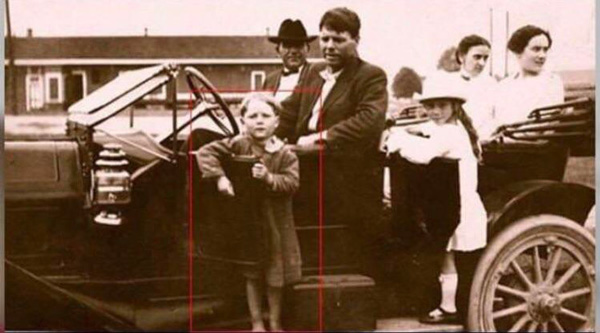
It used to be if something was big news, it got turned into a song. This one's about a famous kidnapping that happened in 1912, the kidnapping of Bobby Dunbar, a four-year-old boy. For two years, the details of his disappearance, and the search for him, and how he was found, and the trial of his kidnapper was all front page news, reported breathlessly all across the country.
But some of the biggest mysteries of the case were never solved, until long after nearly everybody involved was dead, almost a century after it happened, the mysteries finally got solved when one of Bobby Dunbar's descendants started poking around the old stories, looking for answers she wasn't really expecting to find.
Today, we devote our entire show to the legend of Bobby Dunbar and to what his granddaughter discovered-- the messy, real story of what actually happened, which, as you'll hear, turns out to be a lot more interesting than the legend. Tal McThenia is our reporter.
Act One: Part One
Tal Mcthenia
Everybody in the family knew it-- the legend of Bobby Dunbar, the lost boy who was found.
Swin Dunbar
Well, the legend was that, back in the early 1900s, my grandfather became missing.
Margaret Dunbar Cutright
My grandfather had gone on a camping trip with his parents. It was on a lake.
Bob Dunbar Jr
Swayze Lake. It's actually a swamp in Louisiana. And he disappeared.
Tal Mcthenia
Bobby was just four years old at the time, and Swayze Lake was teeming with alligators, surrounded by dark, thick woods. There was a massive search that started in the swamp and spread across the country, but nothing for eight months, until--
Gerald Dunbar
They found him in Mississippi in the hands of a Mr. Walters.
Bob Dunbar Jr
The peddler in Columbia, Mississippi.
Gerald Dunbar
They brought him home. Rode in on a fire truck.
Margaret Dunbar Cutright
There was a tremendous parade, with a fire truck. And the whole town came out. And there was a band, and everybody celebrated. And he was found.
Tal Mcthenia
But Bobby Dunbar wasn't out of danger yet. Someone else tried to claim him, another mother. She'd lost her child, too, and said that the boy they found in Mississippi was hers. There was a big trial that proved her wrong, and Bobby stayed with his parents, Percy and Lessie Dunbar, in Opelousas, where he lived for the rest of his life.
Margaret Dunbar Cutright
It was just a story, a tale you would tell your grandchildren.
Tal Mcthenia
Which she would know. She was one of them. Margaret Dunbar Cutright, out of everyone in the family, was the most captivated by the legend of her grandfather's kidnapping. As a girl, she would beg her grandmother to tell the story over and over. When she had children of her own, Margaret told them the legend, too.
Then, in 1999, her younger brother, Robbie, died in a plane crash. A month later, she was sitting in the den with her father, and he gave her a scrapbook that had been her great grandmother's, overstuffed with photographs and letters and newspaper clippings from the early 1900s, all about her grandfather's kidnapping.
Margaret Dunbar Cutright
It was about 400 articles, not in chronological order. Dad said, this would be a great project for you, Margaret. He had no idea what would come of that.
Tal Mcthenia
Without realizing it, Bob had set his daughter on a path that would nearly tear their family apart. But in the beginning, all Margaret knew was that the scrapbook felt like the thing she'd been waiting for. In 1999, her kids were growing up and in the house less and less. Her husband, Wayne, was working in a different state and only home on weekends. And Margaret was in mourning for her brother. She had long, empty days, and the scrapbook could fill them.
But the more she dug in, the more she began to realize this was not the breezy adventure tale she'd grown up imagining. Even the simplest moments in the story, like when her great grandparents are finally united with their son after an eight-month-long national search. Reporters from several papers were following the couple, Lessie and Percy Dunbar, on the train to Mississippi. Throngs of people were surrounding the house where the boy was being kept. Lessie and Percy went inside, but reports diverge on what happened next.
Margaret Dunbar Cutright
This article says that the mother faints. The headline reads, "Mother Faints, Sight of Kidnapped Child. When the mother reached the house where the boy was being kept, he was asleep. Mrs. Dunbar made a careful examination of the lad without awakening him and was standing over the bed a few hours later, when the child opened his eyes. The boy recognized his mother instantly. 'Mother,' he cried as he reached up and stretched out his arms to her. The mother convulsively embraced the boy and then fainted."
And the second article, the headline was, "Mrs. Dunbar Not Positive Lad is Her Missing Boy. When they reached the home, the child was asleep at the time. When awakened, it began to cry. Mrs. Dunbar looked in the dim light of a smoky oil lamp and then fell back with a gasp. 'I do not know. I am not quite sure,' faltered Mrs. Dunbar."
Tal Mcthenia
In fact, Percy and Lessie both told the papers that the boy didn't look like their son. His eyes were too small. But then the next day, they came back and Lessie gave the boy a bath and identified the moles and scars on his skin and declared he was hers. And according to some newspapers, Bobby didn't recognize his father or mother, either, or his brother Alonzo.
One paper said, quote, "Bobby, at first meeting, turns upon Alonzo with a scowl of anger. There appeared no recognition of his little brother." And then another paper said, quote, "The instant they met, Robert said, 'there's my bubba, Alonzo,' and reached over and kissed him."
Margaret Dunbar Cutright
It was a frequent occurrence in the newspapers to contradict one another. It's very difficult to know for certain what really happened.
Tal Mcthenia
So to sort out what happened, to try to get to the truth of the story, Margaret went on an obsessive quest to small-town libraries and archives and courthouses all over the South. For her birthday, her husband gave her a card for the Library of Congress, and she spent weeks in the reading rooms there.
And as she dug into the historical record, certain figures from the family legend started to seem like real people for the first time. Take the mother who came forward and claimed that Bobby Dunbar was actually her child. Margaret had never given her much thought. She'd just been the woman trying to steal her grandfather. But in the newspapers, this woman has a name-- Julia Anderson. She's a single mom working in North Carolina as a field hand and a caretaker for the parents of William C. Walters, the kidnapper.
Walters claimed that Julia gave him the boy willingly, that his name wasn't Bobby Dunbar, but Bruce Anderson, and that they'd been traveling together for over a year. When Julia first shows up in the papers, she confirms his story, although she contests some of his details.
Margaret Dunbar Cutright
The first article that even brought her into light, in a way-- there was an affidavit printed. "William C. Walters left Barnesville, North Carolina, with my son, Charles Bruce, in February of 1912, saying that he only wanted to take the child with him for a few days on a visit to the home of his sister. I have not seen the child from that day to this. I did not give him the child, I merely consented for him to take my son for a few days.
Walters had been at the home of his father, Mr. JP Walters, near Barnesville since November of 1911. And while he was there, he and the child were together a great deal and seemed very fond of each other. The boy would go anywhere with Walters. I would know my son if I were to see him, and I am sure he would know me. I have no picture of the child, but have a lock of his hair."
Tal Mcthenia
What was your reaction to that?
Margaret Dunbar Cutright
Her statement struck me as a very truthful statement. This woman was telling truth. She did have a son. And my heart hurts for Julia at this point, believing that this boy is her son. You know, it's really awkward because Lessie and Julia are in the same position. They're both missing children.
Tal Mcthenia
From May of 1913 on, Julia was all over the headlines. A New Orleans paper paid for her trip to Opelousas to see if she really could identify the boy as hers. The story, as it was played out in the front pages, was this. Julia arrived, weary from an overnight train ride, and was taken into an Opelousas home. Five boys around Bruce's age, including the child the Dunbars had claimed as Bobby, were brought in at different times, and Julia had to choose. When Bobby came in, he was in tears, and so was Julia. He showed no signs of recognition, even when she offered him an orange. But Julia asked the lawyers in the room if this was the child who was recovered. They refused to answer.
Finally, she said she just didn't know, and the test was declared a failure. Julia begged for a second chance. And the next day, she was allowed to see the boy again and undress him. This time, she felt more certain that it was her son. But her failure the night before was already national news. Julia had no lawyer and no money and very few allies in Opelousas, so she left town and began the long trip back to North Carolina. And from that point on, the boy was Bobby Dunbar.
The more Margaret learned about Julia Anderson's life, the more tragic the story seemed. Julia had three children by two different men, neither her husband. And she'd lost all her children in just a single year-- a daughter she gave up for adoption, a baby whose sudden death she was wrongfully blamed for, and now Bruce. But the newspapers weren't very sympathetic. They implied she was a prostitute, called her illiterate and naive. Take this article in the New Orleans Item titled, "Julia Has Forgotten."
Margaret Dunbar Cutright
"Julia Has Forgotten," by Jerome G. Beatty. "Her long journey had been in vain. She had not seen her son since February of 1912, and she had forgotten him. Animals don't forget, but this big, coarse countrywoman, several times a mother, she forgot. She cared little for her young. Children were only regrettable incidents in her life."
Now, see? I hate this article.
"She hopes her son isn't dead, just as she hopes that the cotton crop will be good this year. Of true mother love, she has none."
See? How judgmental.
Tal Mcthenia
Then one day, Margaret found a Julia Anderson listed on an online genealogy site with this biographical note. Quote, "Julia had a son from her first marriage, named Bruce, who was kidnapped from North Carolina when he was six years old and taken to Louisiana. She tried to get him back, but the people that kidnapped him won him in court and changed his name to Bobby Dunbar."
Margaret Dunbar Cutright
Well, that was not what my grandmother told me. That was not right.
Tal Mcthenia
It was like an upside down world opened up to Margaret, with a family who believed exactly the opposite of what her family believed. And in 2000, Margaret did what nobody else in her family, to her knowledge, had ever done before. She went to meet and visit with the descendants of Julia Anderson, her two living children, Hollis Rawls and Jewel Tarver, and Jewel's daughter, Linda.
Linda Tarver
My name is Linda Tarver, and I'm the daughter of Jewel Rawls Tarver, who is the daughter of Julia Anderson. And Julia Anderson would be my grandmother.
All of us cousins grew up-- we knew that we had an uncle that had been taken by the Dunbar family in Opelousas, Louisiana. We always said "kidnapped." We said they kidnapped him.
Tal Mcthenia
From the Andersons, Margaret learned what happened to Julia after the controversy over Bobby Dunbar. Julia moved to Poplarville, Mississippi, 200 miles east of Opelousas, got married, and had seven children. Jewel and Hollis are the youngest, now in their 80s.
Talking to Jewel and Hollis and Linda, a very different picture of Julia emerges than the one in the newspapers of a barely literate woman of loose morals. Here's Linda.
Linda Tarver
Grandmother loved to read, and she used to read Zane Grey books. And then she would sit them around at night and she would tell them the stories that she had read that day. But then, when she became a Christian, she decided reading Zane Grey was the wrong thing to, so they never got anymore Zane Grey stories, but they had to listen to the Bible then.
Jewel Tarver
We went to church, I'm telling you.
Hollis Rawls
And you behaved, too, in church.
Tal Mcthenia
This is Jewel and Hollis, Julia's children.
Jewel Tarver
And we'd walk through these woods, across an old hickory log, across a creek, and go to church. And it'd be dinnertime before we'd leave, and we'd starve to death before we got home.
Tal Mcthenia
Hollis and Jewel revere their mother. Julia didn't just go to church, they say, she founded the church. She was a nurse and a midwife for the entire community. During the Depression, she sewed all her children's clothes out of fertilizer bags. And they were always well fed. There was only one thing missing.
Jewel Tarver
She always talked about Bruce, but she called him Bobby. She was always looking for him.
Hollis Rawls
She never forgot it-- never, ever forgot the boy. And she'd always, once in a while, bring it up, and what the boy looked like. And she'd take a while to tell it, you know, about he did so and so and this, that, and the other, you know? And if it'd been possible for her to have got the child legally back or anything, she would have done it, if possible. She would have. She loved the child. She loved Bruce. She sure did.
Tal Mcthenia
So growing up, you knew that Bruce was out there.
Hollis Rawls
We knew.
Jewel Tarver
We knew we had a brother.
Hollis Rawls
We knew we had a brother.
Jewel Tarver
We knew it.
Hollis Rawls
We knew that.
Jewel Tarver
We kept thinking, well, one day, we'll get to go to this town, and we'll find him. But we never did go.
Tal Mcthenia
Even though Opelousas is just 200 miles from Poplarville, they didn't have a lot of money back then, and that kind of travel was expensive. They told me that when Julia went back up to North Carolina for her mother's funeral, they had to sell the family mule to pay for the trip. But it wasn't just the cost, Hollis says.
Hollis Rawls
I reckon you'd be afraid, if you want to know the real word. I knew, according to the signs and things that they had in Opelousas, that the Dunbars were well-off people.
Tal Mcthenia
Dunbars everywhere.
Hollis Rawls
Everywhere you look, there's a Dunbar sign on a building. They're something of the-- and people that has those signs up, I was always told that you didn't mess with them.
Jewel Tarver
And we figured if they took Mama's son, well, what kind of people were they to begin with?
Hollis Rawls
And if people can do that through the laws and get away with it, who are we to try to do or interfere with something like that?
Tal Mcthenia
For all the new things Margaret learned about Julia Anderson's family, one of the most surprising revelations Jewel and Hollis offered was about Margaret's grandfather. As much as the Andersons wondered about Bobby, it seemed he'd been wondering about them, as well.
Hollis remembers a day in 1944, maybe, when he was in his late 20s. He was working at an ice plant in Poplarville, and a man he'd never seen before came in and started making small talk. Finally, he introduced himself. He was Bobby Dunbar from Opelousas, Louisiana.
Hollis was startled. But before he could process it, a customer came in and Hollis had to rush off to work. When he came back, Bobby was still there. More small talk, and now a lot of looking each other over. But Hollis' work got in the way again, and eventually Bobby left.
Hollis Rawls
But 30 minutes after he left, it dawned on me what I had done. Here was a man that I'd been looking for for 20, almost 30-- 20-something years, anyhow, and Mother had been telling me about. Here he is, looking me straight in the eye, and I didn't do nothing about trying to find out more about the situation. But I didn't. I just didn't, and I regret that.
Tal Mcthenia
Hollis' sister, Jewel, had a similar story. She was working at a service station that she and her husband ran at a crossroads outside Poplarville. A man came in and talked to her for maybe an hour, she says, just sat and drank coffee, looking only at her and asking all kinds of questions. But he didn't identify himself.
Jewel Tarver
After he left then and I got to thinking about it, I said, that is who I believe he was-- Bobby.
Tal Mcthenia
When Margaret heard this story during her first visit with Hollis and Jewel back in 2000, she had her doubts. But later, Margaret was visiting with her uncle and aunt, her father's siblings. And while they were in the car, Margaret was telling them about her research and the mysterious encounters that Hollis and Jewel remembered. In the rear view mirror, she saw her uncle and aunt exchange a charged look. Then they told her this story. Here's Margaret's uncle, Gerald, Bobby Dunbar's youngest son.
Gerald Dunbar
It would have been 1963, so I would have been 13 years old, right? We were coming back from a trip, my brother's wedding in Ohio, in Cincinnati. And on the way back, we went through Mississippi. And I remember my dad pointing. He says, those were the people that they came to pick me up from.
And he asked, he said, should I stop? And my mother sort of responded, if you think you should. And so they did. We stopped. Then he went into the store. And so we stayed there for maybe 30 minutes or so. And he came back, and we left.
Tal Mcthenia
Margaret, the granddaughter of Bobby Dunbar, and Linda, the granddaughter of Julia Anderson, interpreted this eerie coincidence differently. They'd been discussing Margaret's research on the phone and online since they first met. On the one hand, they were ideal research partners since they both were singularly fascinated with the story. But on the other hand, it was an uneasy alliance. Here's Linda.
Linda Tarver
Margaret was totally convinced that it was Bobby Dunbar all along. I was totally convinced that it was Bruce Anderson all along.
Margaret Dunbar Cutright
We understood that we were both coming from different angles.
Tal Mcthenia
Again, Margaret.
Margaret Dunbar Cutright
But what was there to do but butt heads, you know? And yet, we tried to do it very subtly for months.
Good morning to everyone. And we are certainly glad to have all of you with us.
Tal Mcthenia
Agreeing to disagree gets old fast. The differences between Margaret and Linda came to a head in Columbia, Mississippi, when Margaret was invited to share her research at the Historical Society in town. The sound you're hearing is from a video of the event. In the front of the room were Julia Anderson's children, Hollis and Jewel. Several times during her presentation, Margaret used phrases like this.
Margaret Dunbar Cutright
The illegitimate child of a domestic, Julia Anderson.
Tal Mcthenia
The illegitimate child of a domestic, Julia Anderson. Jewel and Hollis bristled. That was their mom she was talking about. Margaret went on to describe Julia like a character in a story-- working in the fields with coarse hands and bare, dirty feet. And she made it clear that she didn't really believe the Anderson family's version of what happened, that Bobby was Bruce, but her own family's, that Bobby was Bobby, son of her great grandparents, Percy and Lessie Dunbar. When Jewel and Hollis got home and told Linda what happened, she got mad.
Linda Tarver
I truly don't believe that, when she spoke and the way she spoke, I don't believe that she meant to say it to be as derogatory as we took it either, if you want to know the truth. She had spoken the truth of Julia Anderson had children out of wedlock. So she was a loose woman, which, if you have to accept that, you have to accept it.
But I wanted her to see it from my point of view, you know? I felt like she had looked at it from her point of view long enough, that it was my turn. And I don't remember if it was a written letter or email, but I told her, the very woman that you maligned at that meeting today could very well turn out to be your great grandmother.
Margaret Dunbar Cutright
She said to me--
Tal Mcthenia
Again, Margaret.
Margaret Dunbar Cutright
--you need to look a lot more closely. You keep wanting to know all about Julia. You need to look more into Lessie and Percy and judge their characters. And that did not make me happy. It sort of angered me to have her say that. But in retrospect, she was absolutely right. I did need to put down what I believed and be able to look at it with fresh eyes.
Ira Glass
Coming up, what Margaret discovers. Plus, the kidnapper speaks. That's in a minute from Chicago Public Radio when our program continues.