Tell Me I’m Fat |
It's This American Life. I'm Ira Glass. Today's program, "Tell Me I'm Fat," in which we ask, should we think about weight differently than we do? We've arrived at Act Three of our program.
Act Three, How You Doing with Sizes?
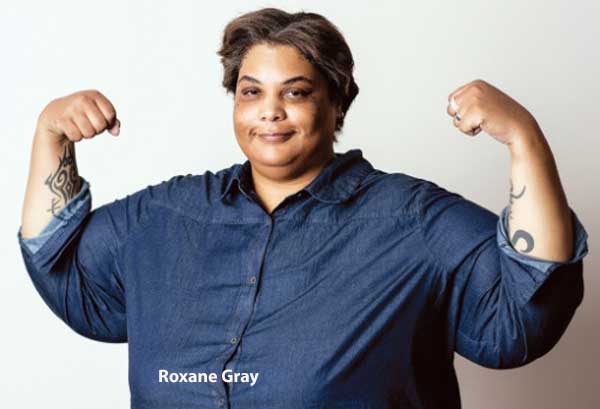
So obesity in America affects a higher percentage of black people than white people. Roxane Gay has written a lot about race and some about obesity in her book Bad Feminist and elsewhere. Roxane's black. She's fat. And she says those two things together have a huge impact on the way people perceive her.
Roxane Gay
Oh, I'm mistaken for a man all the time. Literally all the time. And I'm sorry, but I have huge breasts. There's just no way that you're mistaking me for a man. It's because they see me, and they see my skin. And they think, well, no, she can't possibly be a woman. And so that's the number one thing that happens, and it's actually extremely annoying.
Ira Glass
And it's white people, or it's black people also?
Roxane Gay
Oh, no, it's white people. Black people know what I am.
Ira Glass
You said being black adds another layer of bullshit to being overweight.
Roxane Gay
Yes, it does, like you're even lower on the sort of totem pole of dignity. People look right past you, and they don't think that you have anything of value to offer. Like, you can go into a car dealership, for example. And you're the very last person that the dealer will walk up to, because they think you can't buy a car.
Ira Glass
Has that happened to you at a car dealership?
Roxane Gay
Yeah, definitely. You know, I think the thing that happens most commonly is when I'm flying, I am oftentimes standing in the priority line, because I travel every week. And people will say, you know, this is the first-class line, as if I don't belong there.
Ira Glass
What do you say?
Roxane Gay
I say I know how to read and just leave it at that.
Ira Glass
You draw a distinction among different kinds of fatness. Can I have you talk about that?
Roxane Gay
Yeah, I mean, I think there are different kinds of fatness. There's the person who's maybe 20 pounds overweight, who's fine as they are. But if they want to lose weight, they just need to go on Slim Fast for a couple weeks or something.
And then you have people who are-- I like to call them Lane Bryant fat, which means they can still buy clothes at Lane Bryant, which goes up to 28 in size. And they're the ones I find that are often the strongest cheerleaders of, this is who I am, and, you have to take me as I am and respect me because of my body not despite it. And I admire that a great deal. But I think it's easier to feel that way when you have multiple places where you can buy clothes and feel pretty and move through the world.
Ira Glass
And you noted, Lindy is what you call Lane Bryant fat. She told me she was a size 22.
Roxane Gay
Yeah, I mean, and I don't mean that in a disrespectful way. I just mean she has access to spaces that people like me do not.
Ira Glass
Because what's your situation?
Roxane Gay
There's another level. I mean, then there's when you're super morbidly obese, where you can't really even find stores that can accommodate you. You don't fit in any public spaces, like movie theaters, public bathrooms, so on and so forth.
Ira Glass
Is the official name of what you are morbidly obese? That's the medical term?
Roxane Gay
No, the medical term is super morbidly obese.
Ira Glass
It's so mean.
Roxane Gay
Yes, it is. It's mean. It's dehumanizing.
Ira Glass
How much weight would you have to lose to be Lane Bryant fat?
Roxane Gay
200 pounds.
Ira Glass
You've said this thing-- fat is all I ever think about, and it's exhausting. What are you talking about? What do you mean?
Roxane Gay
I'm just hyper-obsessed. This whole nonstop anxiety conversation happens in my head all the time for just basic life functions, like, oh, I have to go do this, you know? Before I will go out to eat, I research a restaurant extensively on Google. And I look at Google Images. And I make sure, are the chairs solid? Do they have arms? What does the dining room look like? And if I don't think I'm going to be comfortable, I simply won't go.
It's sobering to realize just how the past 25 years have just been all about my body. And that's where I struggle with the fat acceptance movement. I think it's wonderful, and I think it's necessary and a necessary corrective.
But not all of us of have been able to get to that space where we don't care what other people think. I'm not all there yet, and I'm trying. But it's just really hard to not care what people think, especially when they're constantly telling you what they think.
Ira Glass
But part of it is being able to say, I feel good and fine about looking this way and being this way. And it seems like when I read you, I feel like, oh, well, that's a huge part of what you actually don't want to accept. You're saying, I happen to be this way, but I don't want to be this way. So why do I have to pretend that I'm OK with it?
Roxane Gay
Exactly. I don't want to pretend that I'm OK with it, and it's not judging anyone else. It's just that I know the realities of living in my body. I know how irritating and how exhausting it is to, for example, climb a set of stairs. And so I don't need to be thin, but I want to be in better shape. I want to have more stamina. And I honestly, because I'm vain, want to wear cuter clothes.
Ira Glass
That's normal.
Roxane Gay
Yeah, it is normal. But then there's a lot of people who don't like that attitude in me. But again, I think it's because they're Lane Bryant fat. And even when you're Lane Bryant fat, it's a struggle. But at least you have that. I don't even have that. And so it's like, let me feel the way I want to feel. Just let me be me.
Ira Glass
Roxane Gay. She's currently writing a book about being fat. It's called Hunger. By the way, we double-checked with Lane Bryant. This doesn't change Roxane's point at all, but they go up to 32.
Act Four. Cross Training.
Ira Glass
Act Four, Cross Trainers. It's so common to judge people on their weight. And of course, so often there is this moral dimension to it that is just gross-- this idea that you're fat because you're weak, you can't get control of your own life.
Today on our program, we're saying maybe that is not the most accurate or the most helpful way to look at this. This next story is about a very specialized example of this kind of moralism. You may know that there's a Christian weight loss movement. And it's big, with seminars and books like Help Lord, the Devil Wants Me Fat. Daniel Engber takes us into to a particularly extreme moment for this movement.
Daniel Engber
Paul Brinson loves to exercise. He's a runner. He's a biker. He's actually got a doctorate in physical education. And he spent a big portion of his life teaching people how to stay in shape. In the early 1970s, Paul got this dream job offer.
He got a call from the brand-new Oral Roberts University asking him to head up their new phys ed program. Paul was a Pentecostal Evangelical Christian. And Oral Roberts was maybe the most famous televangelist and faith healer in the world. Two of the biggest things in Paul's life were coming together-- God and exercise. So Paul and his wife moved out to Tulsa.
Paul Brinson
When I arrived at Oral Roberts University, within a month, he met with all the new faculty. And I remember sitting across from him in his home having dinner. And I asked him the question, why is physical fitness so important to you?
Because I was aware of the whole Pentecostal fundamentalist movement of Christianity, and exercise was not a part of that environment. And so I wondered, why was it important to Oral Roberts? And his response, I thought, was really interesting.
Now, he was a faith healer. He had traveled the world for those 25 years before we got there praying for the sick. And so he told me. He said, I've probably laid my hands and prayed for over a million-- well over a million-- people. And as I did that, little by little, I observed that I think I wouldn't have to pray for the healing and health of these individuals if they would just take care of themselves.
Daniel Engber
Oral Roberts wanted to teach a lifestyle to his students, what he called the whole man philosophy-- mind, body, spirit. They would all have equal importance at the school. Here's how the provost from back then, Carl Hamilton, explains it now.
Carl Hamilton
Our bodies are the home of the Holy Spirit. Making that home a fit one is one of the ways to glorify God and the Holy Spirit.
Daniel Engber
Paul would be in charge of making that home a fit one. In the fall of 1974, he took over the school's aerobics program at a brand new $2 million center with a fancy indoor track. Every student had to get a certain number of aerobics points per week. They might get a point for walking a mile or two for playing doubles tennis or five for bouncing on a trampoline.
Remember, this is 40 years before Fitbits. Back in 1974, just the idea of regular exercise was cutting edge. Jogging had only just become a thing. Aerobics was brand new. And here was ORU with all its students running around in headbands and tube socks. Then Oral Roberts had another idea-- to push the fitness program even further. Here's Paul.
Paul Brinson
At the graduation ceremonies of 1975, at the end of my first year there, Oral Roberts observed several students who graduated that he saw were obese. And within the next few days, he contacted Dr. Carl Hamilton, the provost of the university-- and this is, I understand, how this took place-- and said, I really don't want to see significantly overweight, obese students graduating, because it indicates that they have not met the goal of the university to be physically disciplined. And please develop some guidelines or some criteria so those students make progress or do not graduate. Maybe do not graduate is too strong a term, but that, , anyway, something is done about that.
Daniel Engber
In that moment, something changed. Paul's fitness program wouldn't just keep tabs on students' exercise. Now he'd make sure they weren't fat. Suddenly how you looked mattered.
Paul Brinson
And so we began doing skin fold testing that fall.
Daniel Engber
Skin fold testing. Just to give you a sense of how serious ORU was about this and how ambitious, at the beginning of every semester, every freshman went to what they called the human performance lab for skin fold testing. They were tested on a bunch of stuff-- their lipid levels, their lung capacity, and their body fat. First, they take a caliper to the thigh.
Paul Brinson
In the abdomen, in the back, in the triceps area.
Daniel Engber
And then in certain cases, they checked their measurements by dunking students in a giant bathtub. That was the gold standard for determining body fat in the 1970s.
Jerri Johnston
So they put you in a bathing suit, right? So the least amount of clothing that you can get away with. And of course, it was a Christian university, so it was almost like a turtleneck bathing suit, right?
Daniel Engber
Jerri Johnston was one of the students in Paul's new program. She says her fat test was like being in a carnival dunk tank.
Jerri Johnston
They would put you on this chair and lower you into the water-filled-- I would just call it-- it was almost like they were putting you in a big beaker. You know what I'm saying? And it would have water in it, and they would put you in the water. And they would tell you-- up to your neck. And they would say, blow out as much air as you can and then hold your breath as long as you can. And then they would put you on in the water. And then they would--
Daniel Engber
You were completely submerged?
Jerri Johnston
Yeah.
Daniel Engber
I mean, well--
Jerri Johnston
You know--
Daniel Engber
Did all of the students have to do that?
Jerri Johnston
I don't think so. I think just the people that were in-- just us special ones.
Daniel Engber
Jerri Johnston was too big. Students like her were put onto something called the Pounds Off plan. It all came down to their percentage body fat.
Paul Brinson
25% for males and 35% for females would be a good cutoff.
Daniel Engber
And then they had to lose some weight. Specifically, lose 8 pounds each semester and 1% body fat. This wasn't a suggestion. It was a requirement. The school told Jerri at the end of sophomore year that she'd have to keep on losing weight. She'd have to weigh 180 pounds by the time that she came back in the fall.
Jerri Johnston
Well, we came on campus. And so my roommate was there, and then my friend was there. And so I was like, oh. And then I said, let me go over. I have to go over the lab. We had to check in over there.
Daniel Engber
The human performance lab?
Jerri Johnston
Yeah, and check in. And then I'll be back, and we'll unpack and everything.
Daniel Engber
When she stepped on the scale, she came in at 184, 4 pounds too heavy.
Jerri Johnston
And they said, you're over this weight. We want you to go home and try to get the weight off this semester. And then you're welcome to come back next semester if you make the weight.
Daniel Engber
She'd have to go back to the dorm, say goodbye to her roommates, and go home. She'd been suspended for being fat.
Jerri Johnston
And I was astonished. And then they prayed with us. I was like, OK. And then--
[INTERPOSING VOICES]
Daniel Engber
They told you that in front of your parents, and then you all prayed together with your parents.
Jerri Johnston
Well, I was praying. My dad might have been acting like he was praying, because he was pretty upset that somebody was treating me like that. And so when I got back in the dorm and I was talking to my roommates and stuff, they were like, well, you can do it. You know, we'll pray for you this semester.
And I was just pretty devastated for the first couple of months that, you know, that that was the only thing that seemed to be important, right? What I look like and not what kind of person I was. And it was kind of a disclaimer of everything that a Christian university was supposed to be about, right?
I was like, really, God? Is this how you're judging people? I don't know how they reconcile that, you know? The thing is supposed to be, God looks inside and sees your heart, right? That's the premise. And that's how it's supposed to be.
Daniel Engber
In 1977, word got out about the Pounds Off program to people who didn't go to Oral Roberts.
Newscaster
The university wants to know what percentage of a student's weight is fat.
Daniel Engber
The Today Show, ABC, the BBC-- news crews arrived on campus to film the students doing their aerobics and sit in on special lectures for the fat kids.
Woman
You know, in the book of Romans, Paul says that all-- 8:28's the verse in case you want to look it up-- all things work together for good to those that love God, who are the called according to His purpose. Now, my goodness, how can anything like fat be good? And how can God have purpose in a person being fat?
Daniel Engber
In one report, the camera shows this guy, an overweight student, sitting shirtless in the lab. A woman in a white coat grabs his belly fat with a set of calipers during the interview.
Julie
How much weight have you lost in this Pounds Off program?
Man
I've lost 25 pounds since last summer, Julie.
Julie
And what do you think about that?
Man
Well, I'm thrilled with it. It's changed my life already. I didn't have the incentive without this program to do it on my own. In fact, without this program, I don't think I could survive, because I'd feel like-- I've just been reborn, actually.
Daniel Engber
Born again by losing weight. The newscasters made it seem like this was some crazy Christian thing. But it wasn't really all that strange. Paul Brinson may have taught what he called God's diet plan to the kids at Oral Roberts.
But by the mid-'70s, diet plans were as ubiquitous as they are today. Then, as now, being fat was not just seen by lots of people as a medical failing, but a moral one. That if you're fat, you must be lazy or lack self-discipline, that there's something wrong with our country that so many of us can't control our weight. As I looked into the history of weight loss culture, I came across this amazing tape of John F. Kennedy from a speech he gave on child welfare in 1962 and sounding not so different from Oral Roberts.
John F. Kennedy
There is nothing, I think, more unfortunate than to have soft, chubby, fat-looking children who go to watch their school play basketball every Saturday and regard that as their week's exercise.
Daniel Engber
But as people grew more obsessed with being thin, there was a backlash. So when the Pounds Off program started making headlines, plenty of people said it was discrimination. And plenty of others said basically, sure, it's discrimination but in a good way, like it could inspire lazy people to get in shape. The ACLU got involved. Paul was shaken up. He talked to my producer Zoe about this.
Zoe Chace
Were you afraid it would be hurtful to them?
Paul Brinson
Yes. That's a really good way to put it.
Zoe Chace
What were you nervous about?
Paul Brinson
I think every individual is different. For some individuals, I suppose if they were four pounds over and they didn't meet a goal that they were supposed to meet, not allowing them back in school-- for some individuals that could be a turning point where they could change their life around, and that would never happen again.
For other individuals, that can be a devastating experience that they never recover from. And who's to know which way that decision is going to go? And so at this point in my life, I'd say I would err on the side of, let's not hurt somebody.
Daniel Engber
Oral Roberts still has a physical fitness requirement. Students there still have to collect aerobics points. But they're not required to lose weight. When we asked the school about the Pounds Off program, the current administration said they hadn't heard of it. They said it was super difficult to comprehend that such a thing had existed. But I don't think it's difficult at all. Stuff like this is all around us. Oral Roberts just made it more explicit.
Ira Glass
Daniel Engber. He writes about obesity for Slate magazine and The New York Times.
[MUSIC - BETTY FORD BOYS, "PHYSICAL FITNESS"]
Act Five. An Immodest Proposal.
Ira Glass
Act Five, An Immodest Proposal. So here in the podcast and the internet version of our radio show this week, we are adding this. I just thought it would be nice to end the show with one last anecdote from Lindy West's book. And this is kind of an uplifting one. I hope that's not bad to say.
Lindy is married to this guy, Aham, and raising his kids with him. And as she points out in the book, he is conventionally handsome, very tall. And when the two of them are out together, sometimes people assume that because he is slim and good-looking and she is fat that they're not a couple.
Even if they're at a bar holding hands, looking exactly like a couple, people say stuff to them like, so you guys roommates? Women hit on him in front of Lindy. She read for me-- and this is what we're going to close out with today-- the story of their engagement.
Lindy West
Aham took me out for dinner on my 32nd birthday, then suggested a quick nightcap at our neighborhood bar. Everyone was there. It was a surprise. Our friends, our families, the kids, a cake. Aham took my hand and led me to the back. There was a paper banner that said my name.
Our friends Evan and Sam were playing a duet on cello and bass. I was confused. Why were there somber strings at my birthday party? Why was Aham doing intense face? Wait, it's almost 10:00 PM on a school night, and we're at a bar. Why are the kids here?
Then it all happened at once-- the knee, the ring, the speech, the question, the tears-- all the hits. It was a full-blown grand gesture. Later, I asked him why he did it that way-- such a big spectacle, such an event, not precisely our style. And I expected something cliche but sweet like, "I wanted to make sure our community was part of our marriage," or, "I wanted everyone to know how much I love you."
Instead, he said, one time, when you were drunk, you told me, "if you ever propose to me, don't do it in the bullshit way that dudes usually treat fat girls-- like it's a secret, or you're just trying to keep me from leaving you. Thin girls get public proposals, like those dudes are winning a fucking prize. Fat chicks deserve that too."
© 2016 This American Life