chapter fifteen
The Keeper
We sat on the grassy bank below the hedge, waiting for darkness to fall. The sun had set now and the sky was a pale smoke blue, faintly glazed with yellow. In the wood behind us the shadows and the spaces in between the trees were turning from grey to black.
‘You could offer me anywhere in the world at this moment,’ my father said, ‘and I wouldn’t go.’
His whole face was glowing with happiness.
‘We did it, Danny,’ he said, laying a hand gently on my knee. ‘We pulled it off. Doesn’t that make you feel good?’
‘Terrific,’ I said. ‘But it was a bit scary while it lasted.’
‘Ah, but that’s what poaching’s all about,’ he said. ‘It scares the pants off us. That’s why we love it. Look, there’s a hawk!’
I looked where he was pointing and saw a kestrel hawk hovering superbly in the darkening sky above the ploughed field across the track.
‘It’s his last chance for supper tonight,’ my father said. ‘He’ll be lucky if he sees anything now.’
Except for the swift fluttering of its wings, the hawk remained absolutely motionless in the sky. It seemed to be suspended by some invisible thread, like a toy bird hanging from the ceiling. Then suddenly it folded its wings and plummeted towards the earth at an incredible speed. This was a sight that always thrilled me.
‘What do you think he saw, Dad?’
‘A young rabbit perhaps,’ my father said. ‘Or a vole or a field-mouse. None of them has a chance when there’s a kestrel overhead.’
We waited to see if the hawk would fly up again. He didn’t, which meant he had caught his prey and was eating it on the ground.
‘How long does a sleeping pill take to work?’ I asked.
‘I don’t know the answer to that one,’ my father said. ‘I imagine it’s about half an hour.’
‘It might be different with pheasants though, Dad.’
‘It might,’ he said. ‘We’ve got to wait a while anyway, to give the keepers time to go home. They’ll be off as soon as it gets dark. I’ve brought an apple for each of us,’ he added, fishing into one of his pockets.
‘A Cox’s Orange Pippin,’ I said, smiling. ‘Thank you very much.’
We sat there munching away.
‘One of the nice things about a Cox’s Orange Pippin,’ my father said, ‘is that the pips rattle when it’s ripe. Shake it and you can hear them rattling.’
I shook my half-eaten apple. The pips rattled.
‘Look out!’ he whispered sharply. ‘There’s someone coming.’
The man had appeared suddenly and silently out of the dusk and was quite close before my father saw him. ‘It’s another keeper,’ he whispered. ‘Just sit tight and don’t say a word.’
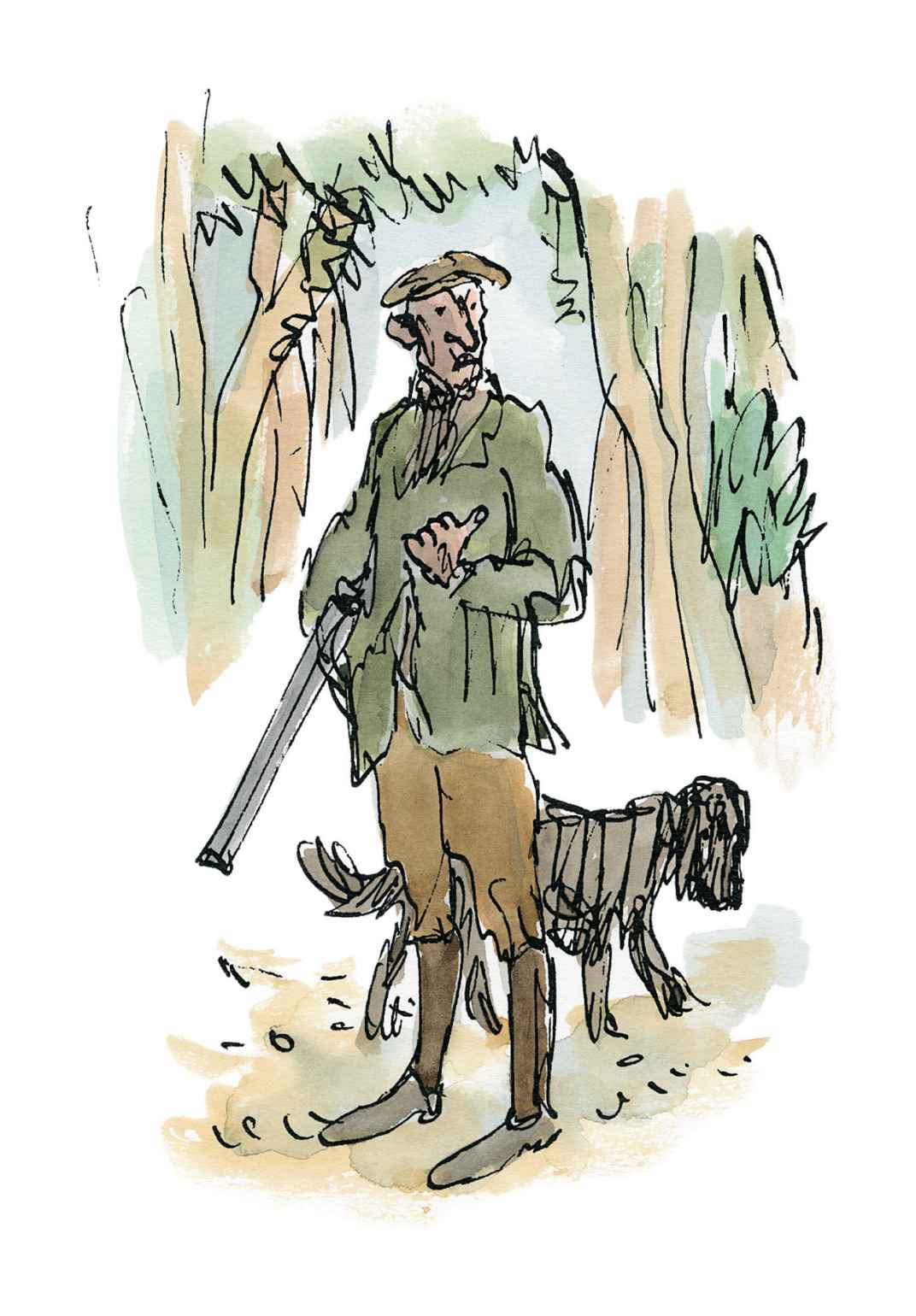
We both watched the keeper as he came down the track towards us. He had a shotgun under his arm and there was a black Labrador walking at his heel. He stopped when he was a few paces away and the dog stopped with him and stayed behind him, watching us through the keeper’s legs.
‘Good evening,’ my father said, nice and friendly.
This one was a tall bony man with a hard eye and a hard cheek and hard dangerous hands.
‘I know you,’ he said, coming closer. ‘I know the both of you.’
‘You’re from the fillin’-station. Right?’
His lips were thin and dry with some sort of a brownish crust over them.
‘You’re from the fillin’-station and that’s your boy and you live in that filthy old caravan. Right?’
‘What are we playing?’ my father said. ‘Twenty Questions?’
The keeper spat out a big gob of spit and I saw it go sailing through the air and land with a plop on a patch of dry dust six inches from my father’s plaster foot. It looked like a little baby oyster lying there.
‘Beat it,’ the man said. ‘Go on. Get out.’
When he spoke, his upper lip lifted above the gum and I could see a row of small discoloured teeth. One of them was black. The others were brownish-yellow, like the seeds of a pomegranate.
‘This happens to be a public footpath,’ my father said. ‘Kindly do not molest us.’
The keeper shifted the gun from his left arm to his right.
‘You’re loiterin’,’ he said, ‘with intent to commit a nuisance. I could run you in for that.’
‘No you couldn’t,’ my father said.
All this made me rather nervous.
‘I see you broke your foot,’ the keeper said. ‘You didn’t by any chance fall into a hole in the ground, did you?’
‘It’s been a nice walk, Danny,’ my father said, putting a hand on my knee, ‘but it’s time we went home for our supper.’ He stood up and so did I. We wandered off down the track the way we had come, leaving the keeper standing there, and soon he was out of sight in the half-darkness behind us.
‘That’s the head keeper,’ my father said. ‘His name is Rabbetts.’
‘Do we have to go home, Dad?’
‘Home!’ my father cried. ‘My dear boy, we’re just beginning! Come in here.’
There was a gate on our right leading into a field, and we climbed over it and sat down behind the hedge.
‘Mr Rabbetts is also due for his supper,’ my father said. ‘You mustn’t worry about him.’
We sat quietly behind the hedge waiting for the keeper to walk past us on his way home. A few stars were showing, and a bright three-quarter moon was coming up over the hills behind us in the east.
‘We have to be careful of that dog,’ my father said. ‘When they come by, hold your breath and don’t move a muscle.’
‘Won’t the dog smell us out anyway?’ I asked.
‘No,’ my father said. ‘There’s no wind to carry the scent. Look out! Here they come! Don’t move!’
The keeper came loping softly down the track with the dog padding quick and soft-footed at his heel. I took a deep breath and held it as they went by.
When they were some distance away, my father stood up and said, ‘It’s all clear. He won’t be coming back tonight.’
‘Are you sure?’
‘I’m positive, Danny.’
‘What about the other one, the one in the clearing?’
‘He’ll be gone too.’
‘Mightn’t one of them be waiting for us at the bottom of the track?’ I asked. ‘By the gap in the hedge?’
‘There wouldn’t be any point in him doing that,’ my father said. ‘There’s at least twenty different ways of reaching the road when you come out of Hazell’s Wood. Mr Rabbetts knows that.’
We stayed behind the hedge for a few minutes more just to be on the safe side.
‘Isn’t it a marvellous thought though, Danny,’ my father said, ‘that there’s about two hundred pheasants at this very moment roosting up in those trees and already they’re beginning to feel groggy? Soon they’ll be falling out of the branches like raindrops!’
The three-quarter moon was well above the hills now, and the sky was filled with stars as we climbed back over the gate and began walking up the track towards the wood.
chapter sixteen
The Champion of the World
It was not as dark as I had expected it to be inside the wood this time. Little glints and glimmers from the brilliant moon outside shone through the leaves and gave the place a cold eerie look.
‘I brought a light for each of us,’ my father said. ‘We’re going to need it later on.’ He handed me one of those small pocket torches shaped like a fountain-pen. I switched mine on. It threw a long narrow beam of surprising brightness, and when I moved it around it was like waving a very long white wand among the trees. I switched it off.
We started walking back towards the clearing where the pheasants had eaten the raisins.
‘This,’ my father said, ‘will be the first time in the history of the world that anyone has even tried to poach roosting pheasants. Isn’t it marvellous though, to be able to walk around without worrying about keepers?’
‘You don’t think Mr Rabbetts might have sneaked back again just to make sure?’
‘Never,’ my father said. ‘He’s gone home to his supper.’
I couldn’t help thinking that if I had been Mr Rabbetts, and if I had seen two suspicious-looking characters lurking just outside my precious pheasant wood, I certainly would not have gone home to my supper. My father must have sensed my fears because once again he reached out and took my hand in his, folding his long warm fingers around mine.
Hand in hand, we threaded our way through the trees towards the clearing. In a few minutes we were there. ‘Here’s where we threw the raisins,’ my father said.
I peered through the bushes. The clearing lay pale and milky in the moonlight.
‘What do we do next?’ I asked.
‘We stay here and wait,’ my father said. I could just make out his face under the peak of his cap, the lips pale, the cheeks flushed, the eyes shining bright.
‘Are they all roosting, Dad?’
‘Yes. They’re all around us. They don’t go far.’
‘Could I see them if I shone my light up into the branches?’
‘No,’ he said. ‘They go up pretty high and they hide in among the leaves.’
We stood waiting for something to happen.
Nothing happened. It was very quiet there in the wood.
‘Danny,’ my father said.
‘Yes, Dad?’
‘I’ve been wondering how a bird manages to keep its balance sitting on a branch when it’s asleep.’
‘I don’t know,’ I said. ‘Why?’
‘It’s very peculiar,’ he said.
‘What’s peculiar?’
‘It’s peculiar that a bird doesn’t topple off its perch as soon as it goes to sleep. After all, if we were sitting on a branch and we went to sleep, we would fall off at once, wouldn’t we?’
‘Birds have claws and long toes, Dad. I expect they hold on with those.’
‘I know that, Danny. But I still don’t understand why the toes keep gripping the perch once the bird is asleep. Surely everything goes limp when you fall asleep.’
I waited for him to go on.
‘I was just thinking,’ he said, ‘that if a bird can keep its balance when it’s asleep, then surely there isn’t any reason why the pills should make it fall down.’
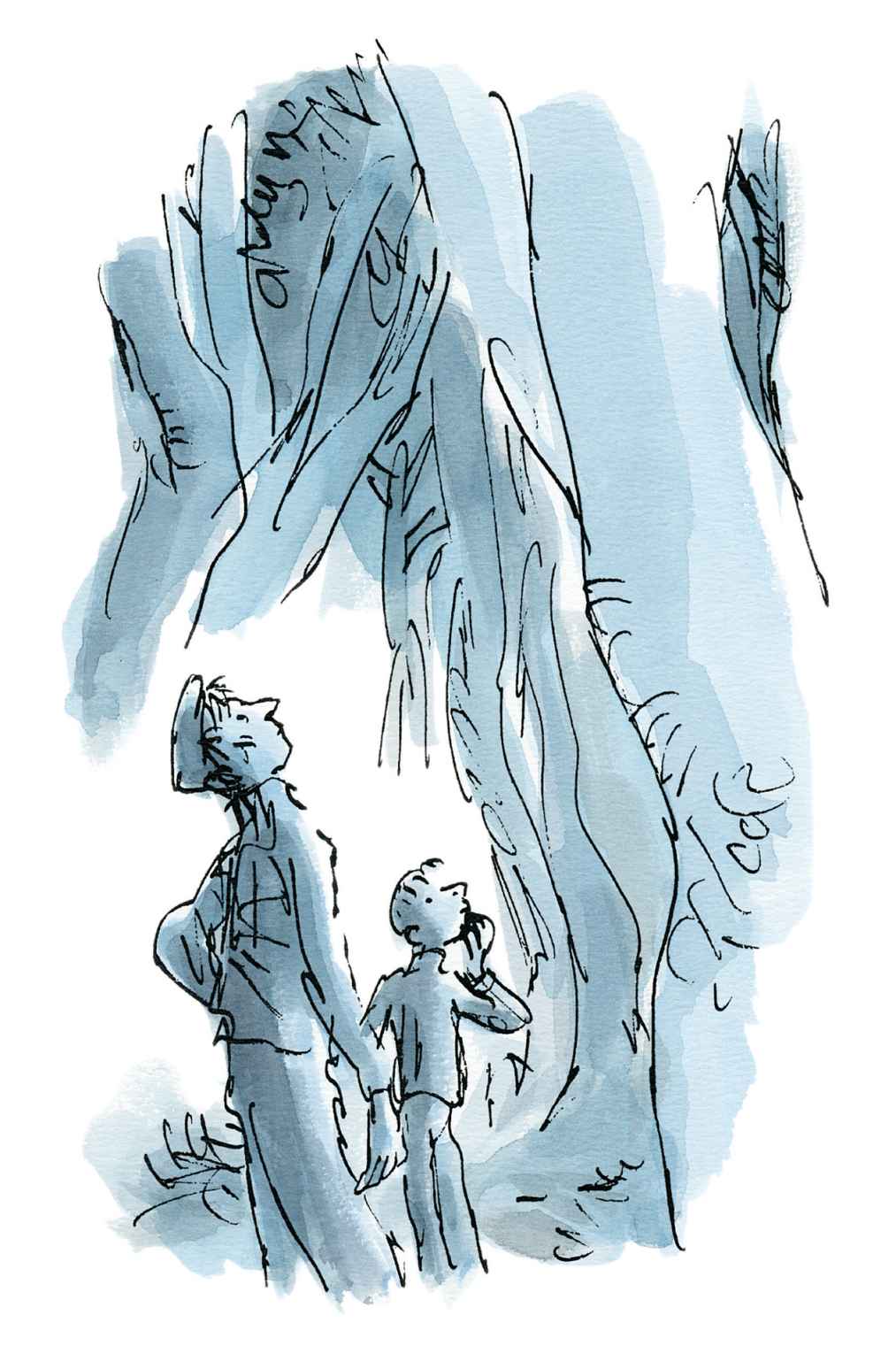
‘It’s doped,’ I said. ‘Surely it will fall down if it’s doped.’
‘But isn’t that simply a deeper sort of sleep?’ he said. ‘Why should we expect it to fall down just because it’s in a deeper sleep?’
There was a gloomy silence.
‘I should have tested it with roosters,’ my father added. Suddenly the blood seemed to have drained right out of his cheeks. His face was so pale I thought he might be going to faint. ‘My dad would have tested it with roosters before he did anything else,’ he said.
At that moment there came a soft thump from the wood behind us.
‘What was that?’ I asked.
‘Ssshh!’
We stood listening.
Thump!
‘There’s another!’ I said.
It was a deep muffled sound as though a bag of sand had been dropped to the ground.
Thump!
‘They’re pheasants!’ I cried.
‘Wait!’
‘They must be pheasants, Dad!’
Thump! Thump!
‘You may be right, Danny!’
We switched on our torches and ran towards the sounds.
‘Where were they?’ my father said.
‘Over here, Dad! Two of them were over here!’
‘I thought they were this way. Keep looking! They can’t be far!’
We searched for about a minute.
‘Here’s one!’ my father called.
When I got to him he was holding a magnificent cock bird in both hands. We examined it closely with our torches.
‘It’s doped to high heaven,’ my father said. ‘It won’t wake up for a week.’
Thump!
‘There’s another!’ I cried.
Thump! Thump!
‘Two more!’ my father yelled.
Thump!
Thump! Thump! Thump!
‘Jeepers!’ my father said.
Thump! Thump! Thump! Thump!
Thump! Thump!
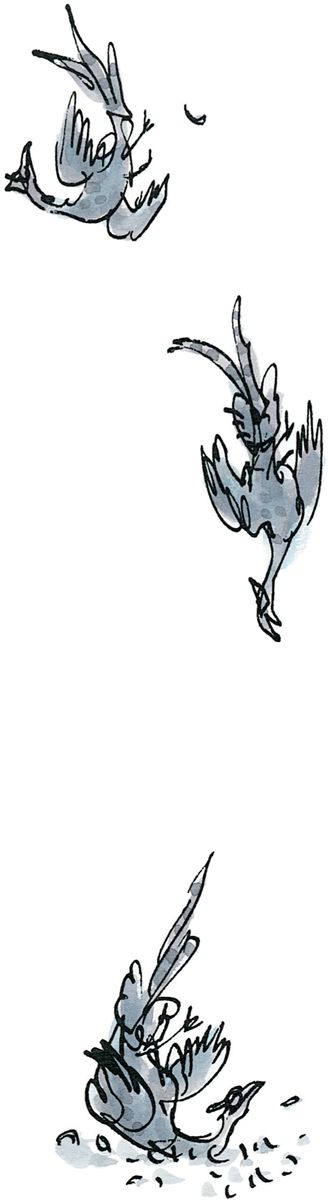
All around us the pheasants were starting to rain down out of the trees. We began rushing round madly in the dark, sweeping the ground with our torches.
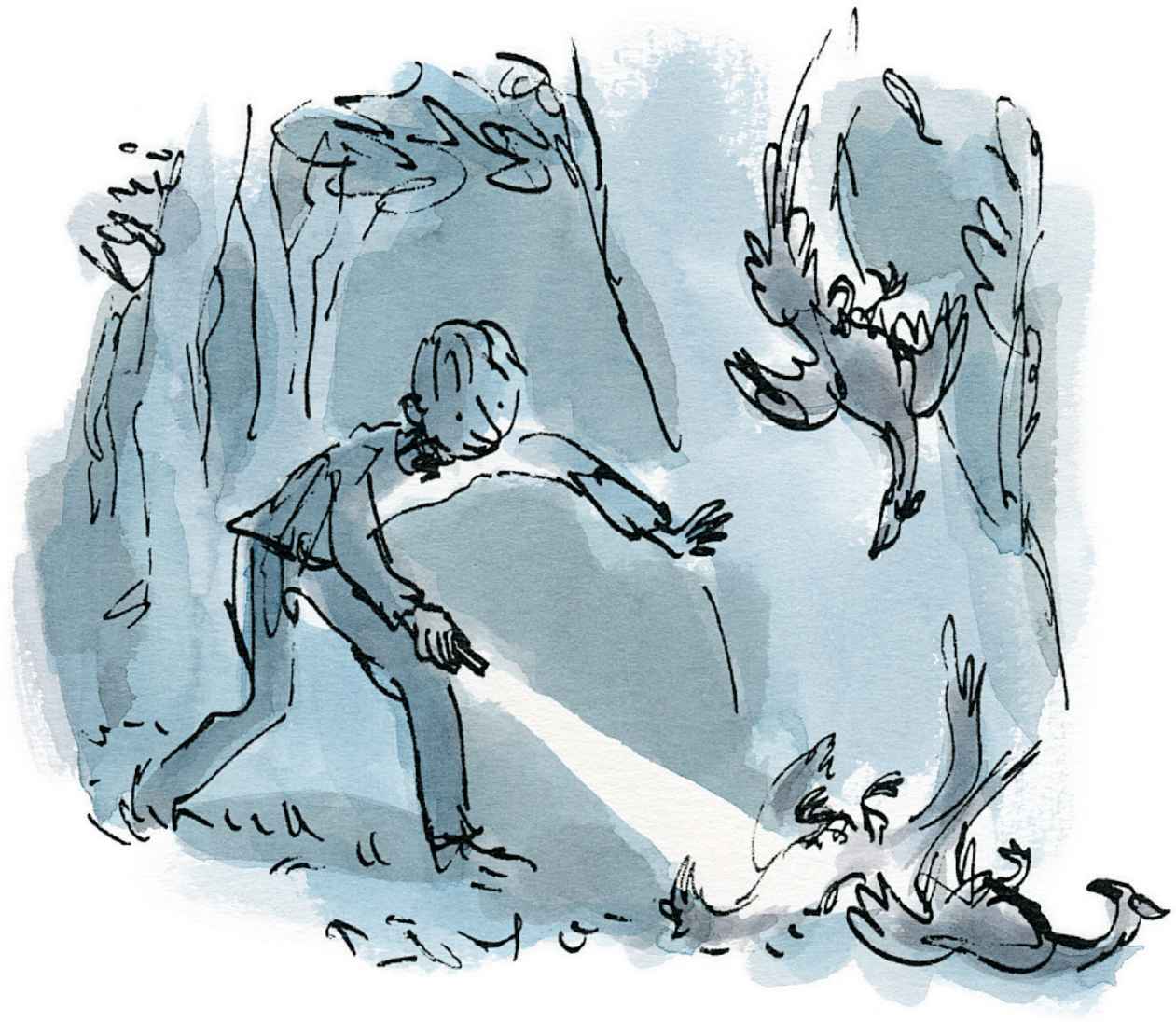
Thump! Thump! Thump! This lot fell almost on top of me. I was right under the tree as they came down and I found all three of them immediately – two cocks and a hen. They were limp and warm, the feathers wonderfully soft in the hand.
‘Where shall I put them, Dad?’ I called out.
‘Lay them here, Danny! Just pile them up here where it’s light!’
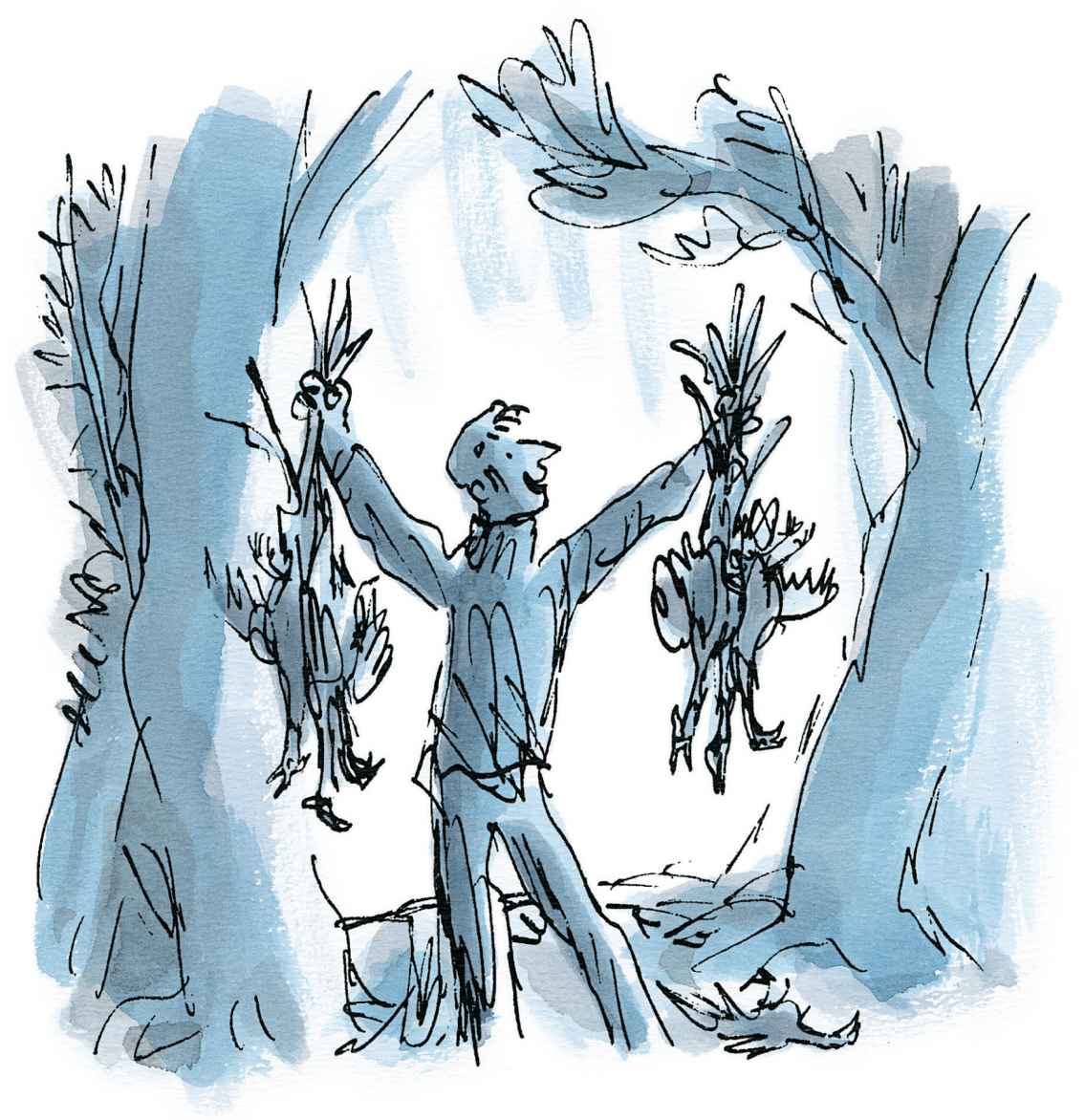
My father was standing on the edge of the clearing with the moonlight streaming down all over him and a great bunch of pheasants in each hand. His face was bright, his eyes big and bright and wonderful, and he was staring around him like a child who has just discovered that the whole world is made of chocolate.
Thump!
Thump! Thump!
‘It’s too many!’ I said.
‘It’s beautiful!’ he cried. He dumped the birds he was carrying and ran off to look for more.
Thump! Thump! Thump! Thump!
Thump!
It was easy to find them now. There were one or two lying under every tree. I quickly collected six more, three in each hand, and ran back and dumped them with the others. Then six more. Then six more after that.
And still they kept falling.
My father was in a whirl of excitement now, dashing about like a mad ghost under the trees. I could see the beam of his torch waving round in the dark, and every time he found a bird he gave a little yelp of triumph.
Thump! Thump! Thump!
‘Hey Danny!’ he shouted.
‘Yes, I’m over here! What is it, Dad?’
‘What do you think the great Mr Victor Hazell would say if he could see this?’
‘Don’t talk about it,’ I said.
For three or four minutes, the pheasants kept on falling. Then suddenly they stopped.
‘Keep searching!’ my father shouted. ‘There’s plenty more on the ground!’
‘Dad,’ I said, ‘don’t you think we ought to get out while the going’s good?’
‘Never!’ he shouted. ‘Not on your life!’
We went on searching. Between us we looked under every tree within a hundred yards of the clearing, north, south, east and west, and I think we found most of them in the end. At the collecting-point there was a pile of pheasants as big as a bonfire.
‘It’s a miracle,’ my father was saying. ‘It’s an absolute miracle.’ He was staring at them in a kind of trance.
‘Shouldn’t we just take about six each and get out quick?’ I said.
‘I would like to count them, Danny.’
‘Dad! Not now!’
‘I must count them.’
‘Can’t we do that later?’
‘One …
‘Two …
‘Three …
‘Four …’
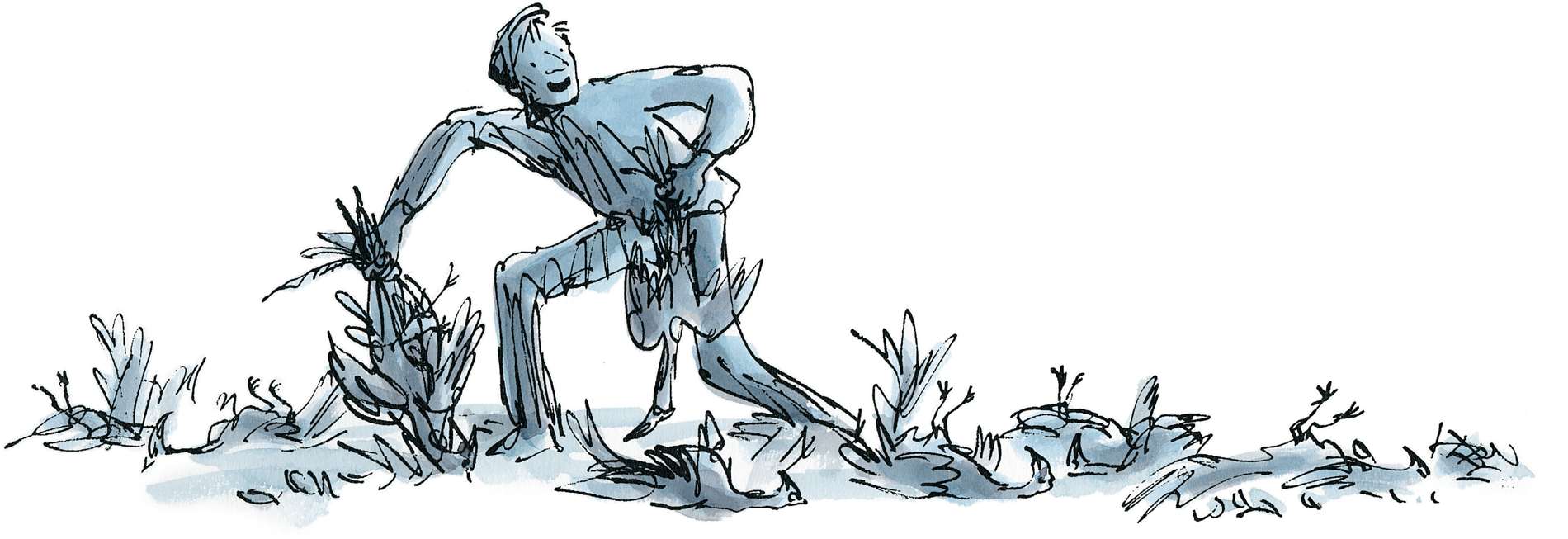
He began counting them very carefully, picking up each bird in turn and laying it carefully to one side. The moon was directly overhead now, and the whole clearing was brilliantly lit up. I felt as though I was standing in the glare of powerful headlamps.
‘A hundred and seventeen … a hundred and eighteen … a hundred and nineteen … one hundred and twenty!’ he cried. ‘It’s an all-time record!’ He looked happier than I had ever seen him in his life. ‘The most my dad ever got was fifteen and he was drunk for a week afterwards!’ he said. ‘But this … this, my dear boy, is an all-time world record!’
‘I expect it is,’ I said.
‘And you did it, Danny! The whole thing was your idea in the first place!’
‘I didn’t do it, Dad.’
‘Oh yes you did! And you know what that makes you, my dear boy? It makes you the champion of the world!’ He pulled up his sweater and unwound the two big cotton sacks from round his belly. ‘Here’s yours,’ he said, handing one of them to me. ‘Fill it up quick!’
The light of the moon was so strong I could read the print across the front of the sack. J. W. CRUMP, it said, KESTON FLOUR MILLS, LONDON S.W.17.
‘You don’t think that keeper with the brown teeth is watching us this very moment from behind a tree?’ I said.
‘No chance,’ my father said. ‘If he’s anywhere he’ll be down at the filling-station waiting to catch us coming home with the loot.’
We started loading the pheasants into the sacks. They were soft and floppy-necked and the skin underneath the feathers was still warm.
‘We can’t possibly carry this lot all the way home,’ I said.
‘Of course not. There’ll be a taxi waiting for us on the track outside the wood.’
‘A taxi!’ I said.
‘My dad always made use of a taxi on a big job,’ he said.
‘Why a taxi, for heaven’s sake?’
‘It’s more secret, Danny. Nobody knows who’s inside a taxi except the driver.’
‘Which driver?’ I asked.
‘Charlie Kinch. He’s only too glad to oblige.’
‘Does he know about poaching, too?’
‘Old Charlie Kinch? Of course he does. He’s poached more pheasants in his time than we’ve sold gallons of petrol.’
We finished loading the sacks and my father humped his on to his shoulders. I couldn’t do that with mine. It was too heavy for me. ‘Drag it,’ my father said. ‘Just drag it along the ground.’ My sack had sixty birds inside it and it weighed a ton. But it slid quite easily over the dry leaves with me walking backwards and pulling it with both hands.
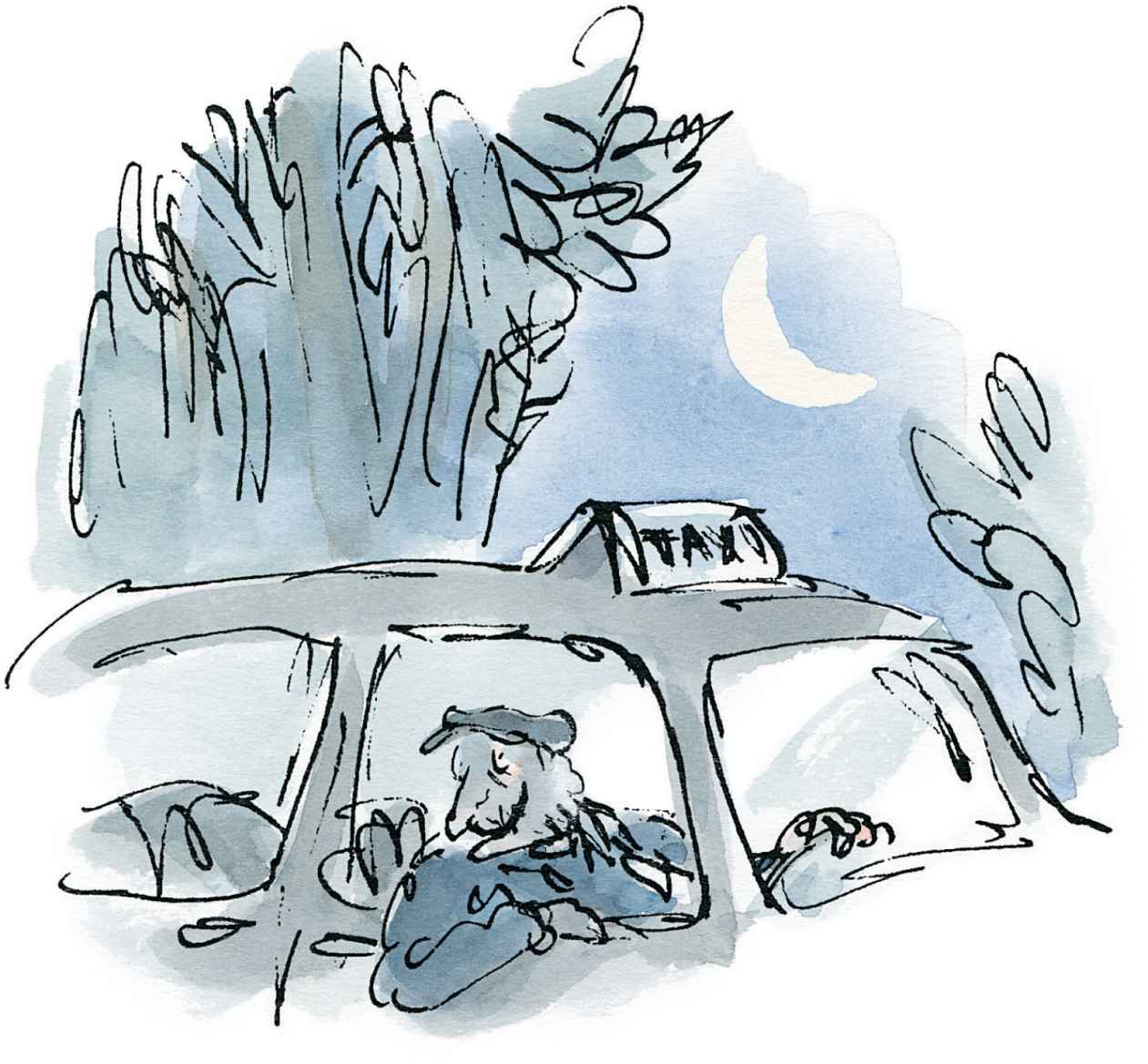
We came to the edge of the wood and peered through the hedge on to the track. My father said ‘Charlie boy’ very softly, and the old man behind the wheel of the taxi poked his head out into the moonlight and gave us a sly toothless grin. We slid through the hedge, dragging the sacks after us along the ground.
‘Hello-hello-hello,’ Charlie Kinch said. ‘What’s all this then?’
chapter seventeen
The Taxi
Two minutes later we were safely inside the taxi and cruising slowly down the bumpy track towards the road.
My father was bursting with pride and excitement. He kept leaning forward and tapping Charlie Kinch on the shoulder and saying, ‘How about it, Charlie? How about this for a haul?’ And Charlie kept glancing back pop-eyed at the huge bulging sacks. ‘Cripes, man!’ he kept saying. ‘How did you do it?’
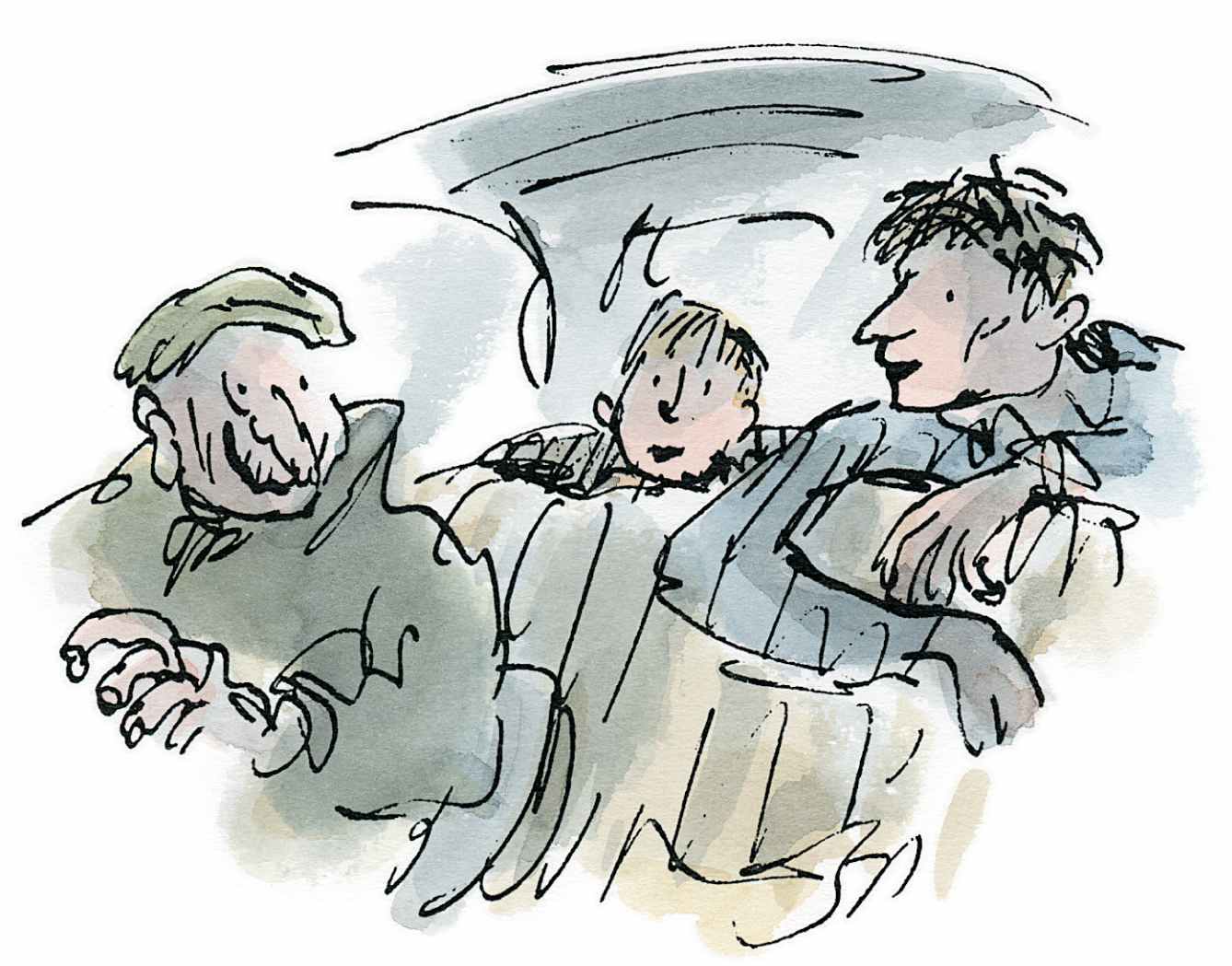
‘Danny did it!’ my father said proudly. ‘My son Danny is the champion of the world.’
Then Charlie said, ‘I reckon pheasants is going to be a bit scarce up at Mr Victor Hazell’s opening-day shoot tomorrow, eh, Willum?’
‘I imagine they are, Charlie,’ my father said. ‘I imagine they are.’
‘All those fancy folk,’ old Charlie said, ‘driving in from miles around in their big shiny cars and there won’t be a blinking bird anywhere for them to shoot!’ Charlie Kinch started chuckling and chortling so much he nearly drove off the track.
‘Dad,’ I said. ‘What on earth are you going to do with all these pheasants?’
‘Share them out among our friends,’ my father said. ‘There’s a dozen of them for Charlie here to start with. All right, Charlie?’
‘That suits me,’ Charlie said.
‘Then there’ll be a dozen for Doc Spencer. And another dozen for Enoch Samways …’
‘You don’t mean Sergeant Samways?’ I gasped.
‘Of course,’ my father said. ‘Enoch Samways is one of my very oldest friends.’
‘Enoch’s a good boy,’ Charlie Kinch said. ‘He’s a lovely lad.’
Sergeant Enoch Samways, as I knew very well, was the village policeman. He was a huge, plump man with a bristly black moustache, and he strode up and down our High Street with the proud and measured tread of a man who knows he is in charge. The silver buttons on his uniform sparkled like diamonds and the mere sight of him frightened me so much I used to cross over to the other side of the street whenever he approached.
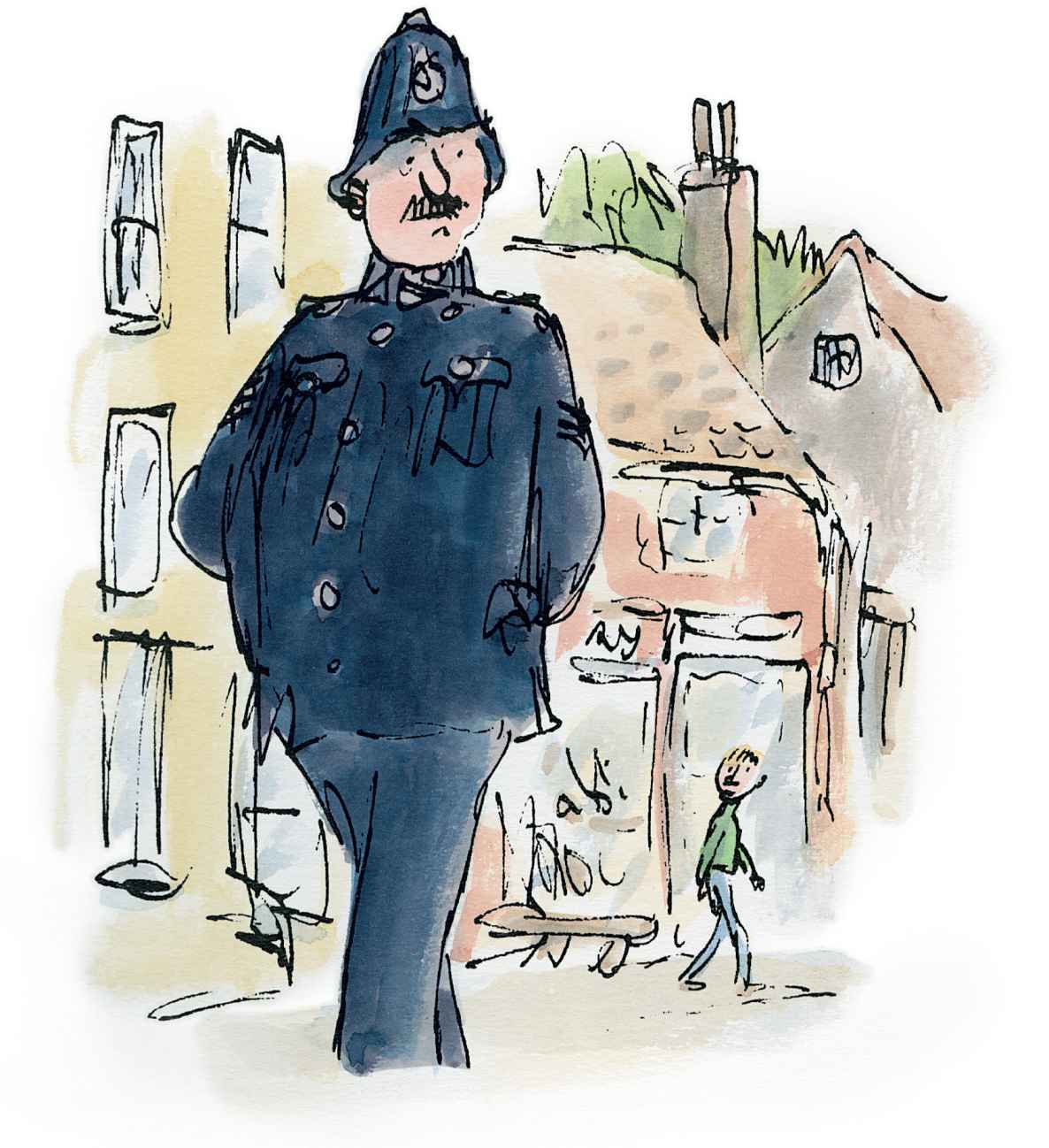
‘Enoch Samways likes a piece of roasted pheasant as much as the next man,’ my father said.
‘I reckon he knows a thing or two about catching ’em as well,’ Charlie Kinch said.
I was astounded. But I was also rather pleased because now that I knew the great Sergeant Samways was human like the rest of us, perhaps I wouldn’t be so scared of him in future.
‘Are you going to share them out tonight, Dad?’ I asked.
‘Not tonight, Danny, no. You must always walk home empty-handed after a poaching trip. You can never be sure Mr Rabbetts or one of his gang isn’t waiting for you by the front door to see if you’re carrying anything.’
‘Ah, but he’s a crafty one, that Mr Rabbetts is,’ Charlie Kinch said. ‘The best thing is to pour a pound of sugar in the petrol tank of his car when he ain’t looking, then he can’t ever come snooping round your house later on. We always made sure to give the keepers a little sugar in their tanks before we went out on a poach. I’m surprised you didn’t bother to do that, Willum, especially on a big job like this one.’
‘What does the sugar do?’ I asked.
‘Blimey, it gums up the whole ruddy works,’ Charlie Kinch said. ‘You’ve got to take the entire engine to pieces before it’ll go again after it’s had the sugar. Ain’t that right, Willum?’
‘That’s quite right, Charlie,’ my father said.
We came off the bumpy track on to the main road and Charlie Kinch got the old taxi into top gear and headed for the village. ‘Are you dumping these birds at Mrs Clipstone’s place tonight?’ he asked.
‘Yes,’ my father told him. ‘Drive straight to Mrs Clipstone’s.’
‘Why Mrs Clipstone’s?’ I asked. ‘What’s she got to do with it?’
‘Mrs Clipstone delivers everyone’s pheasants,’ my father said. ‘Haven’t I told you that?’
‘No, Dad, you haven’t,’ I said, aghast. I was now more stunned than ever. Mrs Grace Clipstone was the wife of the Reverend Lionel Clipstone, the local vicar.
‘Always choose a respectable woman to deliver your pheasants,’ my father announced. ‘That’s correct, Charlie, isn’t it?’
‘Mrs Clipstone’s a right smart lady,’ Charlie said.
I could hardly believe what they were saying. It was beginning to look as though just about everybody in the entire district was in on this poaching lark.
‘The vicar is very fond of roasted pheasant for his dinner,’ my father said.
‘Who isn’t?’ Charlie Kinch said, and he started chuckling to himself all over again.
We were driving through the village now, and the street-lamps were lit and the men were wandering home from the pubs, all full of beer. I saw Mr Snoddy, my headmaster, a bit wobbly on his feet and trying to let himself in secretly through the side door of his house, but what he didn’t see was Mrs Snoddy’s sharp frosty face sticking out of the upstairs window, watching him.
‘You know something, Danny,’ my father said. ‘We’ve done these birds a great kindness putting them to sleep in this nice painless way. They’d have had a nasty time of it tomorrow if we hadn’t got them first.’
‘Rotten shots, most of them fellows are,’ Charlie Kinch said. ‘At least half the birds finish up winged and wounded.’
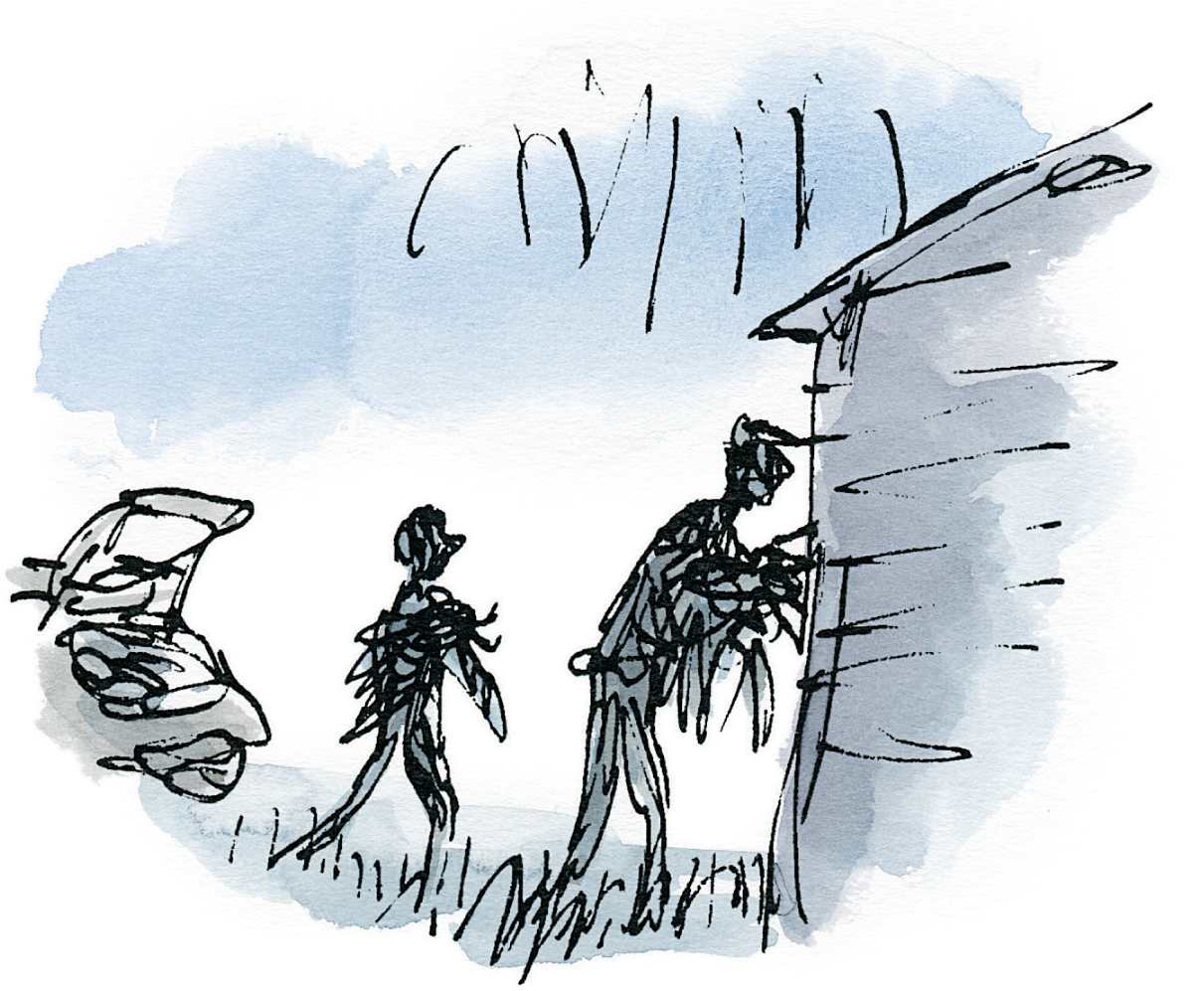
The taxi turned left and swung in through the gates of the vicarage. There were no lights in the house and nobody met us. My father and I got out and dumped the pheasants in the coal-shed at the rear. Then we said goodbye to Charlie Kinch and began to walk the two miles back to the filling-station.
HTML style by Stephen Thomas, University of Adelaide. Modified by Skip for ESL Bits English Language Learning.