[ Unspoken: Take out a piece of A4 or Letter size paper ]
244 Million
Mona Chalabi
That piece of paper you’re holding now represents all 244 million migrants in the world today. All of these statistics are from the United Nations Population Fund’s 2015 data. Even more people would migrate if they could.
Let’s find out more about those 244 million.
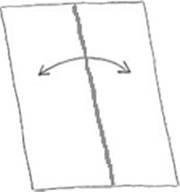
Step 1. Fold the piece of paper in half along the middle line. Now you can see 51 percent of the paper. That represents the 51 percent of all international migrants that end up in high-income countries that are part of the Organisation for Economic Co-operation and Development. Another 20% move to other rich countries that aren’t part of that club, 25% will move to middle-income countries, and the remaining 4% head to low-income countries.
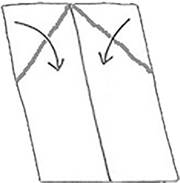
Step 2. Unfold the piece of paper, and fold the two top corners inward along the outermost lines. Now you can see about 78 percent of the paper. That represents the percentage of all migrants that are age twenty-five and older.
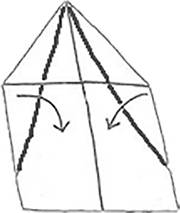
Step 3. Fold the paper inward again along the next lines. Now you can see about 54 percent of the paper. Imagine that just 54 percent of those migrants send money back home. That would equal $309,218,110,000. People working abroad often send money to their friends and families, but up to 20 percent of their hard-earned cash can vanish in transfer fees charged by big companies.
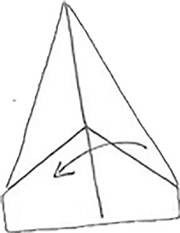

Step 4. Fold the paper away from you along the middle and then fold it along the last line. Now you can see about 11 percent of the paper. Out of everyone who has migrated, 12 percent, or about 30 million, are refugees or stateless people.

Now you have an airplane. How far can you fly?
How to Center Your Own Story
by me, Jade Chang
A month after my novel was published, we lost the election. I was in the midst of a book tour when it happened, spending an extra day in Austin before driving to a bookstore in Dallas. I’d made an early departure from an election viewing party the previous night and woke up on a borrowed futon to a gray and drizzly sky, scared that the world had changed.
Was everything going to be different? Was this the beginning of the end? Were we about to enter a time of internment camps and exclusion acts and even more racist policing? All fall I’d felt a heaving, an unraveling at the edges, an impending, upending something, and now it really seemed like the worst would actually happen.
I packed up and got into my rental car, maps prepped for the three-hour drive. On the road, everything felt ominous. Was the guy in that truck keeping pace with me on purpose? What about the one who zoomed past, honking? I sped into the fast lane, ready to outrun them all, when I realized that I didn’t have enough gas to get to Dallas. I slid back across the highway, gunning for the next exit. Oh great. Waco. A town that exists in the American imagination as a land of extremist white supremacists. Unfair? Probably. At least they’d definitely have a gas station.
I pulled into the first one, relieved that no one else was there. I popped open the lid, unscrewed the gas cap, and tried to pay at the pump.
CARD UNREADABLE. Dammit. I’d have to go inside.
Across the lot, the store gleamed bright and new and frightening. Anyone could be in there. And maybe now they’d feel limitless, emboldened, like they could do anything to me. But I couldn’t get to Dallas without gas, so I swallowed that unfamiliar fear, pushed open the door, and stepped into the freezing-cold sugar-and-coffee smell that marks every American convenience store.
You know that moment, early in a relationship, when you both realize that you actually like each other? And you smile and smile at each other because you both feel seen and loved and unaccountably relieved? That’s what happened when I stepped into the store. I looked at the man behind the counter and he looked at me with the same worried eyes, and in our shared relief we both smiled at each other so hard that you’d swear we were soul mates.
“Hi,” he said. “Crazy day! Strange day! Nice to see you!”
I nodded more vigorously than I’d ever nodded before, and we smiled again.
Phew! our eyes said. It’s you!
Do I even need to tell you that we were both brownish? We were.
I paid for my gas and headed toward the door, waving, feeling warm and relieved. But as I walked back out into the strange gray world, as I jammed the pump into my rented car and watched the numbers tick forward, my anger rose too. Why should I feel so relieved? Our laws hadn’t changed, the structure of our republic hadn’t changed, our president was still black. Yes, there were people who might feel more license to attack or discount me, but they had always existed, had always acted, and always would. I drove, mad at my own fear, at the way it threw me off-kilter and made America into someone else’s country.
I’d written an entire novel that insisted on the centrality of my characters to the story of America. A novel that refused to engage with the idea of the immigrant or person of color as an outsider. The family at the heart of my book is not immune from failures of confidence, but all of the family members are point-of-view characters in their own lives. Their understanding of their place in the world is not based on someone else’s definition. They never doubt the legitimacy of their own gaze. They center their own stories. None of this was an accident. Art is always a political act.
So it was confusing that I could create an entire fictional world that did not waver from that stance yet still have difficulty maintaining it for myself in this real and imperfect world.
When my editor first told me the publication date for The Wangs vs. the World I worried that it would be hard to launch a book in the weeks leading up to a presidential election. Friends reassured me, insisting that the race would already be virtually decided by then, that news outlets would be hungry for something else to talk about.
We all know what happened instead. But it turned out that being on a book tour in the days after November 8 was an unexpected benediction. Everyone I encountered was raw and open and eager to talk, eager to gather together and question their assumptions about the country. The topsy-turvy uncertainty of the 2008 financial crash had initially pushed me to write this novel, and now I was talking about it in another upside-down era. A decade ago the sense that anything could happen had been exciting. Now it was frightening. But maybe that fear was a useful reminder to stay vigilant.
There’s a sign that’s been popping up at recent protests: IF HILLARY HAD WON, WE’D ALL BE AT BRUNCH RIGHT NOW. I mean, sure. Who wouldn’t almost always rather be eating waffles? (Except me. I hate brunch, but that’s a topic for another protest.) But there’s an uncomfortable truth that hides behind the blithe jokiness of the sign: who laughs easily at it and who doesn’t. For the people choosing to make and carry those signs, that is their truth. They’re centering hard. And for those who know they’re not part of a “we” for whom a Hillary win would have meant a problem-free life, it reads as willful cluelessness. Do I think that the people carrying these signs should be condemned? I don’t really care. For me, this misguided brunch statement is more a reminder to make your own sign, and raise it high.
Whether or not you’re a writer, centering your own story is a vital act. There’s a widely accepted concept in psychology called narrative theory, which is essentially the idea that storytelling is so basic to humans that we have to be able to tell a coherent story of our own lives in order to form a healthy sense of self. No one else can tell that story for us or to us.
And if you do happen to be a writer or an artist or a filmmaker or really anyone who puts a story out into the world in these chaotic days, centering that story is a claiming of power. So how do you stand easy in that power? I don’t think there’s ever a final, definitive answer to that question. But here are a few shifts in thinking that have helped me.
Step 1: Always remember this—joy is a rebellion.
Eventually I made it to that bookstore in Dallas, where I very nearly ended up doing the proverbial reading for a single attendee. But later that week, the weirdest thing: a literary panel that felt electric. The room pulsed with the energy of a hundred people searching for an answer or a joke or a hand to hold, for a reason to be together in that place, in that moment. Although my fellow authors—storyteller Tara Clancy and comedian Negin Farsad—were amazing, I wasn’t vain enough to think the power in the room was because of us. No, it was because everyone who had hoped for a different outcome to the election was flailing, and it felt better to flail among others. Also helpful was the panel’s prophetic title, “If We’re Not Laughing, We’re Crying.”
One of the strange gifts of a public panel is that sometimes, when you have to answer a question immediately and in front of an audience, you find yourself articulating something you’ve thought around the edges of but haven’t yet managed to pinpoint. On that day it became clear that the first step to centering your own story is the decision to live unapologetically. Because when you are daily faced with reminders that there are people in public office who want to negate your existence, living unapologetically is an act of defiance. It’s not everything. It’s not a solution. But it’s a completely worthwhile act. And if living unapologetically is a rebellion, then joy itself is a rebellion.
Because here’s the best thing: joy scares people. It scares people because it’s rooted in desire. And desire is about knowing yourself. Here’s the other thing that’s rooted in desire: anger. Anger is not necessarily corrosive. Anger can be glorious, a purifying flame that burns away comfortable lies and acts as an engine of change. Anger is also a freeing of desire.
The idea of centering your own story can seem nebulous. What is your story, anyway? My focus is always on the two poles of our selves, joy and anger. There are so many ways to figure out who you really are. One of the best is to be honest with yourself about what you really want. When you are, you will know and own your joy and your anger.
Step 2: Let the specific become the universal.
“I liked it; I’m just not sure that other people will get it.”
Ah, the familiar refrain of gatekeepers everywhere, operating on the fear/hope/conviction that there is only one form of universal story and anyone who’s not like them can’t possibly be telling it. Really, though, the more specific a moment is, the more it becomes relatable to a wide range of people.
The strange paradox of America is that everyone wants to be an outsider. It’s one of our favorite myths about ourselves, along with the American Dream and American ingenuity and, probably, some still-messed-up version of manifest destiny. Maybe it’s a deep-seated Christ complex—the outsider as savior, the outsider as the one who changes the world. But if everyone’s an outsider, then there is no inside, there is no mainstream. There is no ordinary. No normal. We are all a collection of highly specific histories.
I don’t believe in characters that are “just like any other person, except that they happen to be Chinese!” White characters don’t “just happen” to be white. Their whiteness may be unexamined, but they are purposefully white. Each one comes from a specific place and has a specific family experience. We are born in specificity.
If a movie needs to have two women with names talking to each other about anything other than men in order to pass the Bechdel test, you’d think that a POC version would be two people of color with names talking to each other about anything other than race, but I disagree. What I’d propose instead is two people of color with names actually talking to each other about race or culture in a way that is wholly for themselves, that does not contain an apology or an explanation for anyone else’s benefit. That’s what we want more of. That’s what will resonate. And, yeah, call it the Chang test.
Shows like Insecure and Atlanta have built their audiences on those moments. So does the new show Vida, about two Latinx sisters who return to a Boyle Heights struggling with gentrification.
These shows reflect the real-life conversations we have every day. Recently, I was struck by an episode of the surprisingly heartfelt reboot of Queer Eye for the Straight Guy. At one point the subject, Neal, who is Indian, stands in front of his dowry suitcase with Tan France, the show’s fashion expert, who is Pakistani and Muslim. The two of them discuss the riches in the suitcase jokingly, with full knowledge of what it means to their families, and as the audience, we feel the subtext of that moment, even if we don’t come from a country with widespread modern-day dowry practices. It was exciting to see on a show that has such mainstream aspirations. Immediately, though, Tan appears in a talking-head intercut to explain things. (Their chances of passing the Chang test ruined!) I like imagining this dialogue between the two of them in a movie or TV show, without commentary, something frivolous and fun and so very universal.
Step 3: Know this—you are not a supplicant.
We are beginning to understand that the world is always being made fresh and never finished; that activism can be the journey rather than the arrival.
—Grace Lee Boggs
Consciously and unconsciously, with both the very best and the very worst of intentions, people will try to make you feel like a supplicant. Like your place in the world is conditional, contingent on your willingness to perform an accepted role or dole out gift bags of gratitude. They’re wrong. And sometimes remembering that, and reminding them of that, is activism enough.
A month after the election, I did an interview with a literary magazine. It was a written Q&A, and the last question was, in part, “Is America done with us?” The only response I could give: “How can America be done with us when we are America?”
At another event around that same time, a woman about my age, white, dressed like the coolest ceramics teacher at your 1970s high school, waited until the last book was signed and pulled me aside, a look of concern on her face. “I wanted to ask you something,” she said. “Or I guess I wanted to express some solidarity. It must be so difficult right now to write and talk to people when you’re just an outsider. But I want you to know that I’m glad you’re here.” There’s an easy answer to all of that, which is just “Thank you. I’m happy to be here.” That’s what you say when you don’t want to make the nice people feel bad for being nice to you, and then you go home and dissect the moment with all of your friends. But it wasn’t niceness. It was a subtle assertion of power, and I’m tired of pretending that I don’t see those. I thanked her for coming, and for buying a book, and then I suggested that, just for herself, she think about why she used the phrase “just an outsider.”
There’s an essay by Saeed Jones called “Portrait of the Artist as an Ungrateful Black Writer” that has been on my mind since it first came out in 2015. In it Saeed writes about the nauseating balance between feeling desperately grateful to be allowed into the proverbial room and feeling resentful that his gratefulness is expected. He also references James Baldwin’s observation, “I walk into a room and everyone there is terribly proud of himself because I managed to get to the room.”
Here’s the thing. I don’t feel like a grateful first-generation immigrant. I don’t feel like I owe my existence to any person or institution’s beneficence. I don’t feel conditional; I feel like a fact.
Step 4: Never complain. Never explain.
There are three main kinds of questions that people ask at a reading or an interview.
The first is purely informational: “How did you get an agent?” “What was it like working with an editor?” “What kind of research did you do?”
The second is to establish a connection: “My family lost their fortune too! Did yours?” “I had a terrible, sexy boyfriend that I couldn’t shake for ages too! Did you?”
And the third is to reclaim power.
At a recent event a woman turned to me and said, “Well. I have a question about your book.”
“Yes?”
“Why wasn’t it set in San Marino?”
She smiled at me, waiting.
For a moment I was completely confused. I mean, okay, why wasn’t it set in San Marino? Or Anchorage or Long Beach or Saint Louis? I don’t know. Because I wanted to set it in Bel-Air? And then I realized what she was trying to signal.
“Oh,” I said, “you mean because there are so many Chinese people in San Marino?”
“Yes! Exactly! That’s where all the wealthy Chinese people are! They’re not in Beverly Hills. I lived in Santa Monica. I know!”
“And yet that’s where my characters live. In Bel-Air.”
“But they really should be in San Marino, shouldn’t they?”
One family must be all families. This Chinese family that I literally made up in my mind cannot behave in a way that disrupts her understanding of the universe. She lives in places like Santa Monica and Beverly Hills. They do not.
It’s not always literary redlining. I’ve also been asked, repeatedly, to explain whether I am more Chinese or more American. When I’ve sidestepped the question, I’ve been presented with possible percentage distributions. “Like, do you feel fifty-fifty? Or more forty-sixty? Probably sixty percent American, forty percent Chinese, right?”
Justifying the existence of my characters does not interest me as a project. Justifying my own existence interests me even less. Here’s my calculus: the more secure someone is in their own personhood, the less likely they are to ask me to define mine. Identifying these insistent requests for explanations and refusing to engage with the ones that are more about the questioner’s need to preserve their own worldview is a big step toward centering your own story.
I’ve also been asked to give my opinion on how each of my characters does or does not conform to Asian stereotypes. I’m not interested in trotting out stereotypes when I’ve done so much work to dive into specifics, but sometimes even an outright refusal isn’t enough. There was one particularly dogged questioner who kept coming back to the topic until I finally said that I would comment if she would tell me exactly what stereotypes she wanted me to comment on. “Oh no,” she said, shocked. “I can’t do that! You have to name them. I can’t name them. That would be racist.” I suggested that trying to force me to name and explain demeaning stereotypes was in itself a racist act. And then, yes, she cried.
Naming things really makes a difference. I thought about microaggressions all the time before I had a name for the phenomenon. Once I did, once they could be reliably tagged, they also felt like something that could be dealt with effectively. “Mansplaining.” “Rape culture.” All of those terms help clarify the intention of an act or a situation, and that’s the kind of explaining I can get behind. But refusing to name a thing carries its own form of power.
Step 5: Create your own currency.
There’s a form of currency from immigrants and people of color that publishers, producers, and audiences have long recognized: pain. Whether it’s the larger pain of being a refugee or an enslaved person, or the smaller-scale pain of not fitting in, for a long time these were the only stories that got told. Or, rather, the only stories that got sold. Things are slowly changing. We’re creating new forms of currency in which our joy is as valuable as our suffering.
Last week I was at a gathering of women, a sort of talking circle put together by Anjulie, a songwriter friend. There were more than a dozen of us, almost all working in entertainment, and the discussion that day focused mostly on the politics of getting paid.
Near the end of the afternoon another songwriter, Eden xo Malakouti, told us that she’d recently been given a piece of advice by a well-known actress: “When you come into an industry and you bring something new and fresh, when you bring a different point of view, people will pick you up and consume you like a ripe, succulent, juicy piece of fruit. They’ll just suck everything out of you. They’ll lick up every drop, and then they’ll think they’re done with you. They’ll try to crumple you up and discard you like a peel and core. But what they don’t know, what they don’t know and what you have to remember, is that you’re not the fruit…you’re the tree.” You’re the tree! It’s an excellent philosophy for life.
During those right-after-the-election days, I was still in New York and was asked to go on a radio show to address the question “In this new, post-election reality, has the role of the novel, and the novelist, changed?” The other guests were Alexander Chee and Imbolo Mbue, both novelists I had already met and loved. The host asked us how we handled writing and publishing “if you do not fit into the mainstream, especially in these post-election times.” Alexander replied that as a gay, Korean American writer he had no literary forebears and had never fit into the mainstream. From the beginning, he said, “I had to become the thing I was looking for.” He created his own currency, and finally, finally, people who see him as a literary forebear are arriving to spend it.
After that show Alexander and I went to lunch at a fancy pub around the corner. We splashed out a bit—champagne and oysters. I’d been on the road for weeks, eating confusing meals, and every fizzy sip of champagne exploded in my head like the best little fireworks. We talked about luck in all its different forms, and as we talked the platter of oysters came, nestled in crushed ice, each one plump in its shell. And then, because fact is always stranger than fiction, he dressed one, tipped it into his mouth, chewed gently, then, with a sure smile, reached between his lips and pulled out a pearl.
All I’m saying is this: Be the star of your own life.