7
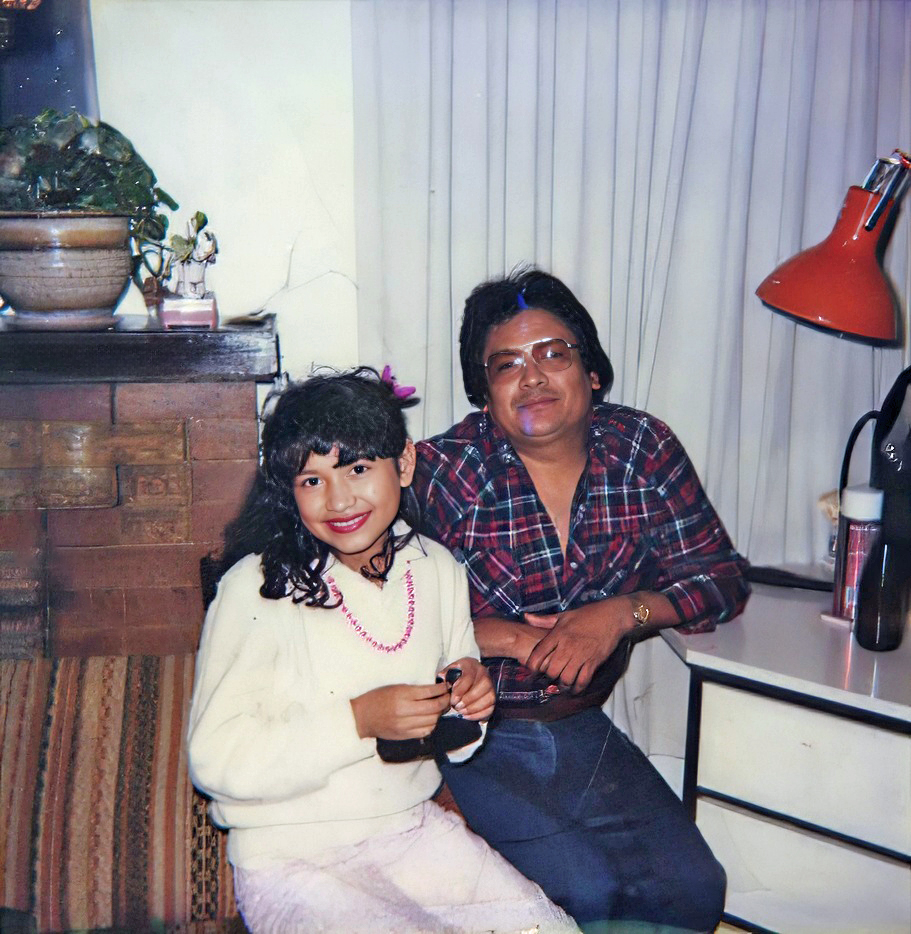
Reyna and Papi
MRS. ANDERSON ANNOUNCED that the school nurse would be coming in shortly to check the students for hygiene problems. I was surprised at that. Everyone around me looked clean and healthy. All the students had nice clothes on, shoes that were practically new. Nobody was barefoot. No one looked as if they hadn’t bathed in days. Why would we need to be inspected? I wondered.
When the nurse came, we were asked to form a single file. When it was my turn, I was told to keep my head down while the nurse parted my hair with a wooden stick. When she was done inspecting me, she wrote down something on a paper and told me I couldn’t return to school until the lice were gone.
“Lice? What lice? No, you’re wrong. I can’t have lice!” I told her, shaking my head.
As my eyes began to water, I wanted to tell the nurse I had been in the U.S. long enough to know my hygiene problems were a thing of the past. Back in Mexico, I wanted to say, my head was a nesting ground for lice. My belly was home to worms. Three times a week, Abuelita Chinta would send us to the canal to bathe in its muddy waters, and I often went around barefoot. But here in El Otro Lado, I had tennis shoes. I showered almost every day, and the water that sprinkled down from the showerhead was so clean I could lift up my head and stick out my tongue and catch the water drops that tasted of rain. We no longer had to wash our clothes in the dirty canal water, nor scrape our knuckles raw from scrubbing our dresses on the washing stones. And we didn’t have to lay our wet clothes on tops of rocks until they were hard and stiffened by the sun, which left them smelling and feeling like cardboard.
No, here in the U.S. we went to the laundromat down the street, where we didn’t have to do anything but load the clothes and then sit on a bench and listen to the machine hum and vibrate as it did the work for us. Then off the clothes went into the dryer, where I then stood and watched them spin around and around in colorful circles. When the dryer beeped, I would open the door, and the clothes would tumble out into my arms, so soft and warm and smelling of flowers, sky, and sunshine. How amazing, I wanted to tell the nurse, that this is how clothes smelled even though they hadn’t been touched by a single ray of the sun!
I had never been so clean in my life, and yet here she was telling me I had lice.
How can there be lice in the U.S.? I wanted to ask. Did they sneak across the border, like me?
I walked home holding the nurse’s note, wondering what to do. What will Papi do when he finds out I can’t return to class until he takes care of the lice problem? What if he finally decides to send me back to Mexico—never mind that he still hasn’t finished paying his debt—at learning that I am still the dirty girl he once left behind?
I spent the afternoon crying. I imagined Papi putting me on a bus to Mexico, me waving goodbye to Mago and Carlos from the window. And how could I ever hope to make Papi proud of me when I came home with news such as this?
When Papi got home, I forced myself to walk up to him and give him the note. I stared at the hand in which he held the note. One of his fingernails had dried blood in it, and I wondered if he had hit himself with a hammer. I wanted to touch his hand, ask him if it hurt. Instead, I wrapped my arms around myself, preparing for the beating I was sure would come. But I was ready to take as many beatings as he wanted to give me, as long as he didn’t send me away. “I’m sorry, Papi. I don’t know how I got them.”
“From other kids at school, I’m sure,” he said, hanging up his keys. “It’s not your fault.”
“You mean, you aren’t going to hit me?”
“Just be careful who you’re friends with, Chata. Maybe one of them gave you lice.” To my surprise, Papi wasn’t angry with me. Instead, he spent the rest of the afternoon parting my hair and looking for lice, removing the white nits very carefully so as not to pull out the hair strands. My father, the one who inflicted pain with his belt or his words, the one who had shown little tenderness toward us, who had hands hardened and callused from so many years of hard manual labor, was very gentle when delousing my hair. For the first time since I’d been in this country, Papi devoted a full two hours to me. Only me.
“You probably don’t remember this,” Papi said as he parted my hair with his fingers. “But when you were little, before I came here, you liked it when I gave you baths. You wouldn’t let anyone bathe you except me. When I came home for lunch, you would be standing by the door, and as soon as you saw me, you would come running out to me saying ‘Agua. Agua.’ Then I would take you to the patio and sit you on the washing stone next to the water tank to bathe you. Sometimes I didn’t even have time to eat my lunch. But you wouldn’t have it any other way.”
I closed my eyes and listened to his story about an event in my life I didn’t remember, but that I would treasure from that moment on.