8
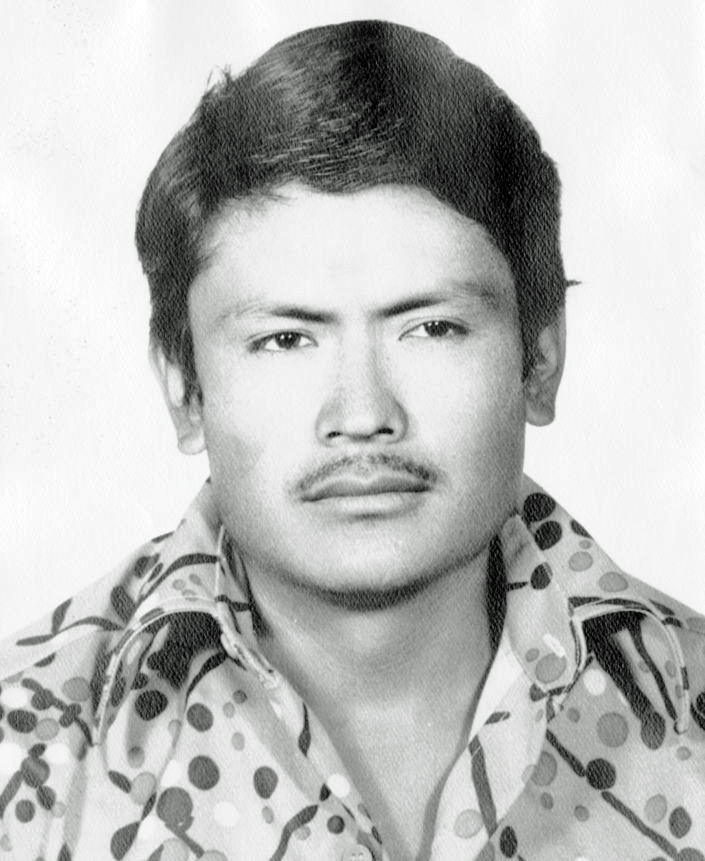
The Man Behind the Glass
MY FATHER HAD told us about his dream house in the letters he’d sent to my mother from El Otro Lado. The house was made of brick with a shiny concrete floor and tall wide windows to let in the sunlight. The walls were painted the color of Mami’s blue eye shadow, and it had three rooms.
Papi’s dream house had a television, a stereo, a refrigerator, and a stove. It was a house with electricity, gas, and running water, and maybe even an indoor bathroom, one with a shower that made you feel as if you were standing in the rain on a sticky, hot summer day. That was the house that my father dreamed of.
Back then, I didn’t know that Guerrero was the Mexican state with the most people emigrating due to the scarcity of jobs. I hadn’t known that a year before he left, my father had already been leaving home to find construction work in Acapulco, Mexico City, even as far as Mazatlán, Sinaloa, until eventually making his way farther north.
At first, he had lived in California’s Central Valley and had slept in an abandoned car while working in the fields harvesting crops, just as he had done in his youth. Eventually he left to try his luck in Los Angeles, where he was fortunate enough to find himself a stable job as a maintenance worker at a retirement home.
Four years after my father left for the United States, and two years after my mother left, the construction of our house finally began. Back then, I interpreted this to mean one thing—Papi and Mami would soon be back!
Abuela Evila gave my father a piece of her property, which meant that our house was going to be built right next to hers. It wasn’t something Mago, Carlos, and I were happy about. Who wanted to live next to Abuela Evila? Not us. But because it would cut down on the final costs, it was the only option my parents had. Besides, as he would later tell me, my father had helped his parents pay for the mortgage on their property with the wages he had earned since he was nine years old. Really, it was only fair for him to get a piece of that land. If only he had realized he was making a mistake, building a house on a property that was not under his name.
Workers came early one morning to tear down the outhouse and the shack in which I was born. Both the shack and the outhouse were made of bamboo sticks, so it didn’t take long to get rid of them. I stood there watching, sad that my little shack was being destroyed. Mago put an arm around me and said, “Just think about what is going to be built right there on that spot.”
The workers returned the next day and the day after and the day after and began to lay the foundation, and after that, the walls. As soon as school let out, Mago, Carlos, and I would run down the hill to help out as much as we could. Abuelo Augurio handed each of us a bucket, and we carried bucketfuls of gravel and mortar. Carlos worked especially hard. He liked working side by side with Abuelo Augurio. He wanted our grandfather to be proud of him for being quick and steady, not like us girls who were too slow and clumsy with the bricks and the buckets of mortar. But Abuelo Augurio didn’t pay much attention to Carlos.
We scraped our fingers carrying bricks. At night we couldn’t sleep from being so sore, but every day we put all of our energy into building our house, and when our fingers hurt too much, or our knees wanted to buckle under the weight of the buckets of wet mortar we carried to the bricklayers, we would tell ourselves that the faster we worked, the faster we would have a family again. That thought gave us strength.
But it wasn’t long before the workers stopped coming. By the time February came to an end, and Carlos turned nine, the workers were nowhere in sight. Abuela Evila said our parents had no more money, so the house had to wait. We stood by the door every morning before going to school, hoping to see the truck that brought the construction workers bumping and jerking its way down the dirt road. Then we headed to school, where all we did was look out the window and sigh the hours away, leaning our sorrow on our elbows.
By the end of the week, Mago stopped looking down the dirt road. She pushed Carlos and me up the hill and told us that it didn’t matter anyway. She said that no matter how many bricks and buckets of mortar we helped carry to the bricklayers, the house would never be done because it was just a foolish dream, just as silly as our dream of having a real family again.
“It will get finished!” Carlos said. “They will come back!” He took off running up the hill, and by the time we got to the gate of our school, he was nowhere in sight.
When we got back from school, I went inside my grandfather’s room to look at the Man Behind the Glass. “How much longer?” I asked him. “How much longer will you be gone?” As always, there was no answer.