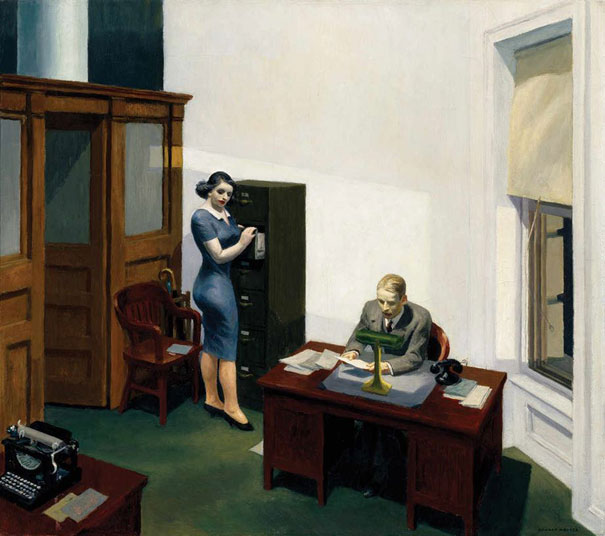
Margaret heard the train rumble by as Walter looked at the papers on the desk. The cord on the window shade swung, whether from the train’s vibrations or from the breeze through the window, she didn’t know. She couldn’t feel either, nor did she feel the blue dress—her favorite—clinging to her curves. All she saw was Walter, and all he saw were the files in the pool of light from the desk lamp.
She had put the papers in the file cabinet and rested her arm atop the folders what seemed like—could have been—a lifetime ago. The phrase brought a faint smile to Margaret’s face. Any time could be a lifetime, depending on how long you lived. And she had thought from time to time that she and Walter might have a lifetime together. Before she had died.
Margaret Dupont had never liked her name. She would have liked a movie star name like Jean or Bette, but her name? It made people think of the woman from the Marx Brothers movies. She stuck with it, though, because she had to, after all, and she liked her middle name, Lucille, even less. She had been named after a maiden aunt who had died young, and from time to time, she wondered if there had been a jinx on the name. But her grandmother liked the name, and as a cousin told Margaret when she was a teenager, “I guess she just wore your mother down.” Yep—she could imagine her mother in the hospital, exhausted, saying, “What the hell, Margaret it is.” She wouldn’t have said it out loud, though—Mother wasn’t going to talk like that in public, any more than she’d take a step with a lit cigarette. It wasn’t ladylike.
But Margaret hadn’t been ladylike as a child, either, and that was probably one of the reasons she and Mother had gone for weeks at a time without speaking sometimes. Mother was small; Margaret was big, like her daddy, who had been big enough to hitch to a plow by the time he was nine, which is when he stopped going to school. Mother got a couple more years in before she had to leave school, and a few years later, she married Daddy and came to the city. Margaret had come along a few years later, the second and last child—so big it nearly killed her mother, a claim she heard too often.
Margaret was big for her age—“Large Marge,” bigger than most of the boys, even, at least until she got sick. Scarlatina, the doctors told her parents, and it weakened her heart and slowed her growth, but she was lucky to have gotten off that easily—not everyone lived through that. But she stuck with life, because she had to, and it hadn’t even occurred to her that there was a choice. And her growth slowed, but even then she was too tall, almost six feet, for heaven’s sake, and what kind of boy would want a big old thing like that? But she had to miss a year of school and make it up after, so she was a year older than the other kids in high school, and so that much bigger, even. “Large Marge,” and clumsy to fit it. She had thrown a knee out of joint at a school dance, but the embarrassment of crumpling to the gymnasium floor had hurt worse than the knee’s displacement.
But she was smart, and she stayed in school and finished it, because Mother and Daddy wouldn’t have had it any other way. And she could work, had worked summers and after school, and did what was needed around the house, when her parents were working—her sister was seven years older, and had married and started a family of her own. Margaret had won the typing medal in high school. And she could draw—her sketches had even been used in newspaper ads from the local department store, with her name and all.
It didn’t matter, though, in Greensburg. She’d always be “Violet and Ernie’s girl,” or “the Tree,” or “Moose,” or “Large Marge.” The town wasn’t big enough for her to be anyone else. So she had to go someplace that was.
When she told Mother and Daddy that she wanted to go to the city—and all three of them could hear New York in those words—Mother asked if she had lost her mind, that she’d do no such thing, and when Margaret said she could, she had saved her money, she had looked up safe places where girls could stay—the Barbizon, the Rutledge!—Mother said any child that wanted to run off to the city was bound to become a whore, or marry an Italian. When Margaret said that she didn’t think either of those would be necessary, Mother slapped her and stalked from the room. Margaret stood there, and didn’t let her eyes water until Mother had left, and Daddy had started to cry. “Couldn’t you just go to Atlanta?”
Margaret did cry, then, but only as she said she had to try someplace big—someplace with opportunities, and stores that might want to see her portfolio, and art. Daddy shook his head and left the room, his shoulders shaking as he walked away. Margaret left three days later, without speaking to Mother again. When she tried to talk to Daddy, he’d just start to cry, and if that happened one more time, she knew she might not be able to go at all. She packed her things and caught the train, as no one waved goodbye. Later that night, she found ten dollars had been tucked into an envelope in her suitcase. The only word on it was “Daddy.”
The coach fare to New York was more than that, but she paid—with her own money, and even giving a quarter to the porter—and rode the shuddering coach for what may have been thirty hours (“Remember,” she said to herself, “Buy a watch!”), but felt as though it could have been thirty years. She ate soup in the dining cars, tucking extra crackers into her purse for snacks along the way. On the second day of the trip, a young soldier in the coach smiled at her and tried to start a conversation, and while Margaret didn’t have much to say to him, she wondered at the idea that a man might want to talk to her—tall, ungainly, Large Marge. He got off the train somewhere in Ohio, handing her a hastily written address and telling her to write him once she got to be a famous ar-TEEST. She said that might be a while, but thanked him. She knew she’d never see him again, though—Ohio was a place she didn’t want to pass through more than once.
Surely in New York, there might be someone for her. She imagined him—tall like Daddy, taller than her. Blonde hair and a kind voice—and a love of art, of course. But she’d have to be careful—she had read the magazines, and knew there were men in the city who would use a girl and throw them away, and to have to return to Greensburg, to Mother—best not to think of that.
She had dozed off, with her head against the window, and awoke with a start when the conductor touched her lightly on the shoulder and said, “Pennsylvania Station, miss. End of the line.” She blushed as she stood, gathered her purse and stepped from the passenger car to find her luggage—well, a suitcase and makeup kit, and her portfolio. She bought a map at the newsstand, and looked up the Barbizon. It looked to be about two and a half miles, but she hadn’t come here to spend all her money on cab fare. She began to walk north, up Seventh Avenue toward Central Park and then east.
It took Margaret almost two hours to reach the hotel. She could have made it in half the time, but she kept stopping, almost stunned by the towers around her, and the people everywhere. The thought circled through her head: “This is what New York looks like.” Then it changed: “This is what New York looks like with me in it.” Finally, she found the hotel—it was the biggest building she had ever seen—before today.
She walked into the lobby, approached the desk. “I’d like a room, please.”
The clerk, a woman, reminded her of her elementary school librarian—pinch-faced and stern, with the ability somehow to look down at Margaret despite being at least a head shorter. “What’s the reservation under?”
“I’m afraid I don’t have a reservation.”
“Any references?”
“You mean, like for a job?”
“No, miss. To stay at the Barbizon, we require three letters of recommendation. We’re quite selective about the young ladies who reside here.”
“Well, I don’t have anything like that. I’m new to the city, and didn’t know anything about that. Couldn’t you just—”
“I’m sorry,” the librarian said. “That simply isn’t possible. Good day.”
The blood began to drain from Margaret’s face as the older woman turned away. She stepped back from the counter, feeling her knees wobble a bit. She ducked her head as she stepped back through the doors, onto the street. It was afternoon, and the streets were already falling into the shadows of the tall buildings. She walked, toward the park, then south. As the street numbers grew lower, the language on the signs changed from English to German, and then occasionally to English again. Some of the German signs said something about a Bund—Margaret wondered if those were the people she had seen in the newsreels.
Her luggage grew heavier and heavier as she walked through the upper Eighties, and she was wondering why she had been such a fool as to do this, and whether Mother and Daddy would claim her body when she died in an alleyway, when she saw a house with a hand-lettered sign reading “Rooms to Let.” She knocked on the door.
The woman who answered had her hair pulled back into a bun, but she looked kinder than the woman at the Barbizon and she looked at Margaret, and at her luggage, and said, “Room, cold breakfast, and dinner for five dollars a week. Two weeks in advance.” Her voice was pleasant, and sounded foreign—like Margaret would have imagined a leprechaun’s to be. Before she thought, she asked, “Are you Irish?”
The woman scowled. “Would that be a problem, missy?”
Margaret blinked. “Oh, no, ma’am. I just thought you talked pretty, like one of those priests in the movies.”
“You sound like a hillbilly yourself, you know.”
“Maybe I am. But I’m a hillbilly who needs a place to sleep, and I’ve got ten dollars.”
“Fifteen, girl. The ten are advance; the five is for this week.”
Margaret ran some figures in her head. She’d need to get a job pretty quickly, but what she could see over the woman’s shoulder, into the hallway and the dining room at the side, looked clean. “Fifteen, then.” She handed the woman her cash, glancing into her own purse as she did so. She corrected herself: she’d need to get a job really quickly. “What’s your name, hillbilly?”
“Margaret Dupont. Miss Margaret Dupont. And you are?”
“Mrs. Dorothy Daly—not that the ‘Mrs.’ does me a whit of good, with Himself gone two years now.” She crossed herself. Margaret wanted to smile—she had never seen that outside of a movie, either. But she kept a straight face. “So, Peggy, you’re a big thing, aren’t you? Bet you eat a lot.”
“I try to watch my figure,” Margaret said—what she had read about those rude New Yorkers had some truth to it, she guessed. “And why did you call me Peggy?”
“Short for Margaret, girl,” Mrs. Daly said, shaking her head. Before Margaret could figure that out, Mrs. Daly said, “Don’t just stand there like a gump—let’s get you in before dinner.”
The room was small—in Greensburg, it would have been cramped—with a single bed, a washbasin, a nightstand and a chest of drawers. The mirror atop the nightstand was missing a bit of its silvering, but it would do well enough. And she could put her things down at last. She focused again on Mrs. Daly’s voice as she discussed house rules. “No guests upstairs, and no more than four showers a week. I’ve a clean house, but not a palace. There’s a phone down the hall. Five minute limit, and no long distance without paying up front.”
“That’ll be fine.” I’ve no one to call, anyway.
“And Peggy?”
“Yes?”
“Bring your suitcases down once you’ve emptied them.”
“Oh! Do you store them for us?”
“You could say that, hillbilly, or you could say they’re collateral. You’re not likely to skip if you’ve nothing to carry your things in, are you?”
Margaret did as she was told, except for the portfolio, which she saw as more of a sample book than a piece of luggage. The dinner was chicken, potatoes, and green beans—a meal she had eaten many times before, had cooked many times before, but it didn’t taste like the food from home. But it wasn’t soup or crackers, and she cleaned her plate. She thought of getting a second helping, but she remembered Mrs. Daly’s comment about her size, and decided to pass. The meal was enough, and she could get by on two meals a day for a while.
Mrs. Daly introduced her to the other tenants, ranging from an old man to a woman who may have been thirty to Margaret’s nineteen. She promptly forgot their names, as the weight of the day and the weight of the meal pulled her toward sleep. After a decent interval, she went upstairs to her room and fell asleep as if she had been clubbed. Tomorrow was Thursday, time to look for a job.
And Friday became time to look for a job as well, as did the following weeks. Apparently Mr. Roosevelt’s big ideas hadn’t made it to the department stores yet, because none of them needed so much as a window dresser, much less a sketch artist. She thought she had a nibble in the fashion district, but nothing happened there either. And she almost regretted slapping the bartender who offered her a waitressing job—in exchange for what he called a “finder’s fee,” but one in which no money would change hands. Almost. But she didn’t want to prove Mother right.
As she walked through the garment district once again (an hour from the rooming house), she saw a rather run-down office building, which she assumed held rather run-down offices. Well, she was feeling rather run-down herself—and running out of time and money, even on the two-meal-a-day plan. Before long, she might have to ask Mrs. Daly if she could wash dishes or cook in exchange for some of the rent. But for now, she could keep looking.
So she walked into the building, and looked for, and then at, the directory. There were offices listed on the tenth, seventh, sixth, and third floors, and Margaret figured she might as well start at the top and work her way down, so there would be fewer steps at the end of the day after she had struck out. She rode the elevator to the top floor, where it took her about ninety seconds to learn that Garlandson Architects Inc. didn’t need anyone, thank you, miss. Three flights of stairs later, she found herself on the seventh floor, which didn’t surprise her a bit, but which also failed to yield a position with Parker and Son, whatever it was that they did. As she got to speak neither to Mr. Parker nor his son (his Son?), she didn’t even get to learn what their business was, other than not hiring anyone. Likewise, the booking agent down the hall—a Mr. Landsberg—told her she was out of luck unless she could dance. Margaret almost gave it a try, but she told Mr. Landsberg sorry, but she wasn’t a showgirl.
“Maybe you should try it sometime,” Landsberg said. “You’ve got the figure for it. How tall are you?”
Margaret was so surprised by the idea that she might have a figure for anything that she told the truth. “Five-eleven and a half.”
Landsberg shook his head. “No, sweetheart, that’s too tall for the Rockettes. But if you change your mind, give me a call.”
“Probably better for everyone if I don’t,” she said to herself in the hallway. A showgirl’s figure? Large Marge? She looked down at herself. Her legs were long, and pretty well toned from all the walking she had done recently, and the two-meal plan kept her slim, too—even Mrs. Daly would occasionally push a second helping at her in the evening. Well, she guessed there might be a bright side to that much, anyway.
Another flight took her to the sixth floor, which was primarily vacant. Like my prospects, she thought, but in the interest of completeness, she walked the hallways until she saw a door at the end of the hall. “Walter Schroer, Title Attorney” was gold leafed on the pebbled glass, and the letters were new enough not to start flaking. At least, not yet. She could see a silhouette through the glass, and she knocked at the door.
“Come in,” said a voice—a man’s voice, and a pleasant one at that. Margaret did, and he said, “Oh, you must be the girl from the agency. What took you so long?”
For an instant, she thought about lying, saying yes, she was that girl from the agency, but she didn’t think it would be a good idea, especially if the real girl from the agency (what agency?) were to show up in the middle of things. So she said, “I’m not sure what you mean—I’m just here looking for work. But if you’re expecting someone—”
“Well, I was,” the man said, “but she doesn’t seem to be here.”
Margaret looked around. The office was small—not much larger than her room at Mrs. Daly’s. The man—who she figured was Mr. Schroer, as the office hardly seemed big enough for too many other people—had a small desk, brown wood on the green carpet. A filing cabinet was behind his right shoulder against a wall of the strangely angled room. The room’s shape reminded her of a cough drop, or a card from a Rook deck before the sides were tapped into a neat pile. A smaller desk sat catty-cornered to her right, and a typewriter sat there. On the man’s desk, a desk lamp was positioned to illuminate a blotter, and a telephone rested by his left elbow.
Schroer looked at her as she looked around. “Can you type?” he asked her.
“Yes, sir, about 60 to 65 words per minute.”
He whistled. “Can you file?”
“Well, knowing the alphabet helps with the typing.”
He smiled. “And can you take dictation? Let’s see. Sit over there.” He gestured toward the typewriter. “There’s a pad and pen in the desk drawer.” Indeed, there were. “You ready, Miss . . . ?”
“Dupont,” Margaret said. “Mar—Peggy Dupont.” She liked the sound, and maybe the new name would bring a change of luck.
“OK, Mar-Peggy,” Schroer said, and then she smiled. “October 19, 1935. Dear Mr. McGillicuddy—two d’s—I am happy to inform you that the title to the parcel of land designated Plat Z219X3 is free of liens. Furthermore, no easement will be necessary, as right-of-way is included in the rights to the property. The necessary papers are enclosed. At your service, I remain, Sincerely, Walter Schroer. Read it back.” She did, and as she finished, he said, “Not bad. Type it up, please.” So she did that as well. “May I see it?”
“It’s your office,” she said, a little surprised at her own, well, sassiness. Mother would have had a conniption. But she handed him the paper, and he said, “Nicely done.” He went back to the desk, picked up the phone, and placed a call.
“Ajax Personnel? Yes, this is Walter Schroer. Misfiled? It happens, I suppose. Don’t bother. I think the position is filled. Thank you. Goodbye.” He looked back at Margaret. “Well, Mar-Peggy, judging from your voice, I’m guessing you aren’t from Brooklyn. Where did you learn to type and take dictation?”
“Greensburg High School, sir. In Greensburg, Tennessee.”
“I didn’t know they typed there.”
She narrowed her gaze. “Not all of us do.”
“Probably why they kicked you out.” She started to stand up, but he gestured to her, both arms out, palms down. “Settle down, Mar-Peggy.”
“Do you have to keep doing that? Peggy is fine.”
“Good to know. Have you ever been a secretary before? No? Well, if seventeen-fifty a week is fine, then you can be one now. The going rate is twenty, but good luck finding a job that pays the going rate. I’d start by keeping an eye on the death notices. Also, you can answer the phone, which shouldn’t be hard, as it doesn’t ring very often.”
“Seventeen-fifty is very satisfactory, Mr. Schroer.”
“This office isn’t big enough for Misters and Misses. Unless there’s a client in here, Walter will do.”
Mother wouldn’t have approved of that at all, but then, this wasn’t Greensburg. “OK, Walter.”
“Very good. Now what do you know about property law?”
Nothing, as it happened, so he spent the afternoon telling her what a title was, and what he did, and where the City Register Office was, where he would be sending her from time to time, and where the deli was, where she could bring him a sandwich tomorrow at lunch, and it was five o’clock when he finally said, “Any questions?”
No more than a million, she thought, but she said, “You gave me a lot of information. And thank you for giving me a chance.”
He shrugged. “Thank Ajax. See you tomorrow at nine.”
“Yes, sir.” The three miles to the rooming house were the shortest she’d ever walked, until the next morning. At last, she was no longer walking through the city with her in it—she felt as though she walked through her city.
It had taken Margaret a while to get used to being dead, she thought. Well, really just a couple of weeks, and she didn’t exactly know what the rules were, or how long she had to learn them—forever, perhaps? Or would she lose interest in being . . . well, a ghost, she guessed, or maybe what they called a haint back in Greensburg, eventually, and just become something else or become nothing? Whatever was coming, she couldn’t say, but she would have liked to know how things worked.
Her body, for example. She knew where it was—back in Greensburg in the family plot, at least that’s what she figured when she heard that Daddy had claimed it. She was a little surprised that she didn’t have to go where it did. In fact, she couldn’t—she tried, but then she realized she didn’t know how to do that, or even if that were possible—but she hoped it had been a nice funeral. Her aunt Connie loved a good funeral, but especially loved it when the next of kin would “take on,” weeping, wailing, throwing themselves at the grave, that sort of thing. Margaret didn’t figure that would have happened at her funeral—Mother wouldn’t have stood for it. Sorry, Aunt Connie. But it might have been nice to hear the music.
Still, she was in New York, and being a ghost had some advantages. She didn’t have to pay rent anymore, and it didn’t make much difference to her whether she was inside or out, awake or, well, not asleep, exactly, because she didn’t get tired anymore. Sometimes, though, she would be looking around, or moving about the city, and then she wouldn’t feel like it, and she’d blink and it would be hours, or even a couple of days later. Either way, regardless of where she had been when she blinked, she’d find herself either in the office, or in front of Mrs. Daly’s rooming house, where she had—
Well, where she had died. It wasn’t anything dramatic, she guessed, but it most definitely had been fatal. No crime in the street or being hit by a taxi, or anything, just falling the wrong way. She had been thinking about the new honeysuckle perfume she had bought at Macy’s, when her heel had broken on the curb, or maybe her knee had gone out again—she couldn’t really recall now, and the particulars didn’t especially matter—and she fell and as her head rushed toward the sidewalk she thought This is going to hurt but it didn’t, and the next thing she knew, she was behind Mrs. Daly, who was talking to a neighbor about that great tall girl who had fallen and just died, out like a candle (Mrs. Daly said, crossing herself), and how her poor father had come to take the girl’s things back to wherever she was from and left nothing but a room to rent again.
And Margaret figured that was sad, but it didn’t bother her all that much, because it wasn’t like she hurt, and she could go to the shows and museums, the park, and really anywhere in the city, and she didn’t have to pay admission or anything, and no one bothered her, of course. She thought some of the animals may have noticed her—cats in alleys and windowsills, birds, and it seemed the squirrels in Central Park cocked their heads a certain way when she was around—but no people. And she could walk all day without getting tired or hungry, and that was fine with her as well.
She saw other ghosts (the word still seemed strange, maybe even a little uncomfortable, like unwed mother or Negro, but it was the word she had) around the town, but if they had noticed her, they didn’t mention it—perhaps one didn’t do that sort of thing. They minded their business, and she minded hers, and that was fine, she guessed.
There wasn’t much she could do, though, really. She could pass through things—that was one of the first things she had tried, once she had heard Mrs. Daly—but that also meant things passed through her, most of the time, anyway. As the days went by, she found that if she concentrated, she could ride in a streetcar, cab, or subway train and travel with it, instead of just standing there like a gump as it passed through her. But she couldn’t pick things up or move them, at least nothing more than specks of dust, and that took concentration and time, and when she was finished, she wouldn’t want to concentrate, and she’d blink and be back to the rooming house or the office, but later.
She wasn’t entirely sure what she looked like, or what it was the animals, and perhaps the other, well, the others, saw when they encountered her. When she thought about it, looking down where her body had been, she thought she looked about the same—her favorite blue dress with the white collar (had she been buried in that? Died in it? She didn’t know, but she liked the dress), stockings, dark shoes. No girdle, but she hadn’t needed one before either, and alas, no one had ever been in a position to comment on it. She thought she had seen her reflection in a shop window once, a blue flower that matched her dress in her dark hair, but she couldn’t be sure, and perhaps it was a trick of the light. Perhaps she was a trick of the light as well, but she didn’t feel like such a thing.
How did she feel? Like the third carbon of herself: legible but faint, perhaps a bit smeary. Useful for a file copy, but not something to send to a client. But she was still in the city that had become her city, the city where she had been Peggy, even if she had been betrayed by clumsy old Large Marge when she fell.
She missed Walter, though. They had worked together for six months before she died, and she had liked being around him. It was work, yes, but he seemed like a nice boss, and he was terribly good looking, which didn’t hurt, but he was also a perfect gentleman.
Darn it. She had been ladylike, of course—Mother wouldn’t have had it any other way—but she knew that some men had noticed her, seeing a flicker in their eyes as she walked down the street, or hearing some banter from the counter man at the deli. There were times she thought Walter had as well—to tell the truth, that was why she had bought the perfume.
He had been in love once before, with a girl who had died of infantile paralysis when he was in law school, but he only talked about her once on a slow afternoon, and she had seen the pain in his eyes and changed the topic. Maybe one day something could have happened with Walter. She had seen it in dozens of picture shows, the boss falling for the secretary, and sometimes it worked out. Maybe it would have, eventually.
But Peggy hadn’t gotten to eventually. Even so, she wondered if that was why she found herself at the office so often. Walter was there a lot, too, sometimes working late into the night. Had he done that when she had worked there, coming back after she had left in the afternoon? Probably not—a good secretary, she thought, made that unnecessary.
Walter was thinking out loud again. He had done that when she worked for him, and she enjoyed being a sounding board. He was looking over a client’s files, but it was incomplete. One of the Ajax girls must have messed it up—Peggy saw the steno book sitting in the chair by the filing cabinet. Sloppy; she had always placed it next to the typewriter, so she didn’t have to hunt for it later.
The whole office looked a little shabbier than she remembered it being. Had it really been this small, this worn? It took a moment to understand the difference. The room had once held all these things, but had also held room for her opportunities. Now those were gone. She was gone. For the first time, really, since she had died, she felt cheated.
But only for a moment. She had come to the city without knowing what was ahead, and it had taken her in, and even in a short time, she had felt a part of it. She had been someone she never could have been in Greensburg—she had been Peggy Dupont.
And what could she be now? She didn’t know, but she hadn’t known before, either. But she had found her way to the city, and had found her way in it, if briefly. She could find a way to whatever came next as well. She thought about the others she had seen, flickering through the city, not speaking to her, doing whatever errands they felt called to do. Why had she seen so few of them? Maybe they were there because they didn’t realize they didn’t have to be.
She had been trapped in Greensburg, until she chose not to be. She had been stranded, alone, until she chose not to be. And if she chose not to be here anymore? Well, she didn’t know, but she had liked what she had found before. Why not see what else was there?
And with that, Peggy Dupont knew what she had wanted all along—to be free, and she was. Free of Greensburg, free of Mother, free of the large body that had betrayed her, and now, free to go wherever she could imagine. She remembered lines from a long poem in high school:
The world was all before them, where to choose
Their place of rest, and Providence their guide.
She had a feeling that there was more than the world before her, just as the city had been bigger than the small office, and she knew that her travels before then were the tiniest clumsy steps. She had other journeys. But there was Walter, who had been kind. Had she loved him? She no longer knew, but she knew he had been kind. Perhaps she could do him a small kindness in return.
She saw the missing sheet of paper, resting askew in the open file drawer. She concentrated harder than she ever had before, and maybe it was that or maybe it was the breeze and vibration of the passing train, but the paper fluttered to the floor near the desk. Walter didn’t see it, studying the rest of the file, but he would soon enough.
And he did, a few minutes later, but Peggy was gone, and it wasn’t until the next morning, as he gathered the file for the closing, that Walter Schroer caught the faintest scents of dust and honeysuckle.
HTML style by Stephen Thomas, University of Adelaide. Modified by Skip for ESL Bits English Language Learning.