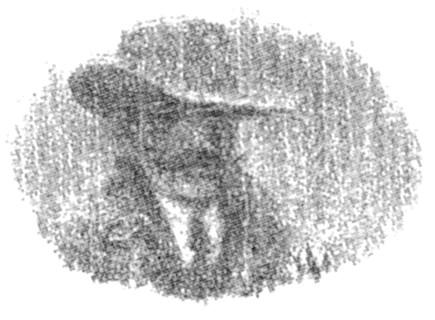
They were there waiting on the veranda, his mother in her nightgown, his father in his hat, his horse saddled, ready to come after him. “I’ve set him free,” Bertie cried. “I’ve set him free, so he won’t ever have to live behind bars.” He was sent to his room at once, where he threw himself on his bed and buried his face in his pillow.
Day after day his father went out looking for the white lion, but each evening he came back empty-handed and blazing with fury.
“What’ll I tell the Frenchman when he comes, eh? Did you for one minute think of that, Bertie? Did you? I should strap you. Any father worth his salt would strap you.” But he didn’t.
Bertie spent all day and every day at the fence, or up his tree in the compound, or at his bedroom window, his eyes scanning the veld for anything white moving through the grass. He prayed at his bedside every night until his knees were numb, prayed that his white lion would learn how to kill, would somehow find enough to eat, would avoid the hyenas, and other lions too, come to that. Above all, he prayed he would not come back, at least not until the Frenchman from the circus had come and gone.
The day the Frenchman came, it rained, the first rain for months, it seemed. Bertie watched him as he stood there, dripping on the veranda, his thumb hooked into his waistcoat pocket, as Bertie’s father broke the news that there was no white lion to collect, that he had escaped. That was the moment when Bertie’s mother put her hand to her throat, cried out and pointed. The white lion was wandering through the open compound gate, yowling pitifully. Bertie ran to him and fell on his knees and held him. The lion was soaked to the skin and trembling. He was panting with hunger and so thin that you could see his rib cage. They all helped to rub him down, and then looked on as he ate ravenously.
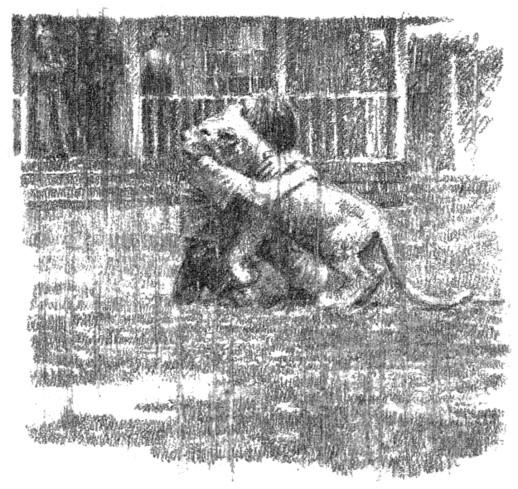
“Incroyable! Magnifique!” said the Frenchman. “And white, just as you said, white like the snow, and tame too. He will be the star of my circus. I shall call him ‘Le Prince Blanc’, ‘The White Prince’. He will have all he needs, all he wants, fresh meat every day, fresh straw every night. I love my animals, you know. They are my family, and this lion of yours, he will be my favourite son. Have no fear, young man, I promise you that he will never be hungry again.” He put his hand on his heart. “As God is my witness, I promise it.”
Bertie looked up into the Frenchman’s face. It was a kind face, not smiling, yet earnest and trustworthy. But even so, it did not make Bertie feel any better.
“There, you see,” said Bertie’s mother. “He’ll be happy, and that’s all that matters, Bertie, isn’t it?”
Bertie knew that there was no point in begging. He knew now that the lion could never survive on his own in the wild, that he would have to go with the Frenchman. There was nothing else for it.
That night as they lay in the dark together side by side, Bertie made him a last promise. “I will find you,” he whispered. “Always remember that I will find you. I promise I will.”
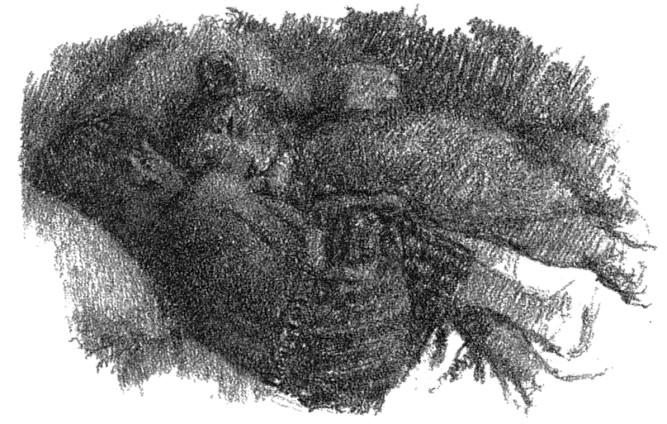
The next morning the Frenchman shook hands with Bertie on the veranda and said goodbye. “He’ll be fine, don’t you worry. And one day you must come to France and see my circus, Le Cirque Merlot. It is the best circus in all of France.” Then they left, the white lion in a wooden crate rocking from side to side in the back of the Frenchman’s wagon. Bertie watched until the wagon disappeared from view.
A few months later, Bertie found himself on a ship steaming out of Cape Town, bound for England and school and a new life. As the last of Table Mountain vanished in a heat haze, he said goodbye to Africa and was not at all unhappy. He had his mother with him, for the time being at least. And after all, England was nearer France than Africa was, much nearer.
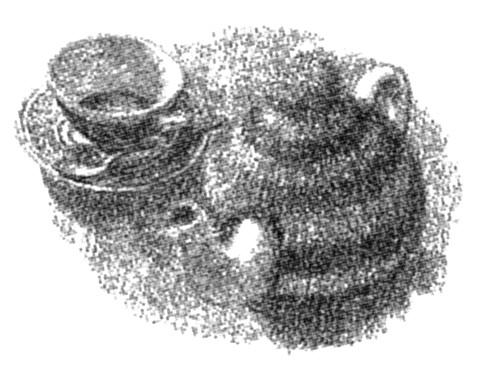
The old lady drank her tea and wrinkled her nose in disgust. “I’m always doing that,” she said. “I’m always letting my tea go cold.” The dog scratched his ear, groaning with the pleasure of it, but eyeing me all the time.
“Is that the end then?” I asked.
She laughed and put down her cup. “I should say not,” she said. And then she went on, picking a tea leaf off the tip of her tongue. “Up till now it’s been just Bertie’s story. He told it to me so often that I almost feel I was there when it happened. But from now on it’s my story too.”
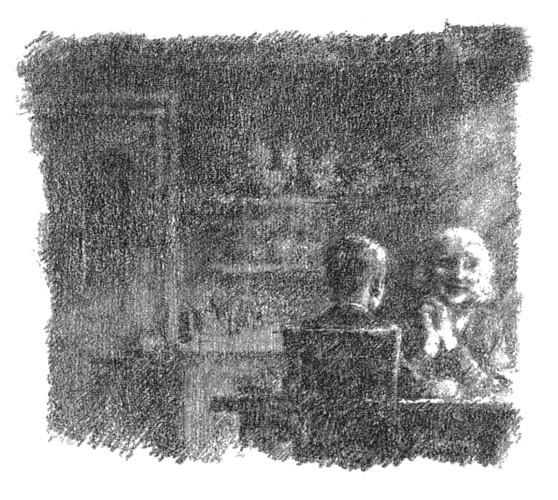
“What about the white lion?” I had to know. “Did he find the white lion? Did he keep his promise?”
The old lady seemed suddenly clouded with sadness. “You must remember,” she said, putting a bony hand on mine, “that true stories do not always end just as we would wish them to. Would you like to hear the truth of what happened, or shall I make something up for you just to keep you happy?”
“I want to know what really happened,” I replied.
“Then you shall,” she said. She turned from me and looked out of the window again at the butterfly lion, still blue and shimmering on the hillside.
Whilst Bertie was growing up on his farm in Africa with his fence all around, I was growing up here at Strawbridge in this echoing cold cavern of a house with its deer park and its high wall all around. And I grew up, for the most part, alone. I too was an only child. My mother had died giving birth to me, and Father was rarely at home. Maybe that was why the two of us, Bertie and I, got on so well from the first moment we met. We had so much in common from the very start.
Like Bertie, I scarcely ever left the confines of my home, so I had few friends. I didn’t go to school either, not to start with. I had a governess instead, Miss Tulips – everyone called her “Nolips” because she was so thin-lipped and severe. She moved around the house like a cold shadow. She lived on the top floor, like Cook, and like Nanny. Nanny Mason – bless her heart – brought me up and taught me all the do’s and don’ts of life like all good nannies should. But she was more than just a nanny to me, she was a mother to me, and a wonderful one too, the best I could have had, the best anyone could have had.
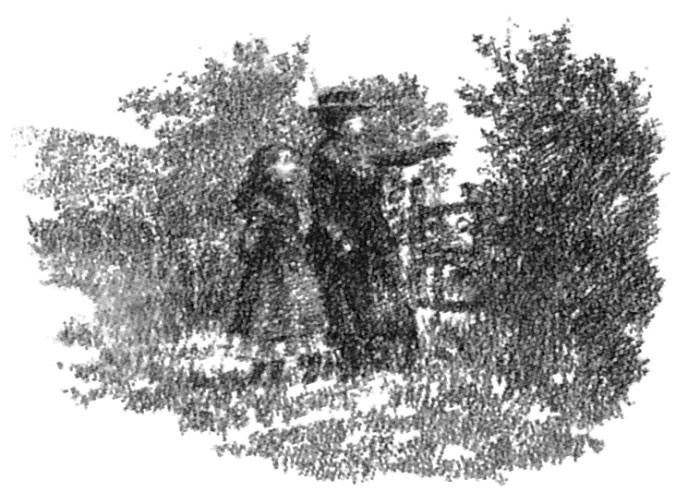
My mornings were always spent at my studies with Nolips, but all the while I was looking forward to my afternoons out walking with Nanny Mason – except on Sundays, when I was allowed to be on my own all day, if Father wasn’t home for the weekend, which he usually wasn’t. Then I could fly my kites when it was fine, and read my books when it wasn’t. I loved my books –Black Beauty, Little Women, Heidi – I loved them all, because they took me outside the park walls, they took me all over the world. I met the best friends I ever had in those books – until I met Bertie, that is.
I remember it was just after my tenth birthday. It was Sunday and I was out flying my kites. But there wasn’t much wind, and no matter how hard I ran, I just couldn’t get even my best box kite to catch the wind and fly. I climbed all the way up Wood Hill, looking for wind. And there at the top I found it at last, enough to send my kite soaring. But then the wind gusted and my kite swirled away crazily towards the trees. I couldn’t haul it in in time. It caught on a branch and stuck fast in a high elm tree in amongst the rookery. The rooks flew out cawing in protest whilst I tugged at my line, crying in my fury and frustration. I gave up, sat down and howled. That was when I noticed a boy emerging from the shadow of the trees.
“I’ll get it down for you,” he said, and began to climb the tree. Easy as you like, he crawled along the branch, reached out and released my kite.
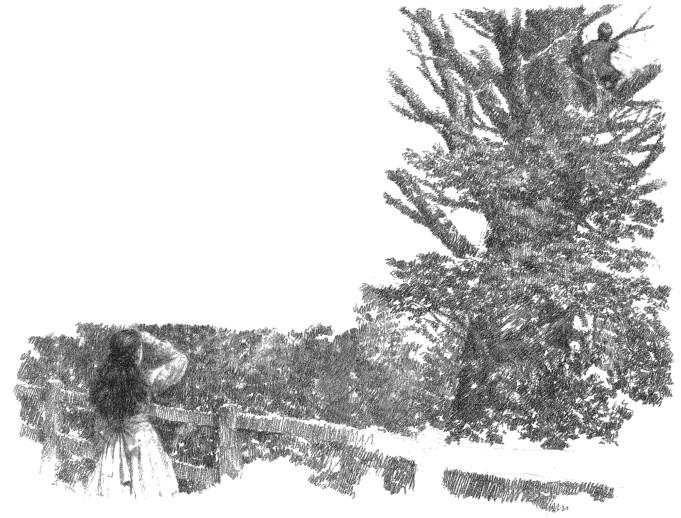
It floated down and landed at my feet. My best kite was torn and battered, but at least I had it back. Then he was down the tree and standing there in front of me.
“Who are you? What do you want?” I asked.
“I can mend it, if you like,” he said.
“Who are you?” I asked again.
“Bertie Andrews,” he replied. He was wearing a grey school uniform, and one I recognised at once. From the lion gateway I had often watched them on their walks, two by two, blue school caps, blue socks.
“You’re from the school up the road, aren’t you?” I said.
“You won’t tell on me, will you?” His eyes were wide with sudden alarm. I saw then that his legs were scratched and bleeding.
“Been in the wars, have you?” I said.
“I’ve run away,” he went on. “And I’m not going back, not ever.”
“Where are you going?” I asked him.
He shook his head. “I don’t know. In the holidays I live at my Auntie’s in Salisbury, but I don’t like it there.”
“Haven’t you got a proper home?” I said.
“’Course I have,” he replied. “Everyone has. But it’s in Africa.”
That whole afternoon we sat together on Wood Hill and he told me all about Africa, about his farm, about his waterhole, about his white lion and how he was somewhere in France now, in a circus and how he couldn’t bear to think about him. “But I’ll find him,” he said fiercely. “I’ll find him somehow.”
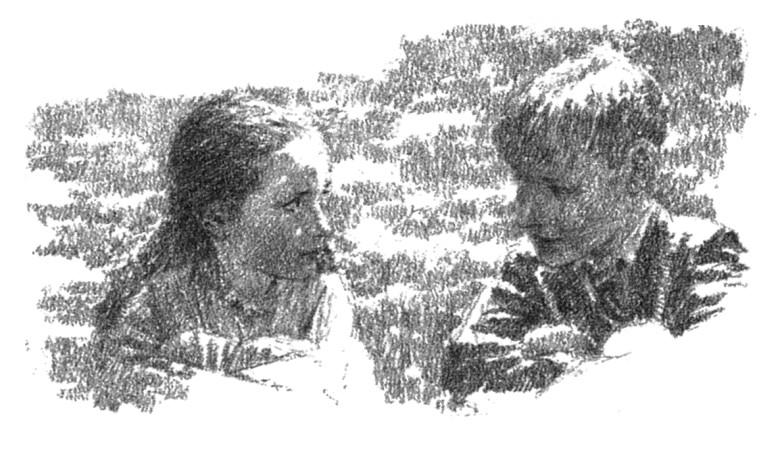
To be honest, I wasn’t sure how much I really believed all this about a white lion. I just didn’t think lions could be white.
“But the trouble is,” he went on, “even when I do find him, I won’t be able to take him home to Africa like I always wanted to.”
“Why not?” I asked.
“Because my mother died.” He looked down and pulled at the grass beside him. “She had malaria, but I think she really died of a broken heart.” When he looked up his eyes were swimming with tears. “You can, you know. Then my father sold the farm and married someone else. I never want to go back. I never want to see him again, never.”
I wanted to say how sorry I was about his mother, but I couldn’t find the right words to say it.
“You really live here, do you?” he said. “In that big place? It’s as big as my school.”
I told him then what little there was to know of me, all about Father being away in London so much, about Nolips and Nanny Mason. He sucked at the purple clover as I talked; and when neither of us had anything more to say we lay back in the sun and watched a pair of mewing buzzards wheeling overhead. I was wondering what would happen to him if he got caught.
“What are you going to do?” I said at last. “Won’t you get into trouble?”
“Only if they catch me.”
“But they will, they’re bound to, in the end,” I said. “You’ve got to go back, before they miss you.”
After a while he propped himself up on his elbow and looked down at me.
“Maybe you’re right,” he said. “Maybe they won’t have missed me yet. Maybe it’s not too late. But if I go back, could I come again? I can face it if I can come again. Would you let me? I’ll mend your kite, really I will.” And he gave me a smile so melting that I couldn’t refuse him.
So it was arranged. He would meet me under the big wych elm on Wood Hill every Sunday afternoon at three, or as close to three as he could. He would have to come through the woods so that he could never be seen from the house. I knew full well that if Nolips ever found out, there’d be merry hell to pay – for both of us, probably. Bertie shrugged, and said that if he got caught, all they could do at school was beat him, and that once more wouldn’t make much difference anyway. And if they expelled him, well then, that would suit him fine.
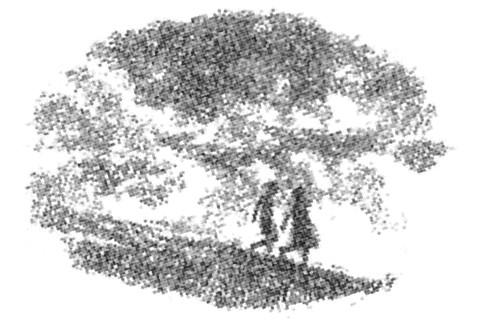
Bertie came every Sunday after that. Sometimes it couldn’t be for long because he had detention back at school, or maybe I’d have to send him away because Father was down for the weekend, shooting pheasants in the park with his friends. We had to be careful. He did mend my best box kite, but after a while we forgot all about flying kites, and we just talked and walked.
Bertie and I lived for our Sundays. In those next two years we became, first, good companions, and then best of friends. We never told each other we were, because we didn’t need to. The more I got to know him, the more I believed everything about Africa, and about “The White Prince” in the circus somewhere in France. I believed him too when he told me again and again how somehow, someday he would find his white lion, and make sure that he’d never have to live behind bars again.
The school holidays always dragged interminably because Bertie wasn’t there on Sundays. But at least there were no lessons to endure with Nolips. She always went off in the holidays to stay with her sister by the sea in Margate. Instead of her lessons though, Nanny Mason would take me on endless nature walks – “walks on the wild side”, she called them.
I grumbled and stamped my feet. “But it’s so boring,” I’d tell her. “If we had zebras and water buffaloes and elephants and baboons and giraffes and wildebeests and spotted hyenas and black mamba snakes and vultures and lions, I wouldn’t mind. But a few deer, a fox’s hole, and maybe a badger’s set? A dozen rabbit droppings, one robin’s nest and some cuckoo pint?” Once, before I could stop myself, I said: “And do you know, Nanny, there’s white lions in Africa, real white lions?”
“Fancy that,” she laughed. “You and your fairy tales, Millie. You read too many books.”
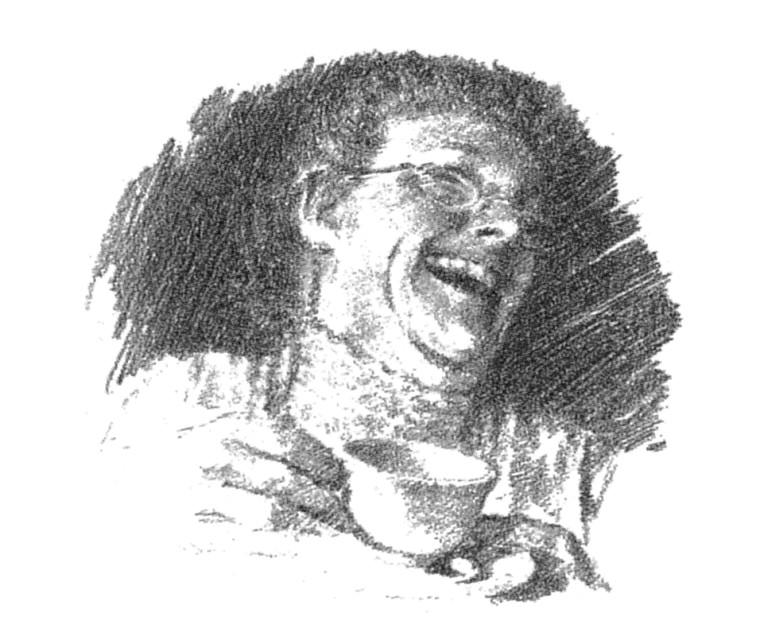
Bertie and I didn’t dare write letters to each other in case someone found them and read them. But school term came round again and he’d be there under the wych elm on the first Sunday at three o’clock without fail. What we found to talk about all the time I cannot honestly remember. He sometimes said how he could never look at a circus poster without thinking of “The White Prince”. But as time passed, he talked less and less of the white lion, and then not at all. I thought that maybe he had forgotten all about him.
We both grew up too quickly. We had one last summer term together, before I was to be sent off to a convent school by the sea in Sussex, and he was to go away to a college under the shadow of Canterbury Cathedral. We treasured each meeting, knowing how few we had left. We were silent in our sadness. The love between us stayed unspoken. We knew it when our eyes met, when our hands touched. We were just so sure of each other. Before he left me that last Sunday he gave me a kite he had made in carpentry lessons at school and told me I had to think of him every time I flew it.
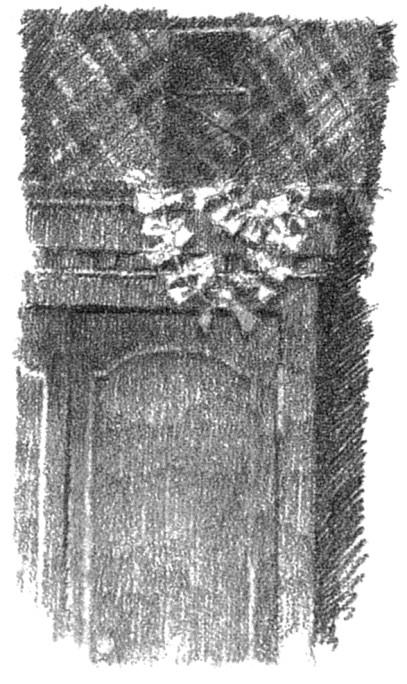
Then he went his way to his college and I went mine to my convent, and we didn’t see each other again. I was always very careful where I flew the kite he’d given me, just in case I lost it up a tree and couldn’t get it back again. I thought that if I lost the kite it would be like losing Bertie for ever. I kept it on top of my cupboard in my bedroom. It’s still up there to this day.
Now we did write because we were away from home and it was safe to do so. We wrote letters that talked to each other just as we had done all those years on Wood Hill. My letters were long and rambling, about tittle-tattle at school, about how much happier it was at home now that Nolips had left. His were always short and his handwriting so tiny you could hardly read it. He was no happier shut inside the walls of his cathedral precinct than he had been before. There were bells, he wrote, always bells – bells to wake you up, bells for meals, bells for lessons, bells, bells, bells cutting his days into thin slices. How we both hated bells. The last thing he heard at night was the nightwatchman walking the city walls outside his dormitory window, ringing his bell and calling out: “Twelve o’clock. A fine night. And all’s well.” But he knew, as I knew, as everyone knew, that all was not well, that a great war was coming. His letters, and mine, were full of the dread of it.
Then the storm of war broke. Like many storms, it rumbled only distantly at first, and we all hoped it would somehow pass us by. But it was not to be like that. Father looked so grand in his khaki uniform and shiny brown boots.
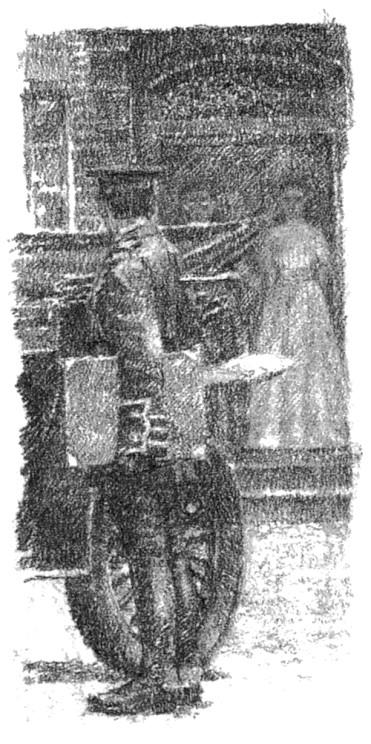
He said goodbye to Nanny Mason and me on the front steps, climbed into his car and was driven away. We never saw him again. I can’t pretend I grieved much when the news came that he had been killed. I know a daughter should grieve for a dead father, and I tried to. I was sad of course, but it is difficult to grieve for someone you never really knew, and my father had always been a stranger to me. Worse, so much worse for me, was the thought that the same thing might one day happen to Bertie. I just hoped and prayed that the war would end whilst he was still safe at college in Canterbury Nanny Mason kept saying it would all be over by Christmas. But Christmas came each year and it never was over.
I remember Bertie’s last letter from college by heart.
Dearest Millie,
I am old enough now to join up, so I shall. I have had all I can take of fences and walls and bells. I want to fly free, and this seems to be the only way I can do it. Besides, they need men. I can see you smiling at that. All you remember is a boy. I am over six foot now, and I shave twice a week. Honestly! I may not write again for some time, but whatever happens I shall be thinking of you always.
Your
Bertie
And that was the last I was to hear of him – for a while, at least.
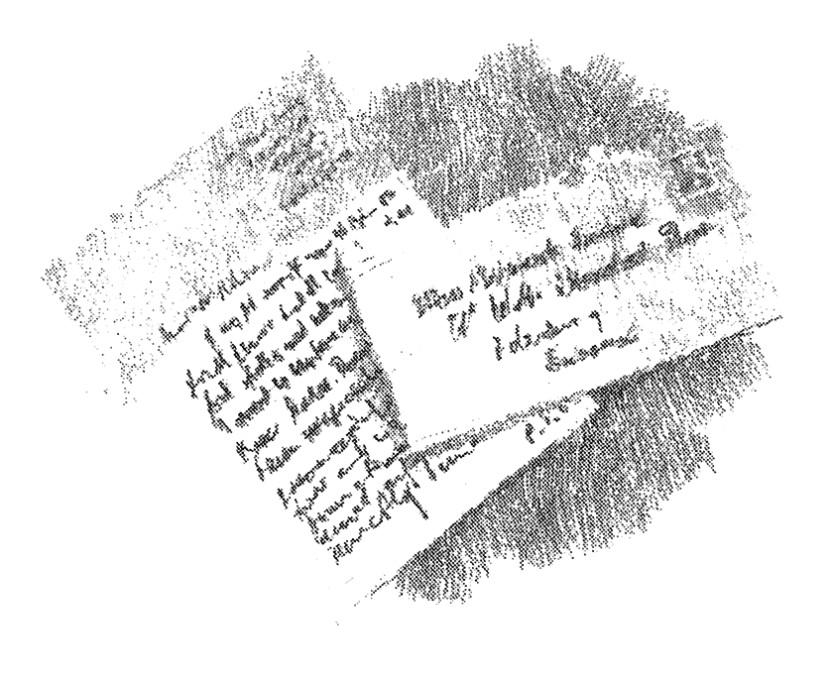
The dog was whining at the kitchen door. “Let Jack out for me, will you?” said the old lady. “There’s a dear. I’ll tell you what, I’ll fetch down the kite Bertie made for me, shall I? You’d like to see it, wouldn’t you?” And she went out.
I was only too happy to let the dog out and shut the door on him.
She was back sooner than I expected. “There,” she said, setting the kite down on the table in front of me. “What do you think of it then?” It was huge, much bigger than I had expected, and covered in dust. It was made of brown canvas stretched over a wooden frame. All the kites I had seen had been more colourful, more flamboyant. I think the disappointment must have shown in my face.
“She still flies, you know,” she said, blowing the dust off. “You should see how she goes. You should see her.” She sat down in her chair and I waited for her to begin again. “Now then, where was I?” she asked. “I’m so forgetful these days.”
“Bertie’s last letter,” I said. “He was just going off to the war. But what about the white lion, ‘The White Prince’? What happened to him?” I could hear the dog barking wildly outside. She smiled at me. “Everything comes to he who waits,” she said. “Why don’t you have a look out of the window?”
I looked. The lion on the hillside was blue no more. It was white now, and the dog was bounding across the hillside, chasing away a cloud of blue butterflies that rose all around him.
“He chases everything that moves,” she said. “But don’t worry. He won’t catch a single one. He never catches anything.”
“Not that lion,” I said. “I meant the lion in the story. What happened to him?”
“Don’t you see? They’re the same. The lion out there on the hillside and the lion in the story. They’re the same.”
“I don’t understand,” I said.
“You soon will,” she replied. “You soon will.” She took a deep breath before she began again.
For many years Bertie never spoke about the fighting in the trenches. He always said it was a nightmare best forgotten, best kept to himself. But later on when he’d had time to reflect, when time had done its healing perhaps, then he told me something of how it had been.
At seventeen, he’d found himself marching with his regiment along the straight roads of northern France up to the front line, heads and hearts high with hope and expectation. Within a few months he was sitting huddled at the bottom of a muddy trench, hands over his head, head between his knees, curling himself into himself as tight as he would go, sick with terror as the shells and whizzbangs blew the world apart around him. Then the whistle would blow and they’d be out and over the top into No Man’s Land, bayonets fixed and walking towards the German trenches into the ratatat of machine-gun fire. To the left of him and to the right of him his friends would fall, and he would walk on, waiting for the bullet with his name on which he knew could cut him down at any moment.
At dawn they always had to come out of their dugouts and “stand to” in the trenches, just in case there was an attack. The Germans often attacked at dawn. That’s how it was on the morning of his twentieth birthday. They came swarming over No Man’s Land out of the early morning sun, but they were soon spotted and mown down like so much ripe corn. Then they were turning and running. The whistle went, and Bertie led his men over the top to counter-attack. But as always the Germans were expecting them, and the usual slaughter began. Bertie was hit in the leg and fell into a shellhole. He thought of waiting there all day and then crawling back under cover of darkness, but his wound was bleeding badly and he could not staunch it. He decided he had to try to crawl back to the trenches whilst he still had the strength to do it.
Hugging the ground, he was almost at the wire, almost back to safety, when he heard someone crying out in No Man’s Land. It was a cry he could not ignore. He found two of his men lying side by side, and so badly wounded that they could not move. One of them was already unconscious. He hoisted him onto his shoulders and made for the trenches, the bullets whipping and whining around him. The man was heavy and Bertie fell several times under his weight, but he got himself to his feet again and staggered on, until they tumbled together down into the trench. The stretcher-bearers tried to take Bertie away. He’d bleed to death, they said. But he would not listen. One of his own men was still lying wounded out there in No Man’s Land, and he was going to bring him in, no matter what.
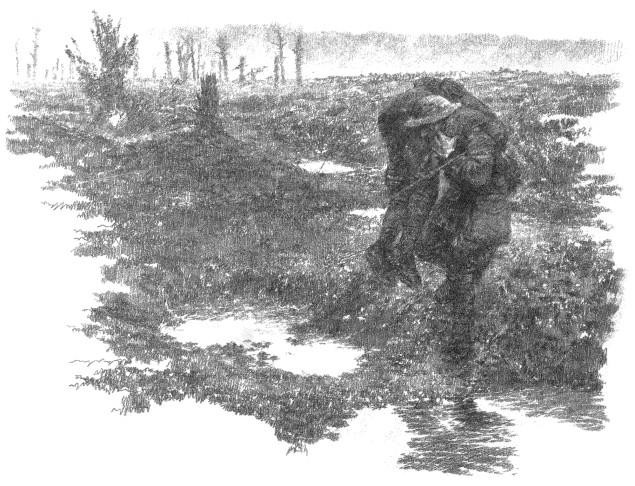
Waving his hands above his head, Bertie climbed out of the trench and walked forward. The firing stopped almost at once. He was so weak himself by now that he could scarcely walk, but he managed to reach the wounded man and drag him back. They say that in the end both sides, German and British, were up on the parapets and cheering him on as he stumbled back towards his lines. Then other men were running out to help him and after that he didn’t know any more.
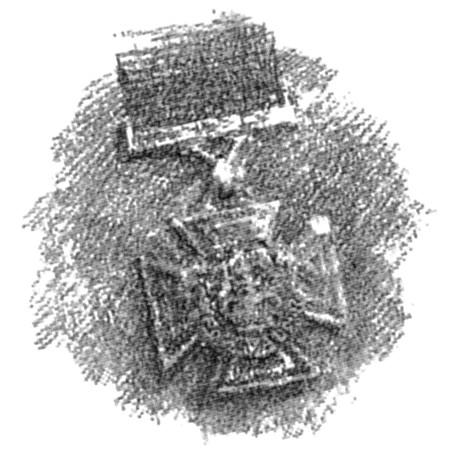
When he woke up he found himself in hospital lying in a bed, with the two friends he had rescued on either side. He was still there some weeks later when he was told that he was to be awarded the Victoria Cross for his bravery under fire. He was the hero of the hour, the pride of his regiment.
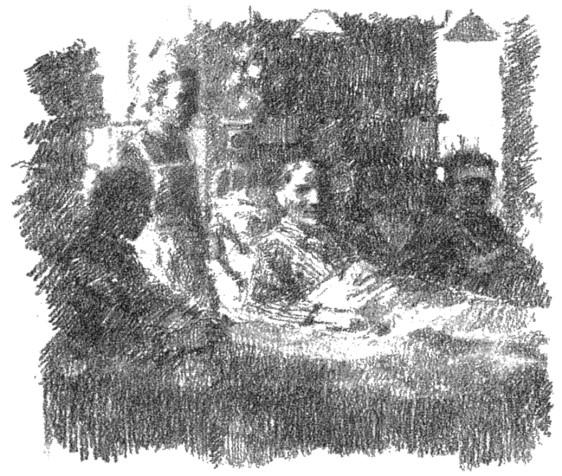
Afterwards Bertie always called it a “lot of old codswallop”. To be really brave, he said, you have to overcome fear. You have to be frightened in the first place, and he hadn’t been. There wasn’t time to be frightened. He did what he did without thinking, just as he had saved the white lion cub all those years before when he was a boy in Africa. Of course, they made a great fuss of him in the hospital, and he loved all that, but his leg did not heal as well as it should have. He was still there in the hospital when I found him.
It was not entirely by accident that I found him. For over three years now there had been no letter, no word from him at all. He had warned me, I know, but the long silence was hard to bear. Every time the postman came, I hoped, and the pang of disappointment was sharper each time there was no letter from him. I told all to Nanny Mason who dried my tears and told me to pray, and that she would too. She was sure there’d be a letter soon.
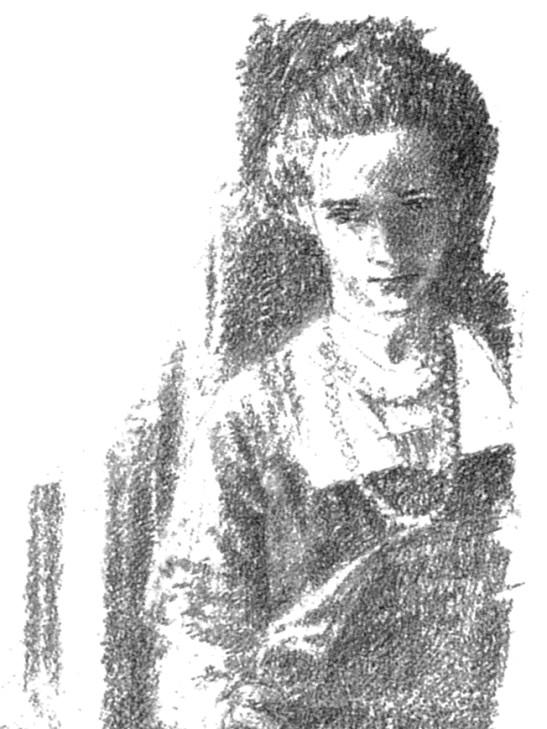
Without Nanny I don’t know how I would have gone on living. I was so miserable. I had seen the wounded men coming back from France, blinded, gassed, crippled, and always dreaded seeing Bertie’s face amongst them. I had seen the long lists in the newspapers of all the men who had been killed or who were “missing”. I looked each day for his name and thanked God every time I did not find it. But still he never wrote, and I had to know why. I thought maybe he had been so badly wounded that he could not write, that he was lying in some hospital alone and unloved. So I determined I would become a nurse. I would go to France, and heal and comfort as best I could, and just hope that somehow I might find him. But I soon discovered that amongst so many men in uniform it would be hopeless to go looking for him. I did not even know his regiment, nor his rank. I had no idea where to begin.
I was sent to a hospital some fifty miles behind the lines, not too far from Amiens. The hospital was a converted chateau with turrets and great wide staircases, and chandeliers in the wards. But it was so cold in winter that many of the men died as much from the cold as from their wounds. We did all we could for them, but we were short of doctors and short of medicines. There were always so many men coming in, and their wounds were terrible, so terrible. Each time we saved one it was such a joy to us. In the midst of the suffering all around us, we needed some joy, believe me.
I was at breakfast one morning – it was June of 1918. I was reading a magazine, the Illustrated London News, I remember, when I turned the page and saw a face I knew at once. He was older, thinner in the face and unsmiling, but I was sure it was Bertie. His eyes were deepset and gentle, just as I remembered them. And there was his name: “Captain Albert Andrews VC”. There was a whole article underneath about what he had done, and how he was still recovering from his wounds in a hospital, a hospital that turned out to be little more than ten miles away. Wild horses would not have kept me from him. The next Sunday I cycled over.
He was sleeping when I saw him first, propped up on his pillows, one hand behind his head. “Hello,” I said.
He opened his eyes and frowned at me. It was a moment or two before he knew me.
“Been in the wars, have you?” I said.
“Something like that,” he replied.
HTML style by Stephen Thomas, University of Adelaide. Modified by Skip for ESL Bits English Language Learning.