CHAPTER ONE
I’ve given this whole thing enough thought that I can confidently say overtime sucks. Especially 9,667 hours of it.
Girlboss! you might say. You earn that dough!
In response, I roll my eyes.
In response I say: I will die in this godforsaken bookstore, and there will be no one to remove my rotting body from the floor. I will die surrounded by Poe, Nietzsche, and Shusterman, wedged halfway between Young Adult and Classics, and one day some alien archaeologist will find my body and study it like Pompeii. He will not say, Girlboss! You earn that dough! He will say
 ,
,
which roughly translates to Sucker!
I will die here alone, bored out of my mind.
I will die here, staring at the lock-and-key journals, the ribbon twirlers, and the overly dramatic book covers that litter the Business section. How to Win Yourself a Wife and Make a Million Dollars in Ten Easy Steps! the titles read, as a man with a fake tan and a receding hairline poses below them. On the rack to my right, the birthday cards with their corny slogans about needing to drink more wine and hating your children have faded almost completely to white. They taunt me, as if to say, Why did you even bother staying? Nothing else here did!
I wasn’t always so alone at the last bookstore on Earth. (At least I think it is. Most cell-phone towers are down, and global communication is on the fritz, so who knows if it’s actually the last bookstore on Earth. It is to me.) I used to have Eva, who was three years older than me and twenty years too old to be dealing with my BS. Eva didn’t mince words. Eva wasn’t afraid of going into the basement at night, even though god knows what was hiding down there. Eva couldn’t sing, but she sure as hell tried. She left nine months and seventeen days ago.
She said that she wanted to “explore.” She wanted to “see what was left of the world.” She said it in the same way parents say, “I’m not mad, I’m disappointed,” and “I really did enjoy your band concert and didn’t at all notice when you messed up in measure thirteen of Contrapunctus Nine.” She wouldn’t look me in the eye.
I told myself it was okay and that I was fine with it. I told myself that I liked the quiet that hung in the air because how much did I really like people in the first place? How much did I really need someone to talk too loudly and chew with their mouth open? I told myself that there was a difference between being alone and being lonely. They weren’t a package deal.
I told myself she would be back soon, like she said she would be, and I counted the days on the wall, adding tally marks in permanent marker until I lost count and energy. After the almost-end-of-the-world, when I realized I had no home to go back to, I had chosen to come back here. So had Eva, until she didn’t.
I unhook the CLOSED sign in the front window, the metal uncomfortably warm between my sweaty fingers. I try not to think about Eva and the tally marks and how unbearably hot it is. Tendrils of hair slick themselves to the back of my neck, having managed to weasel their way out of a sloppy ponytail. I try not to think about anything as I look at the miles of nothingness outside.
The middle of suburban New Jersey, of course, is no more interesting after the almost-end-of-the-world than it was before. Even though there are no more terrible drivers or men with scary accents who say things like “pork roll,” “Bruce Springsteen,” and “down the shore,” there are also no more Coke slushies or Wawas. It’s a net-zero equation.
I flip the CLOSED sign on the door so that it says OPEN, even though what I really want to do is hurl it at the wall. But I don’t, because I did that yesterday and it absolutely didn’t help. Instead, I stare through the glass at the voids left behind. The shadows where people used to be, sitting under the husk of an oak tree that looms in the square. Crawling through the debris, the smashed windowpanes, and splintered wood. Sliding out of the cars that lurk, discarded, on the side of the road.
Wouldn’t it be funny if it were all a dream? Like a bad story written in the fifth grade that ends with And then, she woke up. A slapdash ending to a half-assed tale. Some cursed, messed-up nightmare of a dream. I’d wake up in bed, a thousand light-years away, a sheen of sweat on my forehead, and stare out at the moon from between the slits in my curtains. I’d say to my parents the next morning at breakfast, You won’t believe the cursed, messed-up nightmare of a dream I had, and the statement would hang in the air until I remembered that it’s over. It didn’t matter anymore.
Through the fogged-up window, I can see a man in a faded navy peacoat stumble down the road. He fumbles with his coat buttons and looks around the desolate open space. He does not see me watching him yet. He does not know that he is the first person I have seen in days. He does not look happy to be here.
I didn’t think I’d be seeing him again so soon.
When he sees my shadow in the window, he pauses and looks around the deserted town square before grimacing and striding toward the door.
CHAPTER TWO
When I first met the man in the faded navy peacoat, or Peacoat Man, as I’ve taken to calling him, Eva had been gone for two days. I’d devolved into a vampiric existence, not sleeping, not eating. And sure, it’s not like we were ever anything more than friends—although my crush had grown to a size that I had never before encountered—but it hurt like something more. I spent my time picking at my fingernails and watching them bleed. I didn’t know what to do except stare at the ceiling and wallow in my own uselessness.
I thought I had gone mad when I first looked out the window and saw a figure approaching. For an instant, I was transported back to normal times, when I’d pass the hours watching people walk by from inside the comfort of the air-conditioned store. And sure, maybe I shouldn’t have, but out of reflex, I smiled at him.
I don’t know if that’s what started it all. My gleaming smile could have been the catalyst that led me to this particular point in time. Or maybe the man was going to come into the bookstore whether I let him in or not. Maybe he would have gone all zombie movie on me and busted down the door with a rusted chain saw. Still, as he reached for the door handle, he smiled back, and I let him in.
He had come to buy a book about birds, or at least that’s what he said, and he even tried to hand me a crumpled twenty-dollar bill in payment.
He said, “I have nothing else to give you.”
I laughed at its uselessness, but I took it anyway. At that time, I couldn’t understand what value a book had in this new world. I mean, I understood what it meant to me, but to the rest of the world? It soon became clear that I severely underestimated the power of distraction. Peacoat Man chuckled when I asked him if he wanted a paper bag, or birthday wrapping.
He said, “No thank you. My birthday isn’t until March. But thank you for making my day a little less dull.”
I said, “Thank you for stopping by. Please do come again.”
• • •
The bell above the door chimes as Peacoat Man walks in, and I smile. He pauses for a moment before he plasters on a smile in return, and I watch the corners of his eyes crinkle slightly as he combs his fingers through his sweat-slicked hair. I watch something flicker across his face, as if he’s wondering whether to hide his emotions for my sake. I make the choice for him, sticking to our normal pleasantries as I put down my copy of The Island of Dr. Moreau.
“It’s a little hot to be wearing a coat.” I can feel the back of my tank top adhering to my skin in the sticky July heat. I say it as if he hasn’t been wearing the same coat every single time I’ve seen him, even as the months slipped into summer and the temperature climbed. I say it as if I haven’t said it a million times before in the seventeen times I’ve seen him these past nine months.
The man laughs. “I’d lose it if I wasn’t wearing it. I’d lose my head if it wasn’t screwed on.” His fingers shake slightly as he pulls at the collar of his shirt.
“Ah. I know the feeling.”
I don’t know the man’s name. He’s never told me, and I’ve never asked. I don’t want to know until he’s ready to tell me. It might be rude and go against some apocalyptic rule of etiquette. It’s not in any of the volumes of etiquette books that I have here in the bookstore, and I’ve read them all out of sheer boredom. I’ve read most of the store at this point and have become rather fond of the more tragic endings. Anything that finishes with more desolation than it started with, but beggars can’t be choosers.
Everyone who comes through these doors learns my name. Elizabeth. Liz. Eliza. Lizbeth. E. Don’t wear it out. I’m not afraid of them knowing.
When the last person who knew you forgets your name, it’s like you never really existed in the first place. It’s like you were never really there. Poof, gone. I figure that I’ll spread my name far and wide, considering how few people are left. I’ll offer it to anyone who walks through that door, if they’re willing to listen. If they’re willing to remember me.
“What are you looking for today?” I ask, sliding into customer-service mode. That chipper lilt creeps into my voice again, like it always does. Old habits die hard. I rub my hands against the wooden counter, tracing gentle curves into the dust. I’ll try to clean that later, even if dust accumulates faster than I can remove it.
Peacoat Man wrinkles his nose and wipes his hands on his pants. “A mystery, I think. One that I can figure out, though. Nothing too dark, if you know what I mean.”
“I know what you mean.” I smile again. This time a real one, not one formed by years of muscle memory. “I’ll let you look for yourself. I know how peeved you get when I try to give you a recommendation.”
“That’s because your taste in books couldn’t be any worse. A Canticle for Leibowitz? In this climate?”
I’m going to be perfectly honest and say that I’ve never read A Canticle for Leibowitz, some postapocalyptic epic about a Catholic monastery that worships Saint Leibowitz throughout centuries of desolation and destruction. It was one of the options on my freshman-year summer reading list. I almost chose it until my dad told me he’d read it once and hated it so much that at the age of thirteen, he was scarred for life. I have never read A Canticle for Leibowitz, because I am a chicken who doesn’t want her life ruined. So, of course, I now try to get absolutely anyone and everyone to read the ridiculous book and report back to me. So far, no one has taken my bait.
“You’re pretty fresh this morning, old man.” I don’t know how old he is, but I assume he’d qualify for a senior-citizen discount on NJ Transit.
Peacoat Man just grins, allowing a strand of hair to fall over his hard eyes. “Watch your mouth, young lady.” We stand in silence for a second, slowly melting in the late summer heat.
His face softens as he reaches into his breast pocket and takes out a piece of wrinkled yellow paper, which he holds out to me. “It’s for my sister.” He pauses. “Could you keep it for me, in case she comes through?”
“Of course,” I manage. I lift the message gingerly from his hands, tacking it on the corkboard behind the register.
Peacoat Man also gives me a photograph printed on shiny paper from CVS. A woman beams up at me from the four-by-six rectangle, bundled up in an argyle sweater and a gray beanie. She seems like the type of person who would hike the Appalachian Trail for fun or run a marathon barefoot. Something like that.
It wasn’t my idea to start functioning as a post office. It started eight months ago when an older woman came in with an envelope and offered me a six-pack of chicken-flavored ramen in exchange for making sure that her letter ended up in the right hands. She had been traveling to a western compound with a new group but knew that a friend of hers might pass through the area. Or at least she hoped so. It was an offer that I couldn’t refuse. The letter’s intended recipient arrived three months later, and I gave him his mail. As he held the flimsy piece of paper in his shaking hands, the man cried.
So far, I’ve had thirteen successful deliveries, making my makeshift postal service one of the best bets for people around here. Still, there’s a pile of undelivered letters sitting behind the counter. There are a few dozen people in the area, based on the number of people who have visited in the past year, with others passing through town occasionally. I’m hopeful that at least some of the letters will find their recipients, but I can’t help but feel like I’ve failed. I can’t help but feel like I’m letting everyone down.
“Thanks,” Peacoat Man says. “I’m planning on getting out of here before The Storm passes through. Hunker down somewhere far away, where the damage won’t be as bad.” The man continues, “She should be passing through soon, and I wanted to make sure she has directions to my campsite.” He says it so nonchalantly, like he doesn’t notice the blood draining from my cheeks. Like he doesn’t realize that our casual conversation has morphed into something more sinister.
“What do you mean?” I ask. “About The Storm?”
That grimace tugs at his mouth again. “There’s another one coming,” he says gravely.
“What are you talking about?”
“I’ve heard things. People are starting to talk. They say the clouds have already started to gather over the Atlantic.”
His words slice through me, creating a pit in the bottom of my stomach. The Storm. I had almost pushed The Storm out of my mind entirely. After what happened last year, I told myself that it wouldn’t come again, that it was a one-time thing. It had to be. Because I’m not sure that I can survive another one. I’m not sure if I want to.
“Do you know that it’s coming again?” I ask, my voice dry and harsh. “Or are you guessing?”
The man shakes his head slowly, as if to say How can you possibly be so naive? I hate the look in his eyes, so I straighten my spine and purse my lips.
“Remember last time, how all the birds left?”
I don’t remember how all the birds left, because I honestly couldn’t care less about birds. I didn’t care then, and I don’t now. But then I think back to this time last year, before it happened, and how quiet it was, like the entire world had been shrouded in stillness. At the time, I had simply liked the way that quiet made me feel. Like everything else had gone away. I never dreamed that it was a signal of something so much bigger. So I nod at Peacoat Man, and he nods back.
“It was like they could sense it was coming. I’ve heard that animals can do that sometimes. They know before us when bad things are headed our way. Tsunamis and stuff like that. You see it on television sometimes.” He pauses, staring at some faraway object. “But this time, it’s not only the birds. It’s the deer and the rabbits and who knows what else. I’m not the only one who’s realized it. I’m sure you’ve noticed how few people are in the area.”
I don’t know when Peacoat Man became an expert on predicting weather patterns, but I bite my tongue.
“So it’s coming,” I murmur, allowing myself to play into his macabre fantasy. He doesn’t know anything for certain, I tell myself. He could be totally wrong, and it might not come at all. He knows nothing more than you do. “When?”
“I’m not sure. It could be a couple of weeks. Less, if we’re unlucky. And it’s going to be so much worse. I can tell. Bad enough for the deer and the rabbits that didn’t run last time to pick up on it.” He breathes softly. “I’m going to head out before it’s too late. Try to find a place that won’t be hit quite as hard. I suggest you batten down the hatches, okay?”
He sounds like my dad. I pretend not to notice as his eyes reflexively flick toward the ceiling, acknowledging the gaping hole in the roof two stories above us, blown apart during The Storm. But this place is all I’ve got, even if it’s falling apart.
“Okay.” My mind is swimming, drowning, struggling to stay afloat. I’ve known him for almost a year. He knows me, right? He wouldn’t lie to me.
I glance down toward the small, puckered scars on my left arm. I remember how the rain burned, and I’m sure he does too. The area around his right eye is waxy, the iris faded into a milky white. We all bear our own scars, even if some of them are more than skin deep.
Peacoat Man clears his throat and plasters on a small grimace. “Enough of this doom-and-gloom talk,” he says. “We’ll be fine. We’ve made it out of worse.”
“Sure,” I reply. I’m not sure he knows what he’s talking about, but I don’t press the matter further. It doesn’t matter what he believes; The Storm might not ever come at all.
“And don’t forget about the letter. My sister should be coming through any day now; I only wish I had the time to stay here and wait for her.”
“Got it,” I say, trying to muster up some energy to fuel my smile. “Happy to help.”
“You’re a lifesaver.”
And I almost laugh at that because I’ve never saved anyone’s life. Ever. I’ve never even gotten close. If passing letters from one person to the next saves lives, every postman and third-grade girl deserves a Presidential Medal of Freedom. I do what I can to stay relevant.
I let him retreat to the back of the room to get lost in Agatha Christie and Stieg Larsson. Alone at the cash register, I take stock of the store. Rusted hinges on the front door. Those need to be replaced. Broken windows. Rotten floorboards. Dust everywhere. And don’t forget the massive, gaping hole in the roof. This place is one wind gust away from blowing over completely.
The world as it exists now is not the “end of days” aesthetic that I imagined from my years of binge-watching The 100 and devouring the Hunger Games trilogy. This isn’t the visually pleasing techno-cyberpunk dystopia that used to feature in my daydreams, especially since the electricity went out months ago. I used to devour apocalyptic books when things were normal-ish. I used to validate my fear of the future with the cynical belief that the end times could come any day. In a weird way, I hoped for them. With civilization collapsed, I wouldn’t have to figure out what I wanted to major in at college. Instead, I could live out my Pinterest-inspired, hot-girl zombie-busting dreams, chain saw in my uncharacteristically muscular hands.
I can’t help but wish that I still had a future to be afraid of. A fear that was so far off that I’d never have to confront it. But that’s not an option. The constant braid of time that seems to expand in front of me endlessly has run out. All I have is the past. The past and today.
I shift my gaze over to a set of leather-bound books, lying haphazardly on the shelf behind the dust-encrusted Dell computer. The computer was already inoperable before all of this. At this point? It’s a relic. A fossil for our future alien overlords to discover.
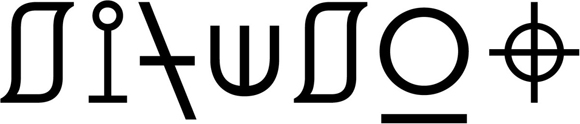 !,
!,
they’ll say, which roughly translates to Idiots! Why do their browsers still default to Microsoft Bing?!
According to Eva, it came from a virus someone accidentally downloaded in 2008 when trying to access a bootleg copy of Breaking Dawn. I’d been trying to get rid of it for months when the computer finally kicked the bucket. Bing is stubborn as hell. It will inevitably outlast all of us.
The journal behind the computer is filled with my slightly illegible writing. My fifth-grade English teacher called my penmanship “the script of a psychopathic killer.” I call it sexy and mysterious. It’s not my fault that I had the flu when we were supposed to be learning cursive in the third grade.
I’ve gotten into the habit of taking down the stories of my favorite regulars at the bookstore. (I haven’t yet decided if this habit is good or incredibly tedious.) When they stop by to get a book or leave me with a letter, I ask them to share a little about themselves. What they were like before The Storm, where they were when it hit, who they are now. I take down the stories because they keep me sane. If I can put words on a page, then it means I was here. No matter what happens, I was undeniably here, and absolutely and utterly real. And it means they were real too.
Peacoat Man yanks me back to reality from my heat-induced stupor as he thwacks the hardcover of a book with the palm of his hands. He’s never given me his story. Something about the misty-eyed look he got when I asked made me think that it was too painful for him to tell.
“Well, I’m ready to head out,” he grumbles.
I shake off my daze. “That’s all?” I ask as I lean a little closer, even though I don’t quite know what else he could want. But the phrase is programmed into my brain, so I say it anyway. I look at the cover of his book. The Alienist. I bury my ever-present need to give my opinion.
“That’s all.” His free hand fiddles with the button on his pocket before he pulls out a fistful of something that I can’t quite discern.
He reaches his arm out toward me, and purely on instinct, I offer him my hand. Three objects drop into my palm, one by one. They clink and roll around, warm in my hand.
When I pull back, I see batteries. Double-A batteries. Double-A batteries that he could have probably traded for a week’s worth of food instead of a musty old book.
“Thank you, but I—I—” I stammer, my eyes betraying my thoughts, but the man shakes his head. It’s always worth a try. Some part of me, passed down by my father, who inherited it from his father, and his father’s father, genetically requires me to refuse any sort of gift. In my family, it was always a race to see who could procure a credit card the fastest when we went out to dinner, like some messed-up high-noon duel. But that’s not how it works anymore, right? Chivalry is dead. Nothing comes for free.
“Don’t even.” He clutches his book and walks out, the floorboards creaking as his boots trod across the dusty wood. He pauses, looking back at me as he adjusts the buttons on his dirty coat. Then he adds, “Please stay safe. Things are so much worse than you think.”
All I can think about is the hole in the roof, and the rotting floorboards, and the front door that won’t lock. All the things that are broken. All the things that are waiting for the perfect time to fall apart. Now seems as good as ever.
“I’m not going anywhere.”
Chris Nickelson
33 Years Old
Portland, Maine
It wasn’t at all like it is in the movies. Screaming and fire and destruction and all that stuff that comes with it. Sure, there was screaming at first. It makes sense to scream if your skin is being burned off. But it lasted maybe only twenty minutes before there was no one left outside to scream. It took the unlucky ones out quickly. No mercy. The rest of it, though? It was silent. The rain pounded, and the winds roared outside, but in my solitude, everything was absolutely silent. No voices echoing through the hallways of my apartment building. No slamming doors or music playing a few doors over. Just completely quiet.